















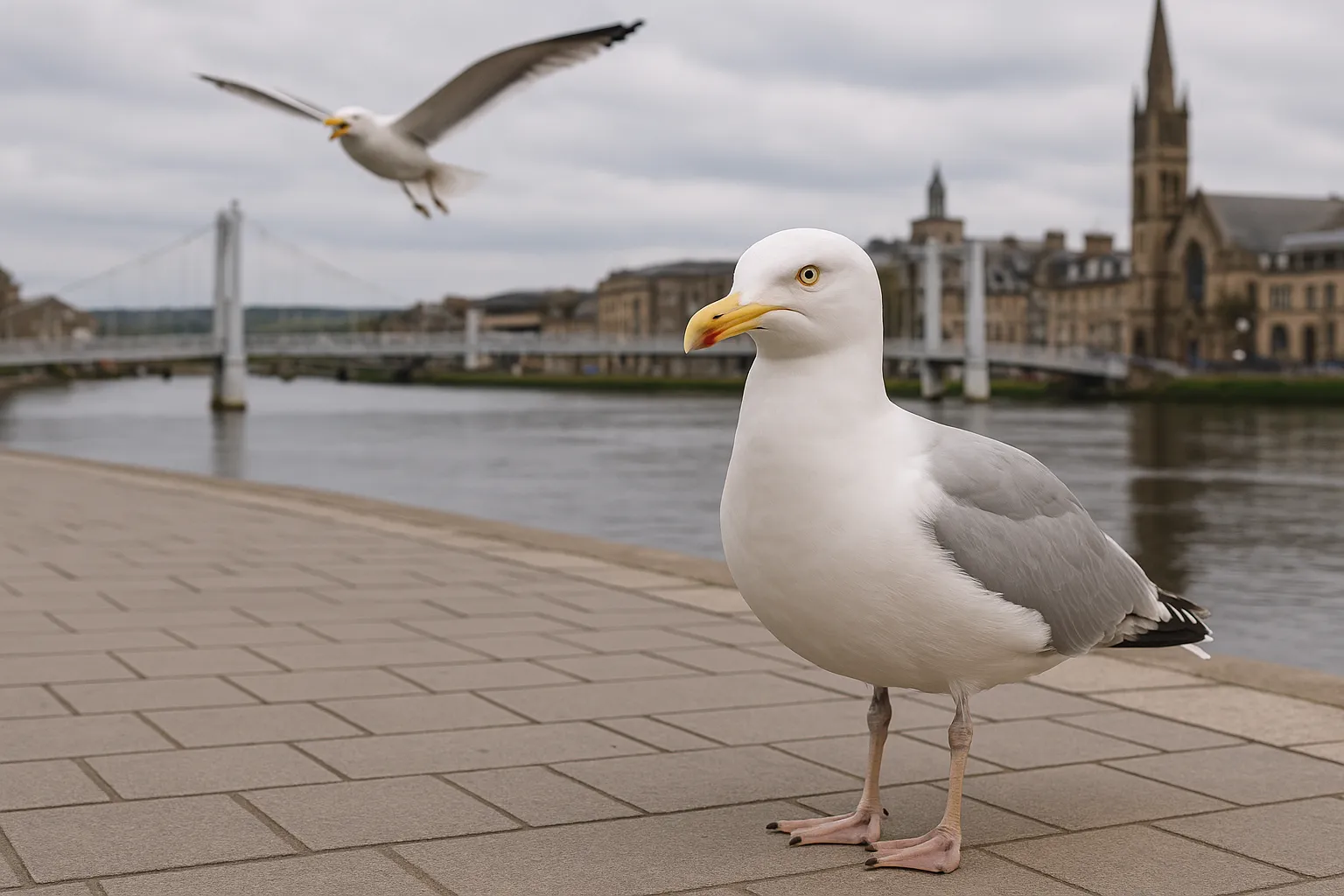
Story Highlight
– Aggressive gulls thriving in urban Inverness, causing disturbances.
– Council plans new strategy to manage gull conflicts.
– Easter egg hunt chaos due to violent gull attacks.
– Herring gull populations declining, moving into urban areas.
– NatureScot faces criticism for controlling gull removal applications.
Full Story
Concerns over aggressive gull behaviour have prompted a comprehensive response from local authorities in Inverness, Scotland. Residents have been increasingly vocal about incidents involving these birds, particularly herring gulls, which have disrupted everyday life. The Highland Council is now implementing a new strategy aimed at mitigating conflicts between the population and the local avian residents, a situation that mirrors challenges faced by many coastal communities across the UK.
A recent report by the Highland Council outlines the growing tensions between human residents and seagulls, with numerous complaints highlighting disturbances during the early morning hours, aggressive snatching of food, and threatening swooping behaviours linked to the birds’ nesting activities. One particularly alarming incident occurred last month during an Easter egg hunt, where children were subjected to multiple aggressive attacks from gulls, casting a shadow over the festive event.
The council’s latest findings indicate that Inverness is home to approximately 700 active nests, thereby necessitating a focused approach to address the burgeoning issues. In collaboration with NatureScot, the Scottish agency dedicated to conserving the natural heritage, the Highland Council has allocated £20,000 for an extensive census and distribution study of gulls within a designated five-kilometre area of the city centre. This study is poised to provide crucial data to inform future strategies.
In light of the escalating conflict, local officials have proposed a pilot management plan specifically designed to reduce interactions between gulls and the public. This plan encourages councillors to endorse steps that promote prevention, enhance public awareness, and explore lawful control measures to alleviate the tensions. A spokesperson for the Highland Council stated that discussions regarding this management approach will occur later this month.
They emphasised the growing apprehension surrounding urban gull activities in Inverness, noting that issues such as noise, aggressive behaviour, scavenging, and fouling have exacerbated community discomfort. Additionally, they acknowledged the current lack of precise information regarding the impact of gull encounters on local residents. In an effort to gather insights, the council has initiated an online survey aimed at capturing the experiences and concerns of those affected, which will be open for responses for a limited period.
NatureScot has also voiced its concerns regarding urban gull behaviour, describing the situation as multifaceted. A representative explained that while urbanisation has resulted in more interactions between people and gulls, it has not led to an overall rise in gull populations. In fact, many species, including the herring gull, have seen a decline in their numbers due to changing environmental conditions and habitat loss. The representative reiterated that gulls are adaptable creatures that often thrive in urban settings due to the availability of food and safe nesting environments, free from natural predators.
Recent statistics from the latest Seabird Census for Britain and Ireland reveal that the populations of all five common gull species breeding in Scotland are experiencing significant declines, with reductions ranging from 44 per cent to 75 per cent across species. Several of these species, including the common gull, herring gull, and great black-backed gull, have been classified as red-listed species of conservation concern in the UK, while lesser black-backed gulls and black-headed gulls fall under the amber list.
The declines in gull populations can be attributed to various factors, including shifts in food sources and changes in land management practices in traditional breeding grounds. Additionally, recent outbreaks of avian flu have disproportionately affected certain species, further complicating their survival prospects. In response to these challenges, NatureScot has increasingly emphasised the use of non-lethal methods for managing urban gull populations in recent years.
Notably, the importance of gulls within Scotland’s ecosystem cannot be overlooked, as they contribute to the nation’s biodiversity. NatureScot aims to collaborate with communities to strike a balance between addressing growing public concerns and ensuring the ongoing conservation of these species. However, the agency has come under scrutiny for its perceived leniency regarding gull-related issues, especially in light of a statistical trend indicating a marked decrease in the approval rate for applications to remove gulls deemed as nuisances.
Previously, NatureScot had approved over 80 per cent of such requests as recently as 2022. By contrast, it has been reported that this approval rate plummeted to less than a third in the subsequent year. This shift has ignited discussions about whether NatureScot should retain its regulatory authority over gull-related applications.
In a statement addressing these ongoing concerns, NatureScot acknowledged the difficulties posed by urban gulls, recognising the potential health and safety risks they can present, particularly to vulnerable populations within schools, care homes, and hospitals. The agency reiterated its commitment to balancing these challenges with the imperative of safeguarding gull populations, which face steep declines across various habitats.
As Inverness grapples with the implications of human-gull interactions, the evolving strategies aim to strike a delicate balance between preserving wildlife and maintaining the quality of life for local residents, highlighting a pressing issue that resonates across coastal towns in the UK.
Our Thoughts
The article highlights the escalating issue of aggressive gulls in Inverness, leading to safety concerns for residents, particularly vulnerable populations. To avoid these incidents, a proactive approach to gull management could have been implemented earlier, focusing on public education and awareness regarding safe practices around nesting areas. Regular monitoring and data collection on gull behavior would also ensure timely responses to emerging threats.
Key safety lessons include the importance of clear communication with the public to report incidents and engage in community awareness campaigns about gull behavior and food management. The council’s delay in collecting accurate data points to a potential breach of the Management of Health and Safety at Work Regulations 1999, which requires employers to assess risks and implement preventive measures.
To prevent similar incidents, local authorities should develop comprehensive urban wildlife management strategies in line with the Wildlife and Countryside Act 1981, ensuring conservation efforts do not compromise public safety. Establishing a balanced approach that includes non-lethal control measures and effective community engagement will help mitigate risks posed by urban gulls.