










Story Highlight
– New bridge reconnects communities over River Irwell after decade.
– Original bridge destroyed by Storm Eva in 2015.
– Opening ceremony attended by local councillors and students.
– Design improves flood resilience and supports active travel.
– Funded by UK Government’s transport settlement and challenge fund.
Full Story
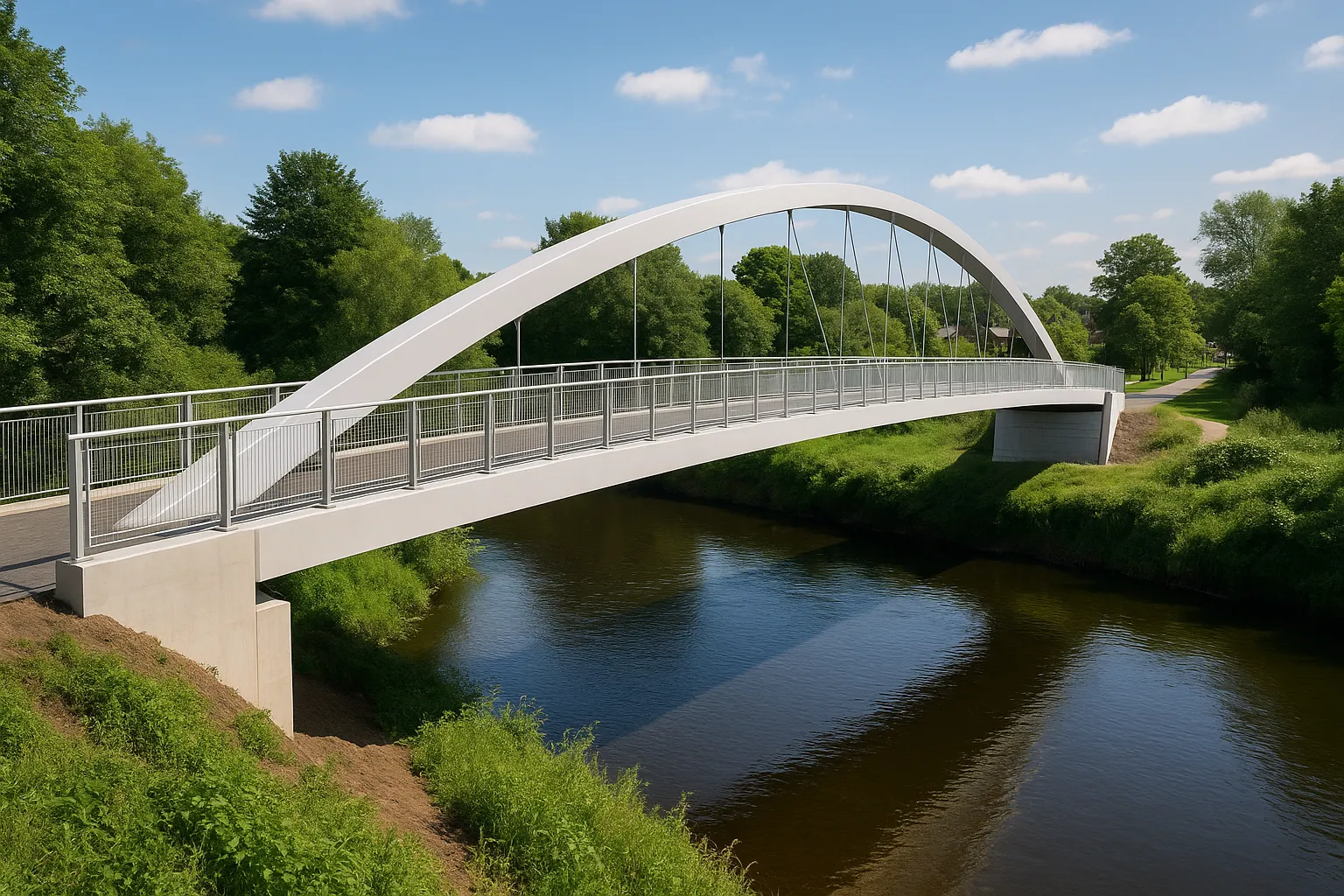
A crucial river crossing in Radcliffe has been restored with the unveiling of a new 50-metre bridge over the River Irwell, marking a significant achievement for the local community after the original bridge was lost over eight years ago. The Milltown Street Bridge, which collapsed during Storm Eva on Boxing Day 2015, has now been replaced, enhancing connectivity and supporting more sustainable modes of transport in the region.
The opening ceremony took place on the 12th of May and saw participation from key figures, including Councillor Alan Quinn, who serves as Bury Council’s Cabinet Member for the Environment. He was joined by Councillor Eamonn O’Brien, the council’s Leader and Cabinet Member for Strategic Growth. Also present were elected representatives from Radcliffe’s ward, members of the Bury Council’s Engineering Services Team, Transport for Greater Manchester officials, and students from the nearby Star Radcliffe Academy.
The new bridge was expertly designed and constructed by Briton Fabricators in Nottingham, while the installation was managed by the main contractor, Bethell. This replacement structure has been built to improve access for pedestrians, cyclists, and those using mobility aids, promoting greater participation in active travel.
Designed as a single-span bridge without any supports in the river, it allows for greater clearance above the water. This innovative design enhances flood resilience, significantly reducing the potential for future damage during extreme weather events.
The new bridge is part of the Bee Network, Greater Manchester’s initiative aimed at creating an interconnected transport infrastructure. Funding for this project was sourced from the UK Government’s City Region Sustainable Transport Settlement and the Greater Manchester Mayor’s Challenge Fund, demonstrating an investment in the region’s future mobility.
The complexity associated with the project meant that the costs were significant. The bridge’s bespoke design and the challenging conditions under which construction took place contributed to the financial requirements needed for its reinstatement. Despite these hurdles, the council has reported that the project was completed on schedule and within the allocated budget.
Councillor Alan Quinn articulated the transformative impact of the new bridge, stating, “This new bridge is a significant improvement on the structure it replaces. Designed and fabricated in the UK using British steel, it showcases high-quality engineering and craftsmanship built to modern standards. Despite the challenges of its complex location over the River Irwell, and construction taking place throughout the winter months, this project has been delivered on time and within budget. The result is a robust, flood-resilient crossing that supports walking, wheeling and cycling, improving everyday journeys for local people. It’s a high-quality asset that will serve the community for many years to come.”
With the bridge now officially opened, additional safety measures have been implemented, including the installation of CCTV cameras to monitor activity in the area and ensure security for pedestrians and cyclists.
Richard Nickson, the Active Travel Network Director at Transport for Greater Manchester, highlighted the bridge’s importance for local sustainable travel, explaining, “This new bridge will restore a key route for people making journeys by walking, cycling, and wheeling in and through Radcliffe, providing a real boost to sustainable travel in the area. Investment in active travel infrastructure is key to the success of the Bee Network, and I look forward to more people in Radcliffe opting for greener travel for shorter trips.”
The restoration of the bridge was no small feat and involved several critical stages, including:
– Collaborating with the Environment Agency to acquire the necessary permissions and manage both flood risk and ecological considerations.
– Dismantling the remnants of the former bridge and clearing the river pier.
– Removing underground obstacles, notably shipping containers that were found buried at the site.
– Demolishing a nearby building and managing the disconnection or diversion of vital utilities such as power, water, gas, and telecommunications.
– Navigating a constrained construction space to safely work around high-voltage infrastructure located adjacent to the site.
– Conducting specialist treatment of invasive species like Japanese Knotweed and Hogweed, in compliance with environmental regulations.
Supervised by Bury Council’s Engineering Services Team, the entire project was executed with a keen focus on safety and quality standards, coordinated efficiently by the main contractor, Bethell.
As Radcliffe continues to evolve, the local council is also addressing other challenges in the area. The Milltown Street location has gained attention due to the ongoing predicament with the Pioneer Mill site, which experienced two significant fires in quick succession—one in September 2025 and another major incident in April 2026. The latter blaze required the attendance of approximately 14 fire engines and multiple support units. The fire in September left one firefighter seriously injured after a wall collapsed during the blaze.
In light of these events, Bury Council is actively collaborating with a range of agencies, including Greater Manchester Police, the Fire and Rescue Service, the Environment Agency, and the Health and Safety Executive, to improve the management of the Pioneer Mill site and explore strategies for its future development.
For further information about the new bridge and ongoing community projects, residents are encouraged to visit the Bury Council website at www.bury.gov.uk/milltown-bridge.
Our Thoughts
The news article highlights the successful completion of the Milltown Street Bridge, with no direct safety incidents reported during the project. However, key safety lessons can still be identified. Firstly, the management of the Pioneer Mill site emphasizes the importance of ongoing risk assessments and site management strategies to prevent incidents like the fire that injured a firefighter.
Relevant regulations, such as the Health and Safety at Work Act 1974, could be breached if adequate safety measures and risk assessments are not established, especially when working around potentially hazardous structures. The injuries sustained in previous incidents underscore the need for stringent safety protocols related to demolition and construction activities, particularly in urban settings.
To prevent similar incidents, it is essential to conduct thorough pre-construction assessments and to maintain constant oversight throughout the project lifecycle. Implementing regular training for workers on emergency response and safety measures is also vital. Ensuring clear communication among all stakeholders, including local authorities and emergency services, will enhance safety and emergency preparedness for future projects.