















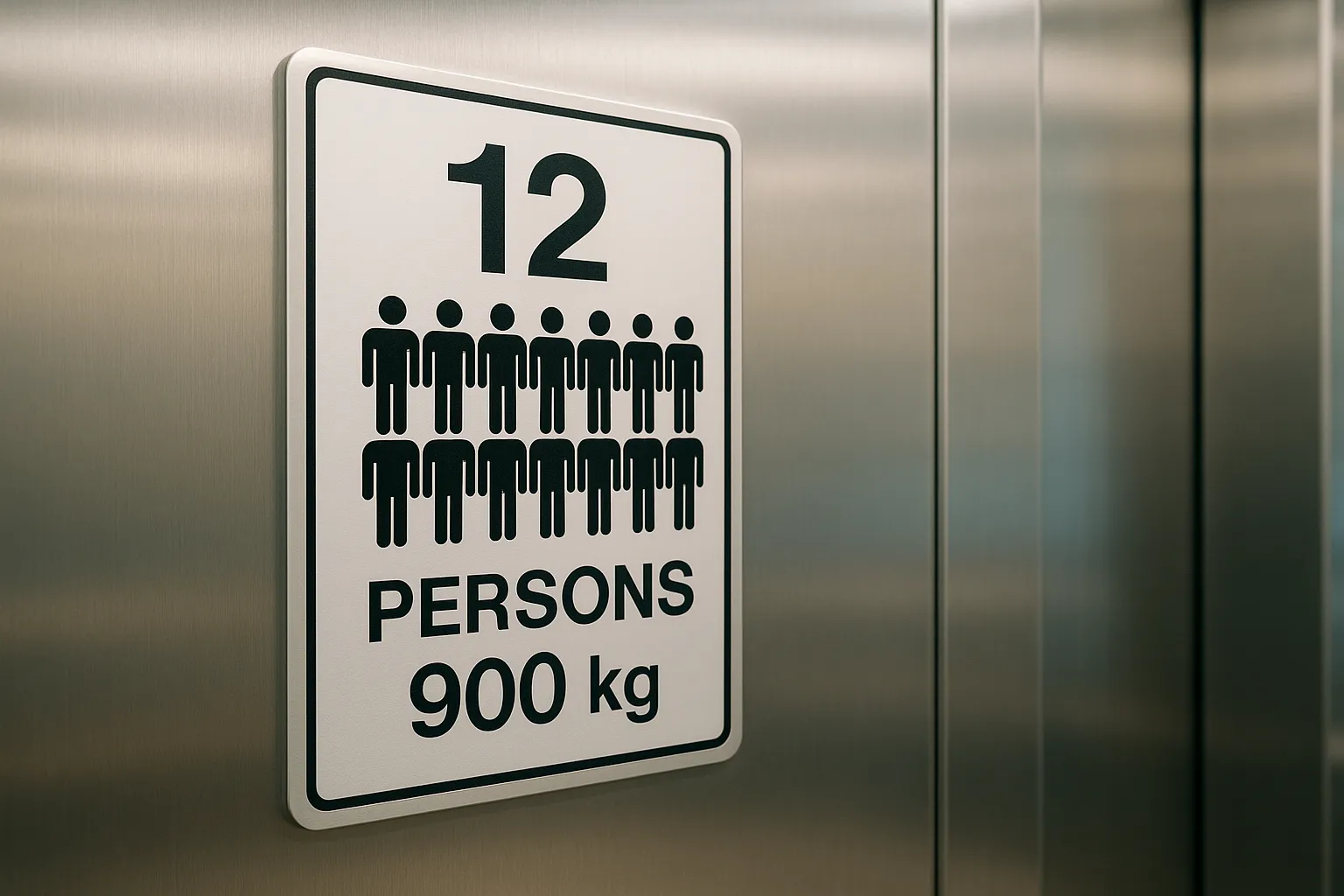
Story Highlight
– Lift signs may not reflect current population weights.
– Experts warn outdated signs could compromise safety.
– Increased journey times linked to miscalculated lift capacities.
– Stigmatization of obesity due to misleading capacity indicators.
– 66% of UK adults classified as overweight or obese.
Full Story
Lift Signage Fails to Reflect Modern Weight Trends, Experts Warn
The safety and functionality of lifts in modern buildings may be at risk due to outdated signage that does not account for changing demographics, particularly increasing levels of obesity. This issue was highlighted during an address at the European Congress on Obesity held in Istanbul, Turkey, where experts noted a significant gap between lift manufacturers’ assumptions of passenger weight and current averages.
Professor Nick Finer, President of the International Prader-Willi Syndrome Organisation, presented compelling findings indicating that the maximum capacity signs displayed in lifts have not kept pace with the rise in average body weight in the population. He stated that these outdated measures could potentially lead to inefficiencies and safety hazards, while also contributing to the societal stigma faced by individuals living with obesity.
Historically, lift capacity signs have been required to indicate the maximum number of passengers that can safely enter a lift. However, these numbers have largely remained static for several decades. Professor Finer emphasized that such rigidity fails to reflect the evolving understanding of average weight in the UK, particularly in light of significant increases in obesity rates.
To illustrate the extent of this disconnect, Professor Finer analysed data from 112 lifts spanning various countries including the UK, France, Germany, Spain, Italy, Austria, and Finland. The lifts, produced by 21 different manufacturers, were assessed for their weight capacities as compared to the average weights of adults in those regions over time. His research focused on weight trends from 1972 to 2024.
In the mid-1970s, the average weight for men in the UK was approximately 75 kilograms, while for women, it was around 65 kilograms. Recent data indicates that these figures have risen significantly, with current averages of about 86 kilograms for men and 73 kilograms for women. This increase has occurred concurrently with a surge in obesity rates, which, according to NHS statistics, indicated that 30% of adults in England were classified as obese in 2024, and a staggering 66% were either overweight or obese.
Professor Finer’s research found a notable correlation between the maximum weight capacities of lifts and the rising average weights of the population until approximately 2002. Since that time, however, it appears that lift manufacturers have stalled in updating their maximum capacity figures. The professor pointed out that even though the average population weight had risen to 79 kilograms, manufacturers continued to base lift capacities on an outdated assumption of 75 kilograms per person.
“The failure of lift manufacturers to adapt to rising levels of obesity and body size means that lift capacities are overestimated,” Professor Finer explained. “This situation could result in longer wait times for lifts and raise concerns regarding safety. Additionally, it inadvertently contributes to the stigma associated with being overweight, suggesting that lifts can accommodate more individuals than is comfortable.”
The implications of this range from practical inconveniences, like delayed travel times within buildings, to significant safety concerns, with the potential for overloading lifts—a risk that could compromise the safety of users. Furthermore, the issue of stigmatization arises, as current maximum capacity signs may imply that larger groups or individuals cannot use the lifts without discomfort.
In his abstract presented at the conference, Professor Finer underscored the continuous trend of manufacturing practices failing to align with the realities of population weight increases. By neglecting to adjust lift capacities accordingly, the industry is not only doing a disservice to its consumers but also perpetuating negative perceptions associated with body image.
This revelation has spurred calls for action within the industry, as experts and advocates encourage lift manufacturers to reassess and revise their weight capacity guidelines. Adjusting this parameter could alleviate some of the pressure on individuals who may already feel marginalized due to societal attitudes towards weight.
Local perspectives in the UK reflect growing concerns about public health, with community health leaders echoing the need for inclusive designs that cater to the diverse body sizes present in society today. They argue that public spaces should promote accessibility and comfort for all individuals, regardless of their weight status.
The conversation surrounding this issue continues to grow, with discussions about the broader implications of design and architecture in relation to public health. By prioritising contemporary data on body weight and the physiological realities of obesity, experts believe that lift manufacturers can help foster an environment that is more accommodating to everyone, thereby reducing stigma and enhancing overall safety and usability.
As society grapples with the challenges posed by rising obesity rates, the industry’s response may shape the future of urban design and public transportation. It is hoped that this pivotal moment will lead to substantial changes that reflect the inclusive needs of our increasingly diverse population.
Our Thoughts
The article highlights significant shortcomings in lift manufacturing regarding capacity signage, which has not been updated to reflect the rising average weights in the population. This oversight may contravene the Health and Safety at Work Act 1974, which mandates employers to ensure the health and safety of employees and the public. Lift manufacturers should adhere to the Lifting Equipment and Lifting Operations Regulations 1998 (LOLER), which require regular assessments and updates to equipment and its usage guidelines.
To prevent safety issues, manufacturers could implement more frequent reviews of lift capacity signage, ensuring it reflects current demographic data on average weights. Additionally, engaging in user feedback mechanisms could address journey times and comfort levels, potentially avoiding stigma for heavier individuals. Incorporating more inclusive and accurate data in signage would not only enhance safety but also promote dignity for individuals with obesity.
Overall, there is a crucial need for adaptation in lift design and guidelines to better reflect societal changes, ensuring compliance with health and safety laws while prioritizing user safety and respect.