














Story Highlight
– Tetra Technologies fined £350,000 for tank collapse incident.
– 62-year-old worker suffered life-changing injuries from rupture.
– Tank was over 30 years old, corrosion noted in 2013.
– Insufficient inspections contributed to catastrophic failure, HSE says.
– Company closed Peterhead site after incident.
Full Story
A significant safety breach at Tetra Technologies UK Limited’s Peterhead facility has led to the company being fined £350,000 following the catastrophic failure of a storage tank, which resulted in severe injuries to a self-employed worker. The incident, which occurred on 21 June 2023, has highlighted ongoing concerns regarding the maintenance and safety protocols in place for industrial storage tanks operating in high-demand environments such as offshore supply bases.
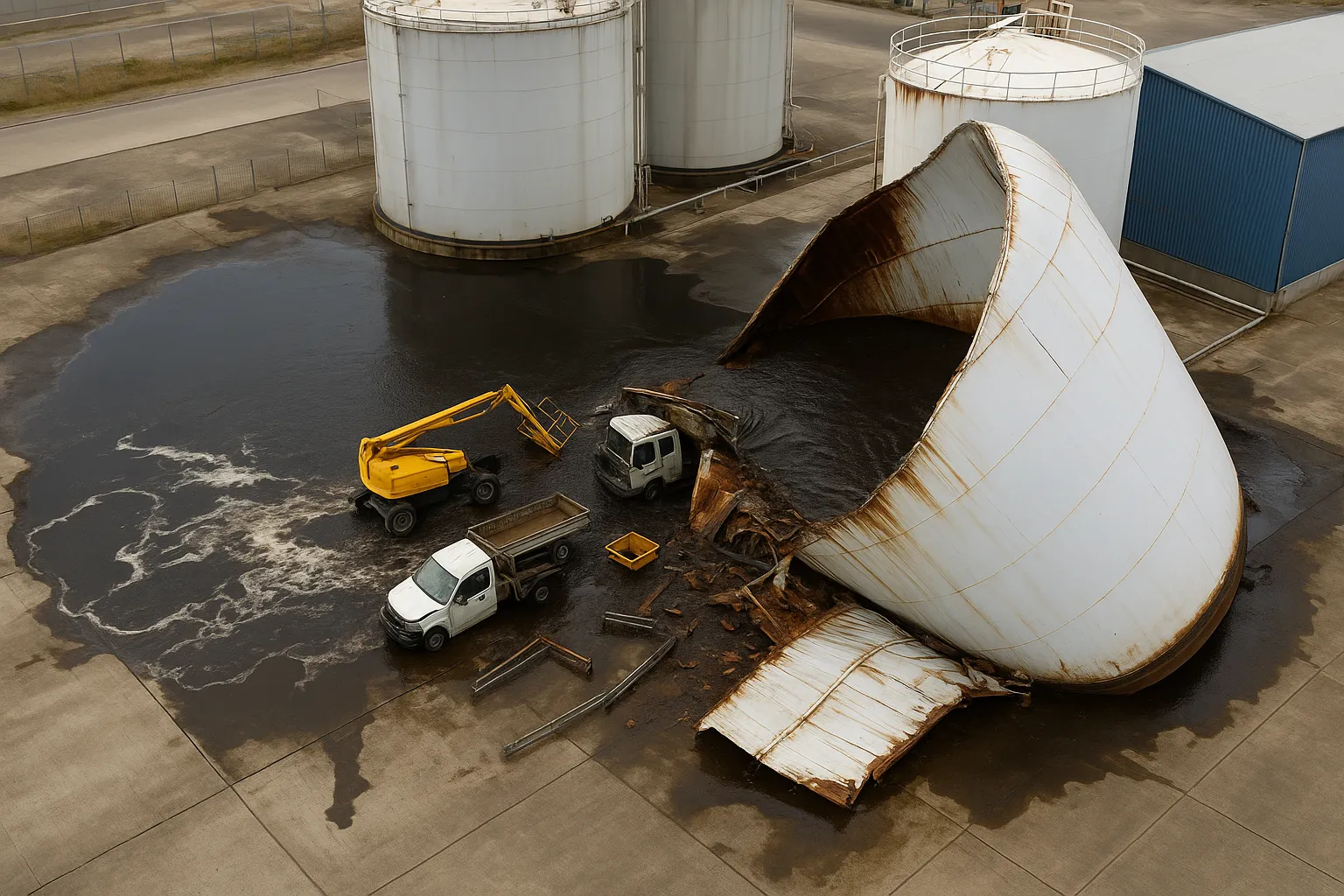
Philip Moir, a 62-year-old rope access technician, was on-site carrying out tank surveys when the facility’s Tank 7 failed dramatically. This bolted steel structure held approximately 480,776 litres of calcium chloride solution, corresponding to a staggering weight of about 700 tonnes. Reports indicate that the tank ruptured unexpectedly, flooding the area and leaving Mr. Moir with severe, life-altering injuries.
After the rupture, emergency responders found Mr. Moir incapacitated, having been submerged in the hazardous fluid up to his chest. Witness accounts describe him being discovered slumped over the controls of a nearby cherry picker, which, along with a Ford Transit van and other equipment, had been moved by the force of the escaping material.
The injuries sustained by Mr. Moir are extensive and serious, including a double fracture of the spine and pelvis, lacerations to the liver, and a punctured lung, along with multiple rib fractures. These injuries have rendered him unable to work, particularly in positions requiring elevation, limiting his ability to perform in his trade.
An investigation conducted by the Health and Safety Executive (HSE) delved into the circumstances surrounding the structural failure of Tank 7. Inspectors determined that the collapse occurred as a result of significant corrosion. Analysis indicated that approximately 4.5mm of the original thickness of the steel had been eroded over time, leaving only 1mm of material to withstand the immense pressure exerted by the tank’s contents.
Inspectors noted that this deterioration had been ongoing for over a decade, with corrosion first detected during inspections in 2013. Despite the clear warning signs, including extensive surface corrosion and degradation at bolted connections, Tetra Technologies did not undertake necessary remediation or adhere to required maintenance protocols.
The incidents investigation report indicated that the failure of Tank 7 happened less than thirty minutes after it had been filled to capacity, a move made in a bid to optimise storage space at Tetra’s Aberdeen facility. HSE concluded that the tank’s failure was not an isolated incident but instead the culmination of long-standing neglect in maintenance practices and a lack of adherence to necessary safety inspections.
In response to the incident, Tetra Technologies made the decision to remove all bolted tanks from its operational sites and cease operations at the Peterhead base, relocating their activities to Aberdeen. During subsequent proceedings, Tetra Technologies UK Limited pled guilty to multiple breaches of the Health and Safety at Work Act 1974 and was fined £350,000 to address the severe negligence leading to the incident.
Mark Carroll, a Health and Safety Executive inspector, emphasised the premeditated nature of the incident, stating, “This was a completely preventable incident. The corrosion that caused this tank to fail had been identified a decade before it collapsed, yet no remedial action was taken, and there is no evidence that the required inspection regime was ever consistently followed.” He further noted the legal responsibilities of companies to maintain safe working equipment, underlining that HSE will pursue enforcement actions when these obligations are disregarded.
As part of its regulatory role, the Health and Safety Executive continues to prioritise the prevention of workplace incidents through rigorous enforcement of safety standards and educational outreach. They underscore the importance of adherence to safety protocols and regular maintenance, especially within industries handling potentially dangerous materials.
The case has raised significant questions regarding the safety culture at Tetra Technologies and highlights the broader implications for offshore supply operations. With around 2,000 ship movements managed annually by the Peterhead facility, the emphasis on robust safety practices becomes paramount in preventing future incidents that could put workers at risk.
As Tetra Technologies faces scrutiny, this incident serves as a stark reminder of the disastrous consequences that can arise from lax safety protocols, underscoring that proactive measures in the maintenance of facilities and equipment are essential in safeguarding the health and safety of all personnel involved in operations.
Our Thoughts
The catastrophic failure of Tank 7 at Tetra Technologies UK Limited could have been prevented through adherence to regular maintenance protocols mandated by UK health and safety regulations. The Health and Safety at Work Act 1974 requires employers to ensure equipment is maintained in an efficient state and good repair. Despite prior identification of severe corrosion, no remedial action was taken, violating sections 3(1) and 33(1)(a) of the Act.
Key lessons highlight the importance of implementing a consistent inspection regime for aging infrastructure, especially for equipment over 30 years old. Following established guidelines for maintenance and inspection, as outlined in manufacturers’ manuals, is critical to preventing such failures.
Immediate steps to avoid similar incidents in the future include developing a rigorous maintenance schedule, ensuring timely remedial actions to address identified issues, and conducting regular training for personnel on safety protocols and risk management associated with aging facilities. The failure to act on known corrosion risks ultimately led to life-changing injuries, reinforcing the duty of care outlined in UK legislation.