
















Story Highlight
– Leaseholder faces £1,500 bill for solar panel installation.
– Freeholders block green upgrades due to high fees.
– Millions of leaseholders may struggle with similar issues.
– Government aims to support solar technology adoption.
– MPs demand action against freeholder fee barriers.
Full Story
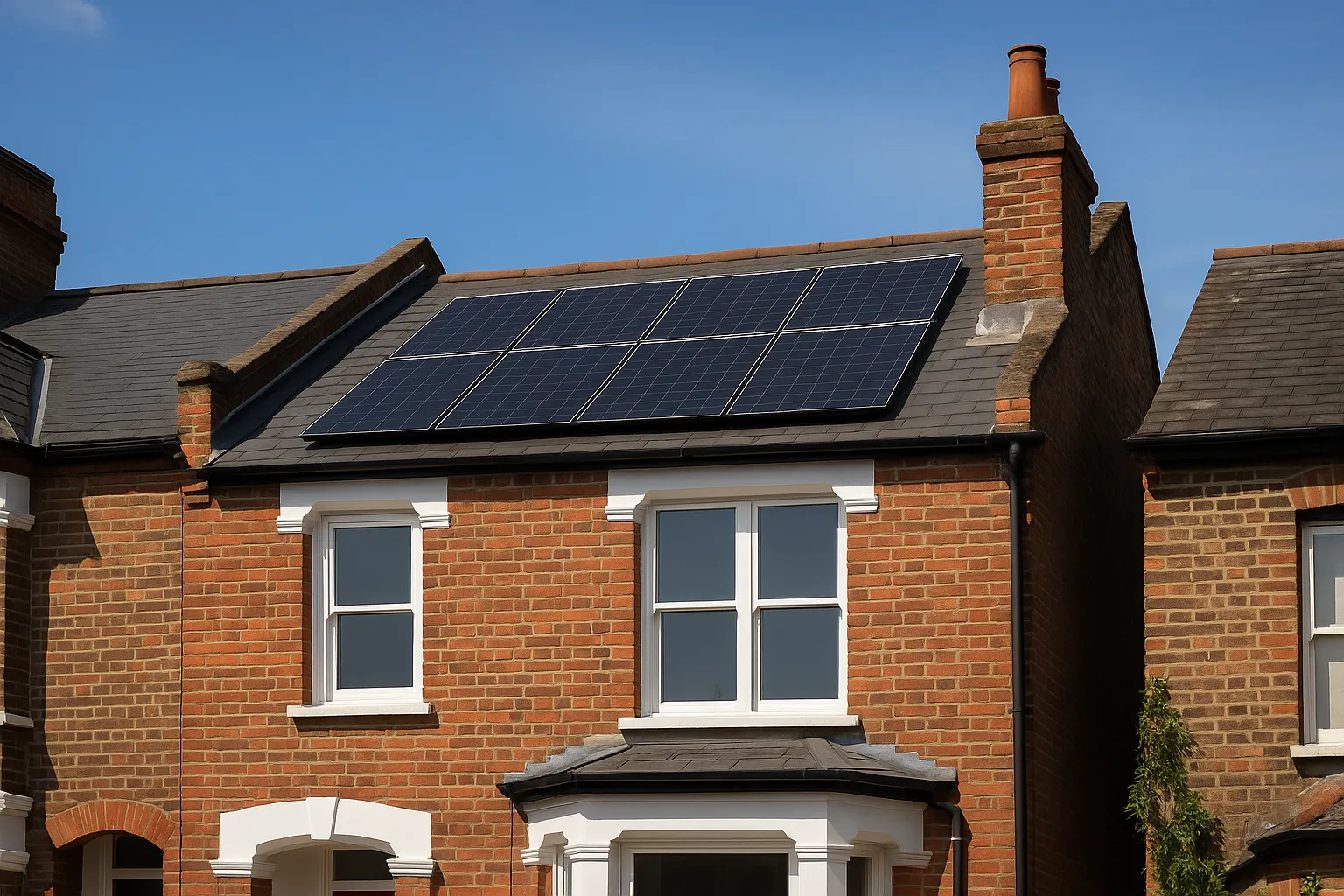
A leaseholder residing in Walthamstow, east London, is confronted with a substantial fee exceeding £1,500 from his freeholder before he can install solar panels on his rooftop. Gabriele Carlisi, who holds a position as an environmental manager, expressed his frustration, claiming he is being “blocked” from pursuing green upgrades due to the exorbitant costs levied by freeholders, which make investments arduous and unfeasible.
This predicament is not isolated. It is indicative of the challenges faced by millions of leaseholders across England, as they seek to implement sustainable improvements in their residences. Experts caution that this issue could present significant barriers to the government’s aspirations for achieving net-zero greenhouse gas emissions.
Carlisi, who enjoys ownership of his flat, nonetheless finds himself required to obtain permission for any modifications to his living space. The peculiar nature of leasehold ownership means he possesses rights over the interior sections of his flat, while a separate entity, the freeholder, retains ownership of the property’s exterior and structural components, including the roof.
Upon approaching his freeholder for consent to install solar panels, Carlisi received a detailed cost breakdown that included £420 for administrative processing and a staggering £1,080 for legal fees. Additionally, he was informed he would be responsible for any necessary surveyor or structural engineer charges and potentially a “premium” fee to the freeholder in exchange for the requested permission.
Even more concerning is that these costs would still be incurred regardless of whether the freeholder ultimately grants permission for the installation. The initial estimate of £1,500 could potentially escalate, leading Carlisi to ultimately cancel his plans for an installation that would have cost approximately £6,500.
Expressing his disappointment, Carlisi noted, “It felt ridiculous to pay upwards of £2,000 only to be told there’s a possibility I wouldn’t be granted permission for the solar installation.” He described the entire experience as “flattening” and pointed out the strangeness of the leasehold system, especially in contrast to the property ownership norms in his native Italy.
“Leasehold, in general, acts as a hindrance. You technically own your property, yet you don’t truly own it. You require someone else’s permission to make essential changes. It’s akin to a primary school system where one needs approval for everything,” he elaborated.
Currently, around five million individuals in England and Wales live in leasehold properties; however, this form of tenure has been abolished in Scotland. The government is in the process of phasing out new leasehold flats through the legislation known as the Leasehold and Commonhold Bill, which aims to convert existing lease agreements to “commonhold” arrangements. Nevertheless, reports suggest that the outright prohibition of leasehold properties may not take full effect until the 2030s.
In light of this, many leaseholders are expected to experience continual difficulties in making sustainable upgrades to their homes, along with the imposition of freeholder fees when wanting to implement even minor changes. Stella Creasy, the Labour MP representing Walthamstow, underscored that these fees constitute a “massive barrier” preventing her constituents from accessing the benefits associated with solar energy installations, urging the government to take action.
Simultaneously, government officials have expressed their commitment to expediting what they term a “solar revolution” across the UK, with substantial investment directed toward facilitating household upgrades that include solar panels, battery technology, and heat pumps. Recently, it was reported that new regulations will permit the installation of “plug-in” solar panel systems directly connected to standard household sockets, making these installations accessible in grocery stores within months.
Katie White, the climate minister, has previously asserted that the government is contemplating the introduction of a legal right to solar energy for renters and leaseholders akin to legislation enacted in other nations. For instance, Germany has enacted a law ensuring that tenants and building owners must grant permission for solar installations unless they can provide valid written justification, such as safety concerns.
A government spokesperson has reiterated the commitment to facilitating consumer autonomy in making decisions about sustainable energy use. The spokesperson stated, “We are supporting consumers to make their own choices – making that possible through our £15bn Warm Homes Plan with various grants and loans, ensuring everyone can tap into the benefits and savings that clean, homegrown energy can provide.”
Furthermore, the spokesperson indicated ongoing collaboration with relevant stakeholders to explore avenues for dismantling barriers that impede the adoption of clean technology, including solar panels, particularly for leaseholders who wish to take active steps towards environmentally friendly upgrades.
Our Thoughts
The situation faced by leaseholder Gabriele Carlisi underscores significant barriers for individuals seeking to implement sustainable energy solutions in a leasehold context. Key safety lessons include the necessity for clearer regulations regarding freeholder permissions, particularly concerning environmental upgrades. The fees imposed by freeholders present an unreasonable financial obstacle, potentially breaching the principle of reasonable care under the Health and Safety at Work Act 1974, which mandates that employers and property owners ensure a safe environment for transformative investments in health and safety practices, in this case, promoting green energy.
To mitigate similar incidents, legislation could enforce streamlined processes and reduced or standardized fees for environmental improvements, akin to Germany’s legal requirements for landlord consent. The current regulations may also lack adequate support mechanisms for tenants looking to enhance their properties sustainably, suggesting a reform is essential to align with the UK’s net-zero targets effectively. Updating policies to safeguard tenant rights in these contexts would be an immediate step towards achieving broader environmental goals while ensuring fairness in property law.