










Story Highlight
– Inquest examines risk of water tunnel entrance to public.
– Noah Donohoe’s body found in tunnel in 2020.
– Experts discuss missed opportunities for risk assessment.
– 2017 refurbishment raised safety concerns but lacked evaluation.
– Access points deemed foreseeable risks for local children.
Full Story
The inquest regarding the tragic death of 14-year-old Noah Donohoe continues to uncover critical findings about public safety and risk assessments related to a water tunnel in north Belfast. Noah’s body was discovered in this underground tunnel on June 27, 2020, six days after he had cycled from his home to meet friends in the Cavehill region. As investigations proceed, experts have raised concerns about whether there were sufficient evaluations of potential dangers associated with the tunnel’s entrance, particularly in light of refurbishment work carried out three years prior to the incident.
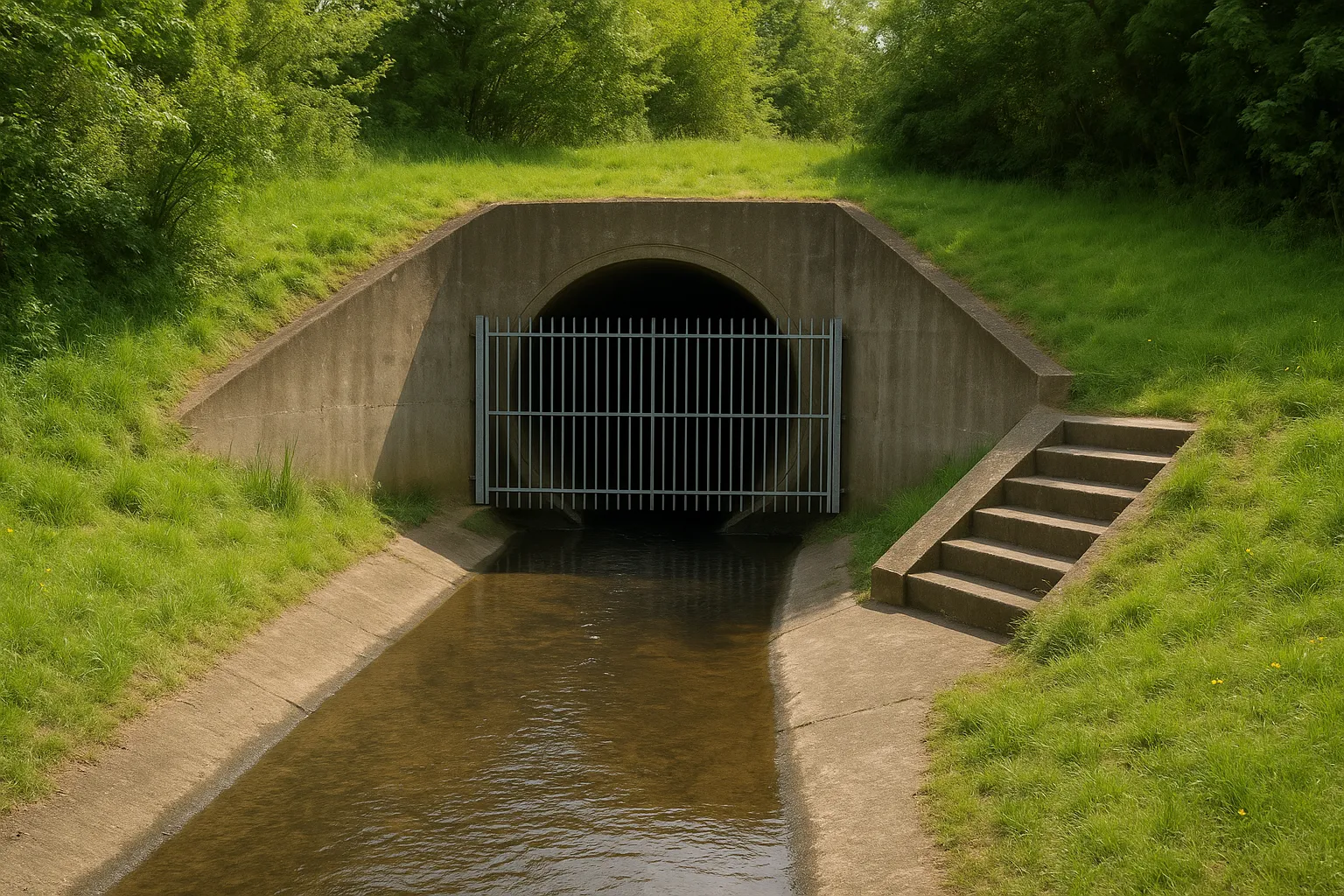
Noah, a student at St Malachy’s College, was located more than 600 metres downstream from his last known sighting, near a culvert inlet situated behind residences on Northwood Road. Throughout the inquest, which has now reached its 16th week, testimony has been provided by various professionals, including civil engineer Brian Pope and risk assessment specialist Dr Mark Cooper. Both experts were part of a cohort that previously submitted collective responses concerning the responsibility of the Department of Infrastructure (DfI) for monitoring and maintaining the culvert site.
In 2017, significant upgrades were made to the culvert entrance, which included the installation of new access steps and a debris screen. However, during today’s proceedings, the experts reflected on the adequacy of these measures. They were presented with photographic comparisons between the 2017 debris screen and its earlier model, which prompted a scrutiny of design modifications. Brenda Campbell KC, representing Noah’s mother, Fiona Donohoe, noted important specifications of the bygone debris screen, observing that it featured 11 bars with an optimal gap of 131-132mm between them, compared to the recommended 144mm spacing needed for compliance and safety.
Campbell probed Dr Cooper on whether the alteration aimed at widening the gaps might have necessitated a comprehensive risk assessment, to which Dr Cooper responded affirmatively. Highlighting his extensive background in addressing serious workplace accidents, he underscored the lack of attention given to public safety concerns at the time of the refurbishment. His testimony revealed a concerning oversight: neither a risk assessment nor appropriate attention to the dangers posed by unauthorised access to the culvert had been conducted.
Dr Cooper elaborated that an evaluation undertaken in 2017 should have taken into account broader health and safety implications, given the proximity of the culvert to an area frequented by children. During a site visit on June 12, 2023, he observed various signs of human activity, including items like tools and children’s play equipment, indicating that residents had been using the land surrounding the culvert as a recreational space.
He stated, “It was foreseeable to me that the land was being used as a playground for individuals. It is bounded and is a green area where children might play and – more than that – it might be seen by parents as a safe place for children to invite their friends.” However, Dr Cooper cautioned that parents likely remained unaware of the inherent dangers that lay beyond the safety of the debris screen.
While a potential risk arising from unauthorised access to the culvert was considered relatively low, the consequences of any incident were recognised as being extraordinarily severe, according to Mr Pope. He noted that a lack of external indicators—like graffiti—did not eliminate the risk of access to the culvert. Responding to questions posed by Neasa Murnaghan KC, who represents the DfI, the experts spoke about the nature of risk assessment and the variability in differing evaluations among professionals.
Mr Pope asserted that if engineers shared identical data during the 2017 evaluations, they should arrive at consistent conclusions. Inquired whether access to the site for the public was entirely unforeseeable, he expressed the contrary belief, suggesting that it represented a low but acknowledged risk, particularly due to its residential surroundings.
The professional discourse continued, with Ms Murnaghan questioning Dr Cooper regarding the expectations surrounding health and safety regulations. In response, he clarified that while outright elimination of risk is not feasible, initiating a comprehensive risk assessment could have substantially altered the protective measures in place.
Dr Cooper’s critical remarks expressed skepticism towards assessments that declare no necessary actions, suggesting that such evaluations might overlook vital safety controls. He firmly asserted, “If you’d have done a proper risk assessment at the time, we wouldn’t be having this conversation now. That’s the problem; it wasn’t done.”
The inquest remains ongoing, with numerous layers of complexity surrounding Noah Donohoe’s tragic passing yet to be fully explored. The implications of public infrastructure maintenance and the associated responsibilities of official agencies are under scrutiny, as the community contemplates the lessons that can be gleaned from this profound loss.
Our Thoughts
The incident surrounding Noah Donohoe illustrates significant oversight in public safety risk assessments related to the culvert refurbishment carried out by the Department of Infrastructure (DfI). Key safety lessons include the necessity for comprehensive risk assessments that account for public access to potentially hazardous areas. UK health and safety legislation mandates employers to assess risks and implement controls to ensure public safety (Health and Safety at Work Act 1974).
In this case, the 2017 refurbishment lacked a thorough evaluation of the risk of unauthorized access, particularly as the culvert’s proximity to residential areas could have made it a point of attraction for children. The experts highlighted missed opportunities for better design and risk management concerning the debris screen, which allowed for gaps that children could pass through.
The failure to recognize and mitigate foreseeable risks not only breached health and safety obligations but also highlighted the importance of assessing changes in infrastructure in light of potential public use. Future incidents could be prevented by ensuring strict compliance with risk assessment protocols and engaging in regular safety reviews of public access points leading to potentially hazardous environments.