















Choose an AI chat
Safety warning issued for anti-wrinkle injections following botulism cases
UK Health and Safety Latest

Safety warning issued for anti-wrinkle injections following botulism cases

by Jade Anderson
July 15, 2026
0

Health authorities in the UK have issued a stark warning over the safety of anti-wrinkle injections, following over 40 reported...

Read moreDetails
Meta introduces new safety measures for its AI chatbot to protect vulnerable youth

Meta introduces new safety measures for its AI chatbot to protect vulnerable youth

July 15, 2026
U.K. proposes midnight social media curfew for older teens amid safety concerns

U.K. proposes midnight social media curfew for older teens amid safety concerns

July 15, 2026
Landlords face challenges in preparing for expanded Awaab's Law compliance

Landlords face challenges in preparing for expanded Awaab’s Law compliance

July 15, 2026
Social media curfew for older teens to tackle online harms

Social media curfew for older teens to tackle online harms

July 14, 2026

Archives

  • July 2026
  • June 2026
  • May 2026
  • April 2026
  • March 2026
  • February 2026
  • January 2026
  • December 2025
  • November 2025
  • October 2025
  • September 2025
  • July 2025
  • August 2009

Categories

  • Health and Safety Help
  • News
  • Policies
  • UK Health and Safety Latest
  • About
  • Advertise
  • Policies
    • Privacy Policy
    • Editorial Policy
    • Corrections & Complaints policy
  • Useful Documents
    • Understanding RIDDOR
    • 10 Workplace Safety Failures
    • A Complete Guide to Reporting Safety Incidents in the UK
    • Fire Risk Assessment: Meeting the Regulatory Reform (Fire Safety) Order
    • COSHH Basics: A Practical Guide to Control of Substances Hazardous to Health
    • Working at Height in the UK: The Essentials (WAH Regulations 2005)
    • Asbestos in the Workplace: Control of Asbestos Regulations 2012 (CAR) Essentials
    • Managing Contractors Under CDM 2015: Roles, Duties & Controls
    • DSE & Ergonomics: Healthy Workstations for Office & Hybrid Teams
    • Lock out Tag out LOTO
    • Workplace Transport Safety: Forklifts, Pedestrians & Traffic Management
    • Noise & Vibration at Work: Practical Controls (2005 Regulations)
    • Confined Spaces in the UK: Safe Entry under the Confined Spaces Regulations 1997
  • Contact
  • Agent
Friday, July 17, 2026
23 °c
London
21 ° Fri
21 ° Sat
18 ° Sun
  • Login
UK Safety News
  • Home
  • News
    • All
    • UK Health and Safety Latest
    Safety warning issued for anti-wrinkle injections following botulism cases

    Safety warning issued for anti-wrinkle injections following botulism cases

    Meta introduces new safety measures for its AI chatbot to protect vulnerable youth

    Meta introduces new safety measures for its AI chatbot to protect vulnerable youth

    U.K. proposes midnight social media curfew for older teens amid safety concerns

    U.K. proposes midnight social media curfew for older teens amid safety concerns

    Landlords face challenges in preparing for expanded Awaab's Law compliance

    Landlords face challenges in preparing for expanded Awaab’s Law compliance

    Social media curfew for older teens to tackle online harms

    Social media curfew for older teens to tackle online harms

    Teesworks offers 26 new job openings as regeneration project boosts local economy

    Teesworks offers 26 new job openings as regeneration project boosts local economy

    Report reveals £10bn waste in PPE procurement during pandemic

    Report reveals £10bn waste in PPE procurement during pandemic

    Man in his 70s dies after cattle incident at Norfolk estate

    Man in his 70s dies after cattle incident at Norfolk estate

    Ministers urged to improve planning for more efficient procurement

    Ministers urged to improve planning for more efficient procurement

    NHS pandemic PPE crisis reveals £10bn waste and planning failures

    NHS pandemic PPE crisis reveals £10bn waste and planning failures

    Trending Tags

No Result
View All Result
UK Safety News
No Result
View All Result
Home News UK Health and Safety Latest

Concerns raised over lift safety standards as body weights increase

Michael Harland by Michael Harland
May 18, 2026
in UK Health and Safety Latest
Reading Time: 4 mins read
0
Concerns raised over lift safety standards as body weights increase

Story Highlight

– Lift safety standards are outdated for modern body weights.
– Average weights in the UK have significantly increased.
– Lift capacity calculations haven’t changed in over 20 years.
– Overestimation of lift capacities may compromise safety.
– Rising obesity rates highlight urgent need for updates.

Full Story

Concerns have been raised about the relevance of lift safety standards in relation to modern body weights, particularly in light of increasing obesity rates. This discussion was brought to the forefront at the recent European Congress on Obesity held in Istanbul, where Professor Nick Finer, President of the International Prader Willi Syndrome Organisation, highlighted the need for updated guidelines concerning lift capacities.

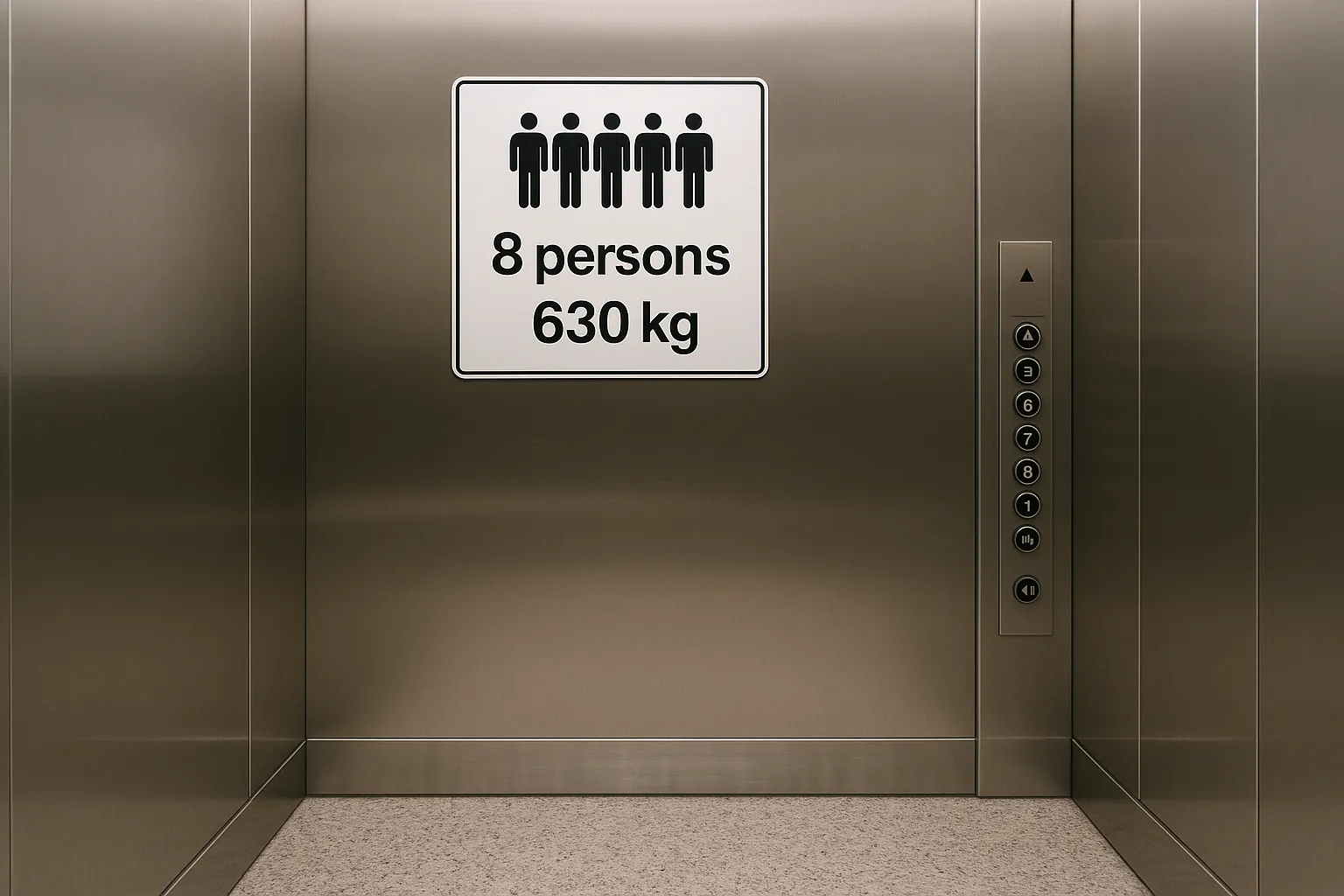
Professor Finer pointed out that current signage indicating maximum passenger numbers and load limits in elevators is outdated. The fundamental issue lies in the fact that manufacturers have not revised their weight assumptions for passengers for over 20 years. Traditionally, the industry has depended on a benchmark maximum weight of 75 kilograms, a figure that dates back to the UK population metrics of the 1970s, a time when average body weights were markedly lower than today.

According to national health data, the average weight for men in the UK has risen significantly from 75 kilograms to 86 kilograms, while for women, the rise has been from 65 kilograms to 73 kilograms. Such statistics, drawn from comprehensive health assessments, underscore a troubling trend associated with increasing obesity. Professor Finer’s analysis included an examination of 112 lifts produced between 1970 and 2024 across seven European nations, where he scrutinised the stated capacity of these elevators in comparison to the upward trajectory of population weights.

His research reveals an intriguing history concerning lift specifications: from 1972 to 2002, load limits in lifts aligned with the gradual increase in average body weights, suggesting a responsive approach by manufacturers. However, this trend ceased post-2002, with no further adjustments made as average weights continued to rise. Professor Finer cautioned that this disconnect between assumed and actual passenger weights could lead to a dangerously misleading overestimation of how many individuals can safely and comfortably utilise a lift.

“This discrepancy could result in situations where lift capacities are overstated, leading to longer waiting times and compromising passenger safety,” Professor Finer remarked. He furthermore addressed the psychological implications, highlighting how the implication that lifts can accommodate more people than is truly comfortable may contribute to the stigmatization of individuals living with obesity.

These revelations are particularly pertinent in the context of current obesity figures in the UK. Recent data from the Scottish Health Survey indicates that approximately two-thirds of adults in Scotland qualify as overweight, with around one-third classified as living with obesity. In England, statistics from the NHS show that as of 2024, 30% of adults are considered obese and 66% fall into the category of overweight or obese.

The rising rates of obesity have prompted calls from health professionals and advocates for a reconsideration of not only lift capacity standards but also public health strategies aimed at addressing this growing crisis. The implications of inadequate lift specifications extend beyond mere inconvenience; they carry significant considerations for public safety and inclusivity.

Experts have underscored the importance of adapting to changing demographics and body weights. The insistence on keeping outdated standards, despite increasing evidence of changing societal factors, suggests a need for greater industry accountability. There is a growing consensus that manufacturers should re-evaluate their benchmarks and ensure that the assumptions underlying lift design are reflective of contemporary realities.

Moreover, there is a call for a broader awareness regarding the societal implications of such standards. Obesity is not merely a matter of individual health; it intersects with issues of accessibility and public health. Creating a transport environment that accommodates all individuals, regardless of body weight, is essential for promoting inclusivity and equality.

As the conversation around obesity continues to develop, so too must the standards and practices that govern public and private transportation infrastructures. The evident gap between evolving body weights and static safety standards poses a challenge that industry leaders, regulators, and health professionals need to address collaboratively.

In summary, the findings presented at the European Congress on Obesity illustrate a critical need for the reevaluation of lift capacity standards in light of changing societal norms and health data. There is an urgent requirement for the industry to align its practices with current realities, to not only enhance safety but to foster an environment of acceptance and understanding for all individuals, particularly those affected by obesity.

Our Thoughts

To prevent the issues highlighted in the article regarding lift safety standards, several measures should be considered. Firstly, manufacturers must comply with the Health and Safety at Work Act 1974, which mandates adequate safety standards and risk assessments. Regular reviews and updates to lift capacity signage should occur to align with current average body weights, ensuring compliance with the Provision and Use of Work Equipment Regulations 1998 (PUWER), which requires that equipment is suitable for its intended use.

Key safety lessons include the necessity of regularly updating safety assumptions and equipment specifications based on current health trends. Failure to do so can lead to violations of the Management of Health and Safety at Work Regulations 1999, which emphasizes identifying and managing risks to protect health and safety.

To prevent similar incidents, ongoing collaboration between health professionals, safety regulators, and lift manufacturers is essential. Establishing a routine audit process could ensure that lift specifications are adjusted in accordance with changing population metrics, thereby safeguarding user safety and comfort while reducing stigma associated with obesity.


SummarizeShare35Share198SendSend
ADVERTISEMENT
Michael Harland

Michael Harland

Related Posts

Woman’s terrifying experience of drink spiking highlights urgent need for bar safety

Woman’s terrifying experience of drink spiking highlights urgent need for bar safety

by Jade Anderson
December 28, 2025
0

A Warwick woman has bravely detailed her harrowing encounter with drink spiking during a night out in Birmingham, revealing how...

NHS pandemic PPE crisis reveals £10bn waste and planning failures

NHS pandemic PPE crisis reveals £10bn waste and planning failures

by Michael Harland
July 14, 2026
0

An inquiry into the UK’s PPE procurement during the Covid-19 pandemic has revealed alarming inefficiencies, including £9.9 billion written off...

Useful Documents

  • Understanding RIDDOR
  • 10 Workplace Safety Failures
  • A Complete Guide to Reporting Safety Incidents in the UK
  • Understanding RIDDOR
  • Fire Risk Assessment: Meeting the Regulatory Reform (Fire Safety) Order
  • COSHH Basics: A Practical Guide to Control of Substances Hazardous to Health
  • Working at Height in the UK: The Essentials (WAH Regulations 2005)
  • Lock out Tag out LOTO

Recent Posts

  • Safety warning issued for anti-wrinkle injections following botulism cases
  • Meta introduces new safety measures for its AI chatbot to protect vulnerable youth
  • U.K. proposes midnight social media curfew for older teens amid safety concerns
  • Landlords face challenges in preparing for expanded Awaab’s Law compliance
  • Social media curfew for older teens to tackle online harms

Recent Comments

  1. Piper Douglas on Worker dies due to inadequate machinery safety measures
  2. Natalie Coleman on New housing laws aim to tackle damp and mould crisis in England
  3. Simon Barrett on Honeymoon ruined by illness as newlywed suffers severe infection in Cape Verde
  4. Nolan Barrett on Work-related ill health in Great Britain remains a concern after pandemic peak
  5. Dylan Reeves on Sickness rates among Scottish police officers soar to troubling levels
UK Safety News

Copyright © 2026
UK Safety News

Navigate Site

  • About
  • Advertise
  • Policies
  • Useful Documents
  • Contact
  • Agent

Follow Us

Welcome Back!

Login to your account below

Forgotten Password?

Retrieve your password

Please enter your username or email address to reset your password.

Log In
No Result
View All Result
  • Home
  • News

Copyright © 2026
UK Safety News

This website uses cookies. By continuing to use this website you are giving consent to cookies being used. Visit our Privacy and Cookie Policy.