















Story Highlight
– French and British forces seized sanctioned oil tanker Tagor.
– Tagor changed flags during its voyage from Russia.
– Ship accused of supporting Russia’s war in Ukraine.
– UK supports French operation against Putin’s shadow fleet.
– Kremlin decries seizure as “international piracy.”
Full Story
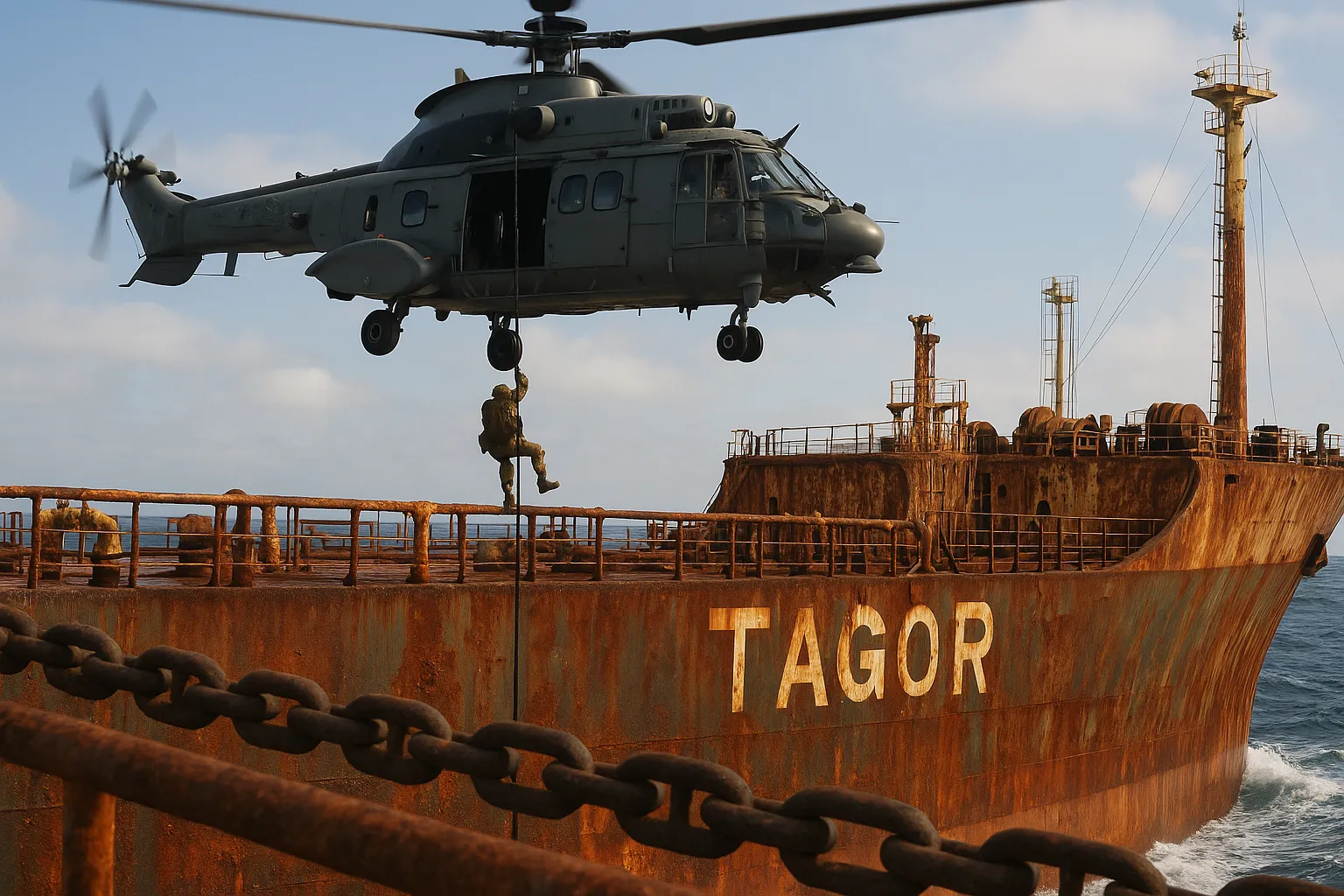
French military personnel descended onto the aging oil tanker Tagor from a helicopter, supported by British forces, as part of a coordinated mission to intercept the vessel, which is suspected of contributing to Russia’s covert maritime operations.
The Tagor had embarked on its journey from Russian ports at the end of May, initially sailing under the flag of Madagascar before changing its registration to Cameroon during its course. However, the maritime register for Cameroon has been non-operational since February, drawing scrutiny towards the tanker as it was alleged to be involved in supplying resources for Russia’s ongoing conflict in Ukraine. The tactics employed by the tanker—changing flags during its journey—rendered it an easy target for European efforts aimed at curbing illicit operations associated with Vladimir Putin’s maritime activities.
As the Tagor navigated towards the Atlantic, the British warship HMS Somerset, which hosts the UK’s Special Forces maritime task force, maintained vigilance in tracking the vessel alongside air support. The operation culminated in the armed boarding of the tanker by French forces approximately 400 nautical miles west of Brittany, an area deemed international waters.
French President Emmanuel Macron announced the successful operation on social media platform X, emphasising the role of allied support from the United Kingdom. He stated, “It is unacceptable for ships to circumvent international sanctions, violate the law of the sea, and fund the war that Russia has been waging against Ukraine for more than four years. These vessels, which fail to adhere to the most basic rules of maritime navigation, also pose a threat to the environment and to everyone’s safety.”
The UK Ministry of Defence corroborated Britain’s involvement in the operation against the vessels associated with Russia’s shadow fleet. In light of rising tensions, especially following the UK Foreign Office’s sanctions against the Tagor for its role in transporting illicit Russian oil globally, the seizure of such vessels has raised questions regarding the UK’s naval actions. Notably, since Sir Keir Starmer pledged to combat Russia’s clandestine fleet, more than 200 sanctioned tankers have passed through UK waters without interception.
In an international context, the legitimacy of boarding a ship influenced by sanctions is tenuous under the United Nations Convention on the Law of the Sea. According to established international maritime principles, vessels are granted a right to innocent passage through international waters. However, once a ship alters its flag during transit—a move that the Tagor executed—it becomes eligible for interception, adding a layer of complexity to the operation’s legality.
The Kremlin swiftly condemned the operation, with spokesperson Dmitry Peskov asserting that the seizure was “bordering on international piracy.” He added that measures were being implemented to safeguard Russian cargoes.
The UK Ministry of Defence defended the engagement, stating that the helicopter deployed from HMS Somerset supported the French forces by monitoring and tracking the situation. The spokesperson highlighted the UK’s commitment to intensifying measures against shadow vessels, stating, “Alongside our allies, we are stepping up our response to shadow vessels – to choke off the funds that fuel Putin’s illegal invasion of Ukraine.”
This multifaceted interception not only reflects the ongoing tensions between Russia and the West but also underscores the complexities of navigating international maritime law. Analysts warn that such operations pose risks of escalation and unintended confrontations on the high seas, as nations grapple with enforcing sanctions while adhering to international legal frameworks.
Much attention remains on how this event might influence future naval operations and the broader geopolitical landscape, especially concerning the UK’s stance amid rising maritime activities linked with Russia. The effectiveness of this operation, paired with international reactions, will likely shape forthcoming strategic decisions involving the management of sanctioned vessels and maintaining security in contested waters.
As the global community continues to scrutinise maritime movements, operations like those involving the Tagor may set precedents that challenge the efficacy of existing international regulations on shipping and sanctions. The surrounding narrative will undoubtedly evolve, especially as political leaders respond to the implications of such military actions within the context of the ongoing conflict in Ukraine. This recent operation illustrates the delicate balance nations must strike when addressing violations versus the overarching commitment to international law and order on the seas.
Our Thoughts
The naval operation to board the Tagor highlights several key safety and regulatory issues that could be improved upon. Firstly, better risk assessment and planning for boarding operations could enhance safety for personnel involved. The UK Health and Safety at Work Act 1974 mandates that employers ensure the health and safety of their employees. Rigorous training and risk mitigation strategies should be in place, especially in potentially hostile maritime environments.
The incident further raises concerns about the compliance with the Health and Safety Executive guidelines on conducting high-risk operations. Clear protocols for equipment checks, proper equipment use during the operation, and ensuring personnel are adequately trained could prevent accidents.
Moreover, the rapid change of the tanker’s flag during its voyage points to a failure in adherence to the International Maritime Organization regulations, which establish guidelines on flag state responsibilities. Ensuring transparency in maritime operations can mitigate illegal activities and enhance safety.
To prevent similar incidents, establishing enhanced international cooperation with stronger monitoring and compliance mechanisms for shipping regulations could be beneficial. Regular audits and increased surveillance of flagged vessels may deter illicit activities while ensuring compliance and safety on the high seas.