















Story Highlight
– Schools in Kent to close due to extreme heatwave.
– Amber and red weather warnings issued for high temperatures.
– Tonbridge Grammar School prioritizes students’ comfort and health.
– Rail disruptions expected; travel advised only if necessary.
– Several businesses and events canceled during heatwave period.
Full Story
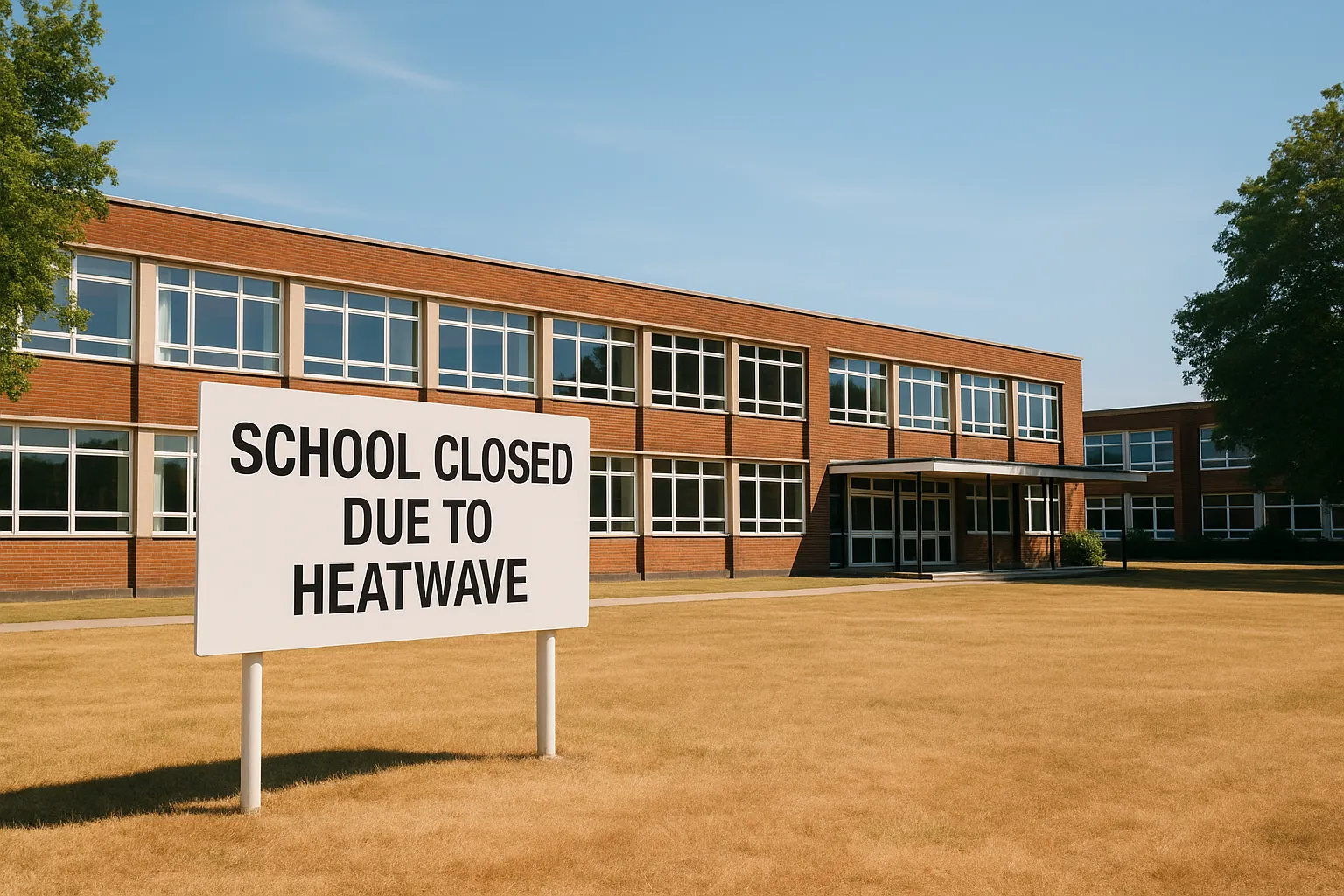
Schools across Kent are preparing for closures as an intense heatwave is forecasted to envelop the region, persisting until Thursday. Among these closures, Tonbridge Grammar School has opted to suspend lessons to ensure that students can work in more comfortable conditions, given the soaring temperatures.
The heatwave has raised serious concerns, with multiple weather warnings and health advisories being issued as temperatures are predicted to approach record levels, potentially nearing 40 degrees Celsius. The Met Office currently maintains an amber warning for extreme heat throughout Kent, valid until Thursday, June 25. Additionally, a rare red alert has been implemented for certain areas, such as Tunbridge Wells, Sevenoaks, Dartford, and Gravesend, set to take effect tomorrow (June 24) from 9 am until 9 pm the following day.
In a notice to parents and students, Tonbridge Grammar School stated, “Following a careful review of current conditions, including the high temperatures in classrooms, the potential challenges for students travelling to and from school particularly given the reliance on public transport and the limited availability of well-ventilated spaces across the site, we have taken the decision to close the school to students tomorrow. We are mindful of the heat and do not expect students to be on screens continuously throughout the day.” They emphasized their commitment to adapting work so that students can take regular breaks and can complete tasks in more temperate environments.
As for other educational institutions, Chiddingstone Church of England School in Edenbridge will also close early at 1:30 pm on both Wednesday and Thursday during the duration of the red weather alert. The ongoing heat has prompted several businesses to shut their doors, and Network Rail has advised commuters to limit travel to essential journeys only within red warning zones.
Southeastern rail services have cautioned passengers about potential disruption to their operations on the upcoming Wednesday and Thursday, indicating a possibility of incomplete journeys. David Davidson, the Chief Operating Officer, remarked, “Our teams are working hard and doing everything we can to ensure we can keep people safely moving this week. Because of the extreme heat, we are advising customers to only travel if absolutely necessary.” Additional measures, including increased staffing at stations and on trains, alongside the provision of water, have been implemented to enhance passenger safety.
Despite the challenging conditions, Thameslink has confirmed that its train services will continue, albeit with reductions in certain sections of the network. The operator is enforcing reduced speeds for safety reasons, which will likely lead to delays, cancellations, and last-minute changes to the timetable.
A number of local businesses have declared temporary closures in response to the extreme weather from today (June 23) through Thursday. Eagle Heights, a bird of prey sanctuary located in Eynsford, has closed its doors for the welfare of both its animals and visitors, assuring ticket holders that they will be contacted to rearrange their visits. Other closures include Blue Gem, a food truck and catering service in Snodland, and several venues operated by the dance organisation Ceroc throughout Kent. Tiny Tims, a tea room in Rochester, will remain closed today but plans to resume operations seamlessly for the rest of the week. Meanwhile, The Woodlands Café in Aylesford is expected to remain closed on Wednesday and Thursday, with plans to reopen on Friday, June 26.
Event cancellations have also marked this period, including a scheduled flag-raising ceremony in Gravesend at the Civic Centre, which has been called off. The local council confirmed that although the ceremony did not proceed, the flag was raised as a gesture of gratitude and support for the community. Moreover, Medway Sport has announced that various PlayZone events, comprising football, netball, and pickleball sessions at The Strand in Gillingham, will not take place in light of the extreme weather.
As the week progresses, forecasts suggest a strong likelihood that the UK may witness record-breaking June temperatures. Maidstone is predicted to reach a sweltering high of 36 degrees Celsius on Wednesday, coinciding with the peak of the heatwave. Other locations, such as Dartford, could see temperatures reach 35 degrees, while Faversham and Canterbury may hit 34 degrees.
Experts warn that this heatwave could lead to considerable challenges, impacting vulnerable groups most severely. Mark Sidaway, the deputy chief forecaster for the Met Office, stated, “We’re expecting severe and significant impacts from this heatwave, with health impacts likely for many, even beyond those who are normally more vulnerable to the heat. As well as very high daytime temperatures, there will be consecutive nights where temperatures do not drop below 20°C, which is called a Tropical Night. This will make it very hard for people to recover from the daytime heat, exacerbating the heat stress impacts.”
The UK Health Security Agency (UKHSA) has issued alarming health warnings, indicating that this heatwave is likely to strain health and social care services, anticipating an increase in mortality rates, particularly among the elderly and those with pre-existing medical conditions. This coincides with the narrative of increasing climate challenges and highlights the urgent need for communities to prepare for such extreme weather events.
Our Thoughts
The decision to close schools and businesses during the extreme heatwave reflects a proactive approach to safeguarding health and safety; however, several improvements could have minimized risks further. Firstly, schools could have enhanced existing ventilation and temperature control systems preemptively, as outlined in the Health and Safety at Work Act 1974, which mandates maintaining a safe working environment.
Employers should ensure adequate risk assessments are conducted regularly, particularly in anticipation of severe weather changes, in line with the Management of Health and Safety at Work Regulations 1999.
Training staff on heat stress prevention and implementing flexible work arrangements could also mitigate risks of heat-related illnesses. The UKHSA warnings underscore the need for public health messaging and infrastructure improvements to address heat risks, especially for vulnerable populations.
Furthermore, while closure was a necessary response, better communication about safety protocols and resources available during such events could enhance overall preparedness for future incidents. Regular review of emergency planning and community health strategies would contribute to a comprehensive approach in mitigating similar situations.