
















Story Highlight
– Harry and Meghan support UK social media age ban.
– Criticism received for perceived condescension in statement.
– Concerns raised about tech firms’ pushback on restrictions.
– Parents urged to take responsibility for children’s online safety.
– Duchess highlighted children’s online safety as a public health issue.
Full Story
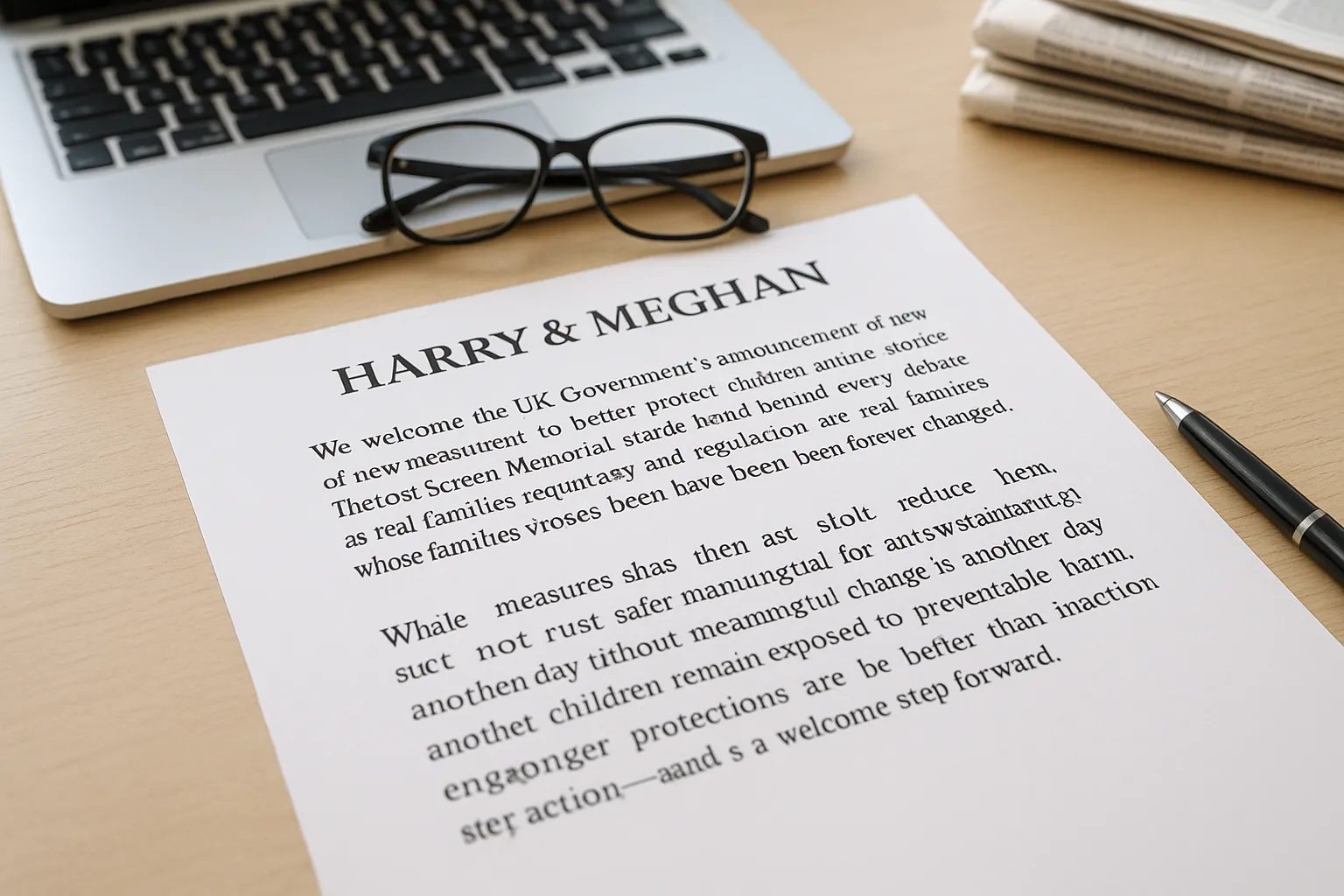
Prince Harry and Meghan Markle have faced backlash following a statement they issued regarding recent UK Government proposals aimed at enhancing children’s safety on social media platforms. The Duke and Duchess of Sussex expressed their approval of the government’s forthcoming ban on social media use for individuals under the age of 16, describing it as “a welcome step forward.” Nevertheless, they cautioned that more extensive measures are required to effectively shield children from harmful content online.
The announcement was made by Sir Keir Starmer, the leader of the Labour Party, who highlighted growing worries about the negative impact of social media on young people. He emphasised that the present landscape is detrimental to children’s mental well-being and urged the government to take decisive action.
Support for the plan emerged from various quarters, including bereaved families and advocates for child safety. However, it did not go without criticism. Certain technology companies voiced concerns that this initiative could drive young users towards less regulated online environments, potentially exacerbating the issues it aims to address.
Within their statement, Harry and Meghan acknowledged the significance of the ban but underscored that such measures, while beneficial, do not address the underlying problems associated with online safety. They stated, “While measures such as these help reduce harm, they do not fix the problem at its source.” This remark reflects their ongoing advocacy for a comprehensive approach to safeguarding children in digital spaces.
Despite their supportive stance, the couple’s comments have led to criticism from some quarters of the public, particularly on social media platforms. Reactions varied widely, with some individuals labelling their message as condescending. One user expressed frustration on X, stating, “This annoys me to NO end. They say in this condescending statement that ‘the burden cannot rest solely on parents and children. It must also be borne by the companies.’ Bull****. Why isn’t it the parents’ responsibility to parent and monitor their children’s online activity?”
Another user echoed these sentiments, calling for parents to take a more proactive role in managing their children’s social media use, stressing that parenting duties should not be outsourced to companies, suggesting that “social media is not a right, it’s a privilege.”
Critics also targeted the couple’s perceived hypocrisy, with one comment pointing out, “Harry & Meghan lecturing on protecting kids from social media? These two have zero relevance to UK policy yet insert themselves for headlines while Meghan posts their own children online for clout.”
In their official statement, the Sussexes referred to personal stories shared through The Lost Screen Memorial, a project dedicated to honouring victims of online harm. In their remarks, they noted the responsibility is not solely on parents but must also be shared by companies that facilitate online interactions. They stated, “Lasting change requires safer platforms by design, meaningful accountability, and a commitment to putting children’s wellbeing ahead of engagement and profit.”
The couple’s advocacy is showcased by Meghan’s previous speech at the opening of the Lost Screen Memorial in Geneva, where she prioritised the need for heightened protections for children in the digital realm. She framed children’s safety on the internet as a pressing public health matter, reiterating that significant action must be taken at various levels to prevent further tragedies.
The reaction to the Sussexes’ involvement with children’s online safety exemplifies a broader societal dialogue about the responsibilities of parents, digital companies, and policymakers. Some critics argue that holding technology firms accountable dilutes parental responsibility, while advocates assert that comprehensive measures must be employed to create safer online environments for the younger generation.
As the debate surrounding children’s online safety continues, the UK government’s proposal stands as a significant step toward protecting its youth in a rapidly evolving digital age. Yet, the challenge remains in balancing parental responsibility with institutional accountability, all while navigating the powerful interests of the technology sector.
The concerns raised by various stakeholders—in particular, parents, advocates for child safety, and even the tech industry—highlight the complexity of forming effective policy responses to the pervasive influence of social media on young people. The discourse surrounding this issue invites further scrutiny of the role of social media platforms, the responsibilities of parents, and the critical need for a unified approach to safeguarding children’s wellbeing.
As this situation develops, it is likely the debate will not only persist but also evolve, prompting a call for continued attention from parents, policymakers, and society as a whole to ensure that children can navigate the digital landscape safely. The balance between engagement and profit versus child welfare remains a contentious issue requiring ongoing dialogue and action from all sectors involved.
Our Thoughts
The article primarily discusses the comments made by Prince Harry and Meghan Markle regarding the UK government’s new measures on children’s online safety. To avoid potential oversights in the protection of children online, several key safety lessons can be highlighted:
1. **Enhanced Regulation of Social Media**: The forthcoming ban on under-16s using social media must be supported by stricter regulations on how platforms manage content and user safety. The UK could implement the provisions under the Online Safety Bill, which seeks to hold companies accountable for harmful content.
2. **Parental Responsibility**: While external regulations are critical, parents play an essential role in monitoring their children’s online activities. Clear communication about online safety and reinforced parental controls can mitigate risks.
3. **Education on Digital Literacy**: Incorporating digital literacy into school curriculums can empower children to navigate online environments safely, fostering a culture where children understand the risks and know how to report harmful content.
4. **Meaningful Accountability for Companies**: The discussion points to a need for companies to be held legally liable for failures in protecting children online, suggesting the enforcement of existing Health and Safety regulations to ensure that safeguarding measures are a priority.
Addressing these areas could prevent future incidents of digital harm and align with the Health and Safety at Work Act by ensuring safe environments for children, both online and offline.