














Story Highlight
– MHRA approves world’s first lower-carbon beclometasone inhalers.
– New inhalers reduce carbon footprint by up to 90%.
– Available in 100 and 200 microgram dosages for asthma.
– Uses environmentally friendly propellant HFA-152a for delivery.
– Safety and effectiveness will be monitored post-approval.
Full Story
The Medicines and Healthcare products Regulatory Agency (MHRA) has announced a significant advancement in asthma treatment with the approval of innovative inhalers designed to reduce carbon emissions. This landmark decision, revealed on 21 July 2026, heralds the release of the world’s first metered-dose inhalers that utilise an environmentally sustainable propellant, marking a pivotal moment in the management of asthma for millions of patients across the UK.
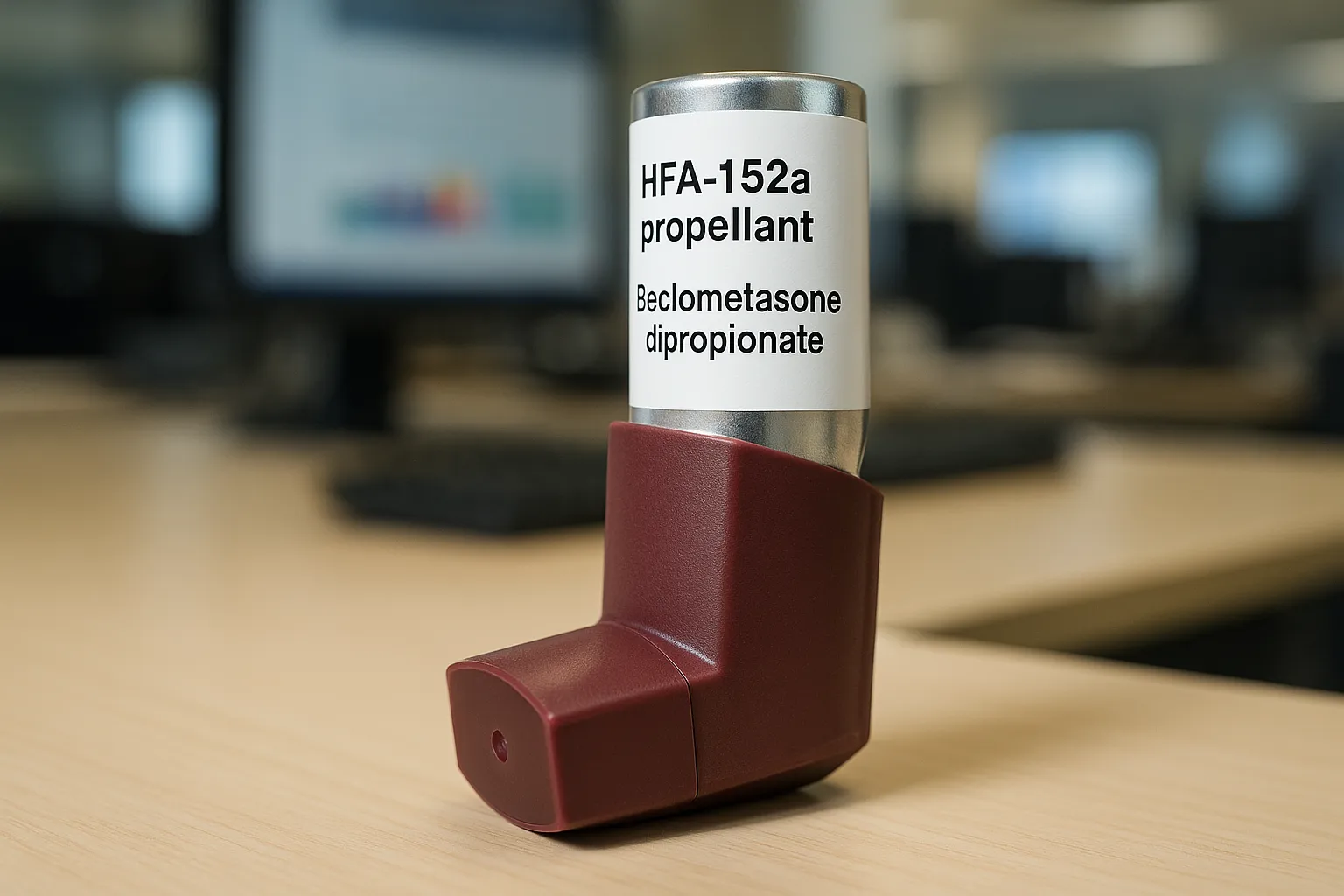
Currently, over seven million individuals in the UK are living with asthma, making it one of the country’s most prevalent long-term health conditions. The newly approved Clenil Modulite inhalers will now incorporate beclometasone dipropionate as an active ingredient while featuring the new propellant, HFA-152a. This development enables patients to utilise their familiar medication while achieving a substantial reduction in the environmental impact associated with traditional inhaler propellants, with a decrease of up to 90% in their carbon footprint.
The approval received from the MHRA represents a pioneering step in inhaler technology, as these updated products will be the first in the world to leverage HFA-152a as a propellant in pressurised metered-dose inhalers (pMDIs). While not a medicinal substance itself, this next-generation propellant is crucial for effectively delivering the inhaled medication to patients suffering from asthma.
The launch of the new Clenil Modulite inhalers is anticipated to take place within this year, allowing for a gradual transition while existing inhalers remain available to current users. This initiative aligns with the government’s commitment to both healthcare innovation and environmental responsibility.
Julian Beach, the Executive Director of Healthcare Quality and Access at MHRA, expressed the importance of the approval, stating, “Keeping patients safe and enabling their access to high-quality, safe and effective medicines are key priorities for us. Asthma inhalers play a vital role in helping millions of patients manage their condition and maintain their quality of life.” The adoption of HFA-152a not only advances patient care but also illustrates a commitment to enhancing environmental sustainability.
The inhalers are designed to provide consistent relief from asthma symptoms, effectively controlling inflammation in the patients’ airways. While the active ingredient remains unchanged, alongside recommended dosages and therapeutic applications, the formulation is backed by thorough research indicating its effectiveness comparable to existing authorised products.
Patients should be aware of the common side effects associated with beclometasone inhalers, which often include oral thrush, hoarseness, and throat irritation. Health professionals have emphasised that potential side effects will be comprehensively addressed in the updated Patient Information Leaflet (PIL) and the Summary of Product Characteristics (SmPC), which will be made available once the new inhalers are officially released.
In a statement on the official government website, it was noted that the MHRA will diligently continue to surveil the safety and efficacy of beclometasone dipropionate. Individuals who suspect that they are experiencing adverse effects are encouraged to consult with their healthcare provider and report any concerns through the Yellow Card scheme or via the dedicated MHRA Yellow Card application.
Asthma remains a widespread condition affecting the respiratory system, characterised by symptoms such as wheezing, persistent coughing, feelings of tightness in the chest, and shortness of breath. As healthcare professionals continue to monitor the effects of the new inhalers, there is cautious optimism that this innovation will positively impact patients’ daily lives by enhancing both health outcomes and reducing environmental footprints.
With the introduction of these new inhalers, the MHRA aims to lead a transformative approach in the healthcare sector that advocates for both patient welfare and ecological conservation. The integration of greener technologies in medical treatments stands as a testament to the dynamics of advancing healthcare practices while being responsibly attuned to the needs of our planet.
As Britain grapples with climate challenges, initiatives such as this one may pave the way for subsequent innovations in pharmaceutical care, setting a benchmark for future products that prioritise both health and environmental stewardship.
Our Thoughts
The article focuses on the approval of a new lower-carbon beclometasone inhaler by the MHRA, aimed at asthma patients. While this advancement is significant for environmental and patient care, key safety lessons can be drawn regarding the management of inhalers and patient education.
To prevent potential issues, manufacturers should ensure robust communication about new inhaler technology and its implications for patient safety, especially in transitioning to new propellants like HFA-152a. Training healthcare professionals on these changes is essential to uphold the Health and Safety at Work Act 1974, which mandates appropriate health and safety training.
Additionally, adherence to the Medicines for Human Use (Clinical Trials) Regulations 2004 is crucial for ensuring that new inhaler formulations undergo thorough testing for any new side effects or performance issues. Continuous monitoring and transparent reporting are vital, emphasizing the importance of the Yellow Card scheme for reporting adverse effects.
To avoid similar incidents in the future, regular safety audits and risk assessments should be conducted on all inhalers to monitor their performance and the safety of new propellants. This proactive approach will enhance the safety of asthma management in the UK.