












Story Highlight
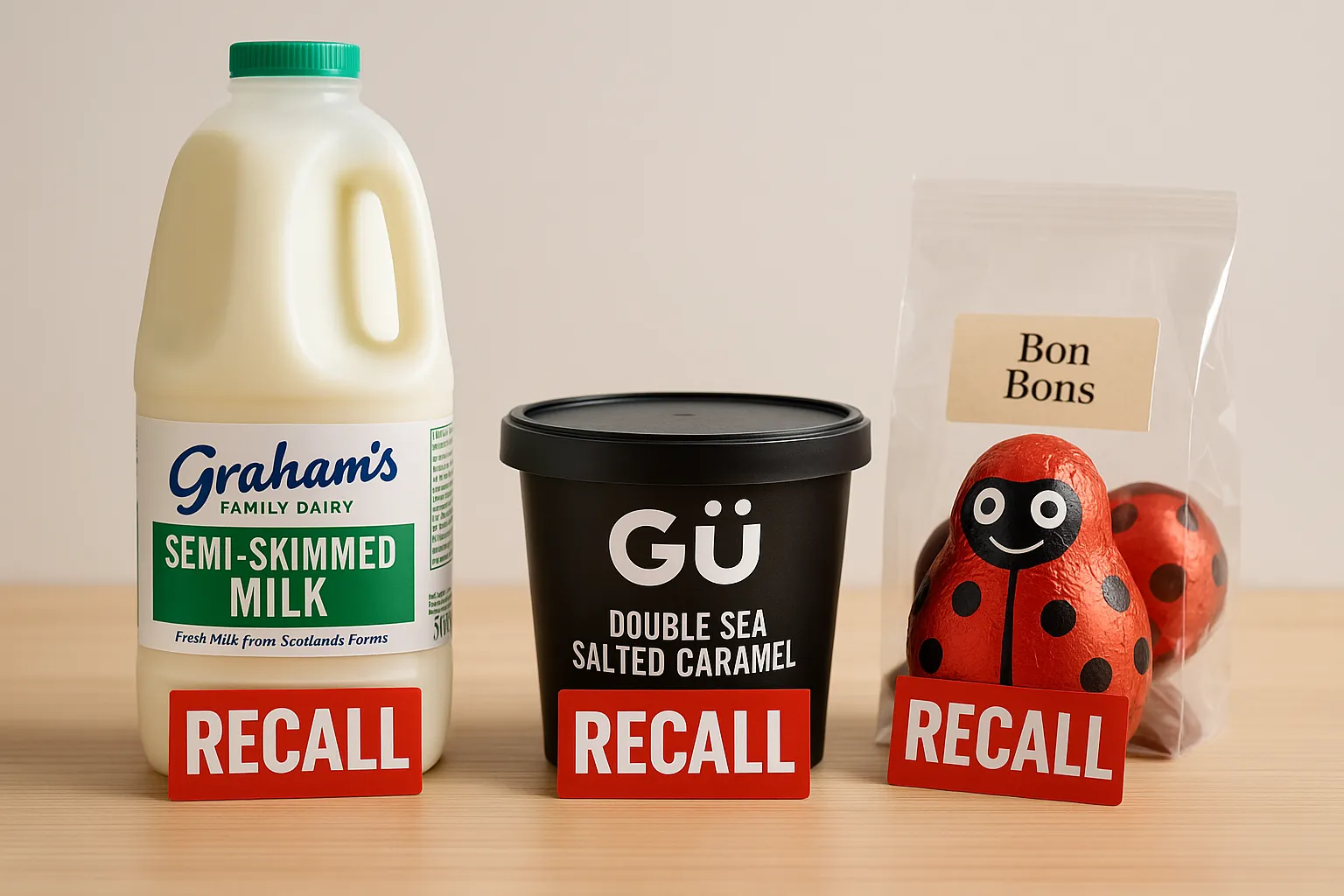
– FSA recalls chocolate, milk, and dessert products nationwide.
– Undeclared allergens and veterinary medicines prompted the recalls.
– Affected chocolate contains undeclared milk and soya allergens.
– Milk products may contain antibiotics, posing health risks.
– Gü dessert recalled for undeclared hazelnuts and soya allergens.
Full Story
The Food Standards Agency (FSA) has released several food safety alerts concerning a variety of products, including chocolate, milk, and frozen desserts. Consumers have been advised against consuming certain affected items due to potential health risks, prompting recalls across the UK.
The recall notices have stemmed from issues such as undeclared allergens and the possible presence of veterinary medicines. Shoppers who have purchased these products are encouraged to refer to the information provided and adhere to the recall instructions, which may involve returning the products to the store for a full refund.
### Recalled Chocolate Products Due to Undeclared Allergens
A number of chocolate items distributed in England, Scotland, and Wales are being recalled due to the presence of undeclared milk and soya. Bon Bons Wholesale Ltd, the retailer involved, has taken immediate action by notifying shops to pull these products from their shelves.
The FSA has specifically warned individuals with allergies or intolerances to milk or soya about these products, as the critical allergens were not accurately mentioned on the labels. An FSA representative remarked, “These products contain milk and soya making them a possible health risk for anyone with an allergy or intolerance to milk or milk constituents and/or an allergy to soya.”
The specific chocolate products affected include:
– **Medium Coloured Ladybird**: Best before dates of March 1, 2027, and January 16, 2028
– **Small Red Ladybird**: Best before January 21, 2027, and January 25, 2027
– **Large Red Heart**: Best before November 22, 2027, December 23, 2027, and December 26, 2027
– **Mini Butterflies**: Best before March 21, 2027, and September 9, 2027
– **Sports Car**: Best before August 15, 2027
Consumers who possess any of these products are urged to refrain from consumption and return them to the place of purchase for a full refund. Bon Bons Wholesale Ltd has also expressed its commitment to consumer safety, stating, “We take our responsibility to consumers extremely seriously and always aim to ensure the highest possible standards of product safety.” For further queries, customers are encouraged to contact the company at enquiries@bonbons.co.uk or call 01937 840681.
### Milk Recalls from Tesco and Asda Due to Possible Contamination
In a related recall, semi-skimmed milk sold in Tesco and Asda stores is being withdrawn due to the potential presence of veterinary medicines, specifically the antibiotic penicillin. Graham’s Family Dairy has initiated a voluntary recall for its semi-skimmed milk products available in various sizes: one pint, one litre, and two litres.
Shoppers who have recently purchased this milk are advised against consuming it and should return it to the point of sale for a refund. The FSA has cautioned customers about the potential health risks posed by the affected milk.
Graham’s Family Dairy has explained that the recall is a precaution undertaken due to the slight risk associated with trace levels of antibiotics that may be present in the milk. A company spokesperson emphasized, “At Grahams Family Dairy we believe that the quality of our products and the safety of our consumers is paramount.” Customers are reminded to check for milk with a best before date of July 31, 2026.
### Concerns Over Undeclared Allergens in Gü Frozen Dessert
In addition to the aforementioned recalls, the FSA has warned that a Gü frozen dessert sold at Tesco and Waitrose stores should not be consumed due to undeclared ingredients such as hazelnuts and soya. The affected product, Gü Double Sea Salted Caramel Frozen Dessert, must have the lot number 126135 with a best before date set for June 30, 2027.
The FSA has advised that this dessert poses a risk to individuals with allergies to nuts, specifically hazelnuts, or soya. Customers in possession of this product are instructed to return it to the retailer for a full refund without the need for a receipt. For additional information, consumers can reach out to Gü at recall@gupuds.com.
A representative for Gü mentioned that this issue is thought to be limited to a small number of products, estimated to be less than ten units. Nevertheless, the company has taken key steps to mitigate future issues, including enhancing allergen and packaging controls during production.
### Understanding Food Recalls and Consumer Safety Alerts
When food safety issues arise, products can either be withdrawn from sale or formally recalled. Withdrawals often occur before a product reaches consumers, while a recall involves customers who have already purchased the item being asked to return it.
The Food Standards Agency regularly disseminates food safety alerts to keep consumers and local authorities informed about potential health risks associated with specific products. These alerts may include Product Withdrawal Information Notices and Product Recall Information Notices. In more critical situations, the FSA may issue a Food Alert for Action, detailing necessary actions for local authorities to ensure consumer safety.
If you possess any of the products mentioned in the recalls, it is crucial not to consume them. Carefully review product details and comply with the manufacturer’s instructions regarding returns for refunds or safe disposal.
Our Thoughts
The incidents reported reveal significant lapses in food safety, primarily related to undeclared allergens and the presence of veterinary medicines in food products. To prevent such occurrences, rigorous adherence to UK food safety regulations, including the Food Safety Act 1990 and the Food Labelling Regulations 1996, is essential.
Key safety lessons include implementing stringent allergen management systems and ensuring that all ingredients are accurately disclosed on product labels to protect consumers with allergies or intolerances. Regular audits and training for staff on allergen controls could enhance awareness and compliance.
The recalls also indicate breaches of the General Product Safety Regulations 2005, which mandate products must be safe for consumers. Prompt action in removing potentially hazardous products from shelves is crucial, and companies should strengthen their quality assurance processes to prevent contamination from veterinary medicines.
To mitigate future risks, manufacturers must conduct thorough risk assessments, maintain robust traceability systems, and establish effective communication channels for customers and retailers regarding product safety alerts. Regular reviews of food safety practices can further help in identifying and addressing potential risks proactively.