













Story Highlight
- Two arrested for damaging traffic scanners in Ilfracombe, Devon.
- Blade Runners claim scanners cause health risks and surveillance.
- Similar attacks reported across Britain, including Cambridge and Sleaford.
- Experts refute claims about traffic scanners’ purpose and health effects.
- Conspiracy theories reflect fears about technology and surveillance.
Full Story
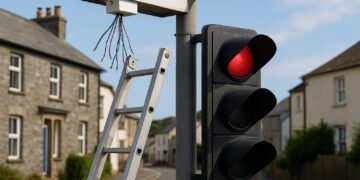
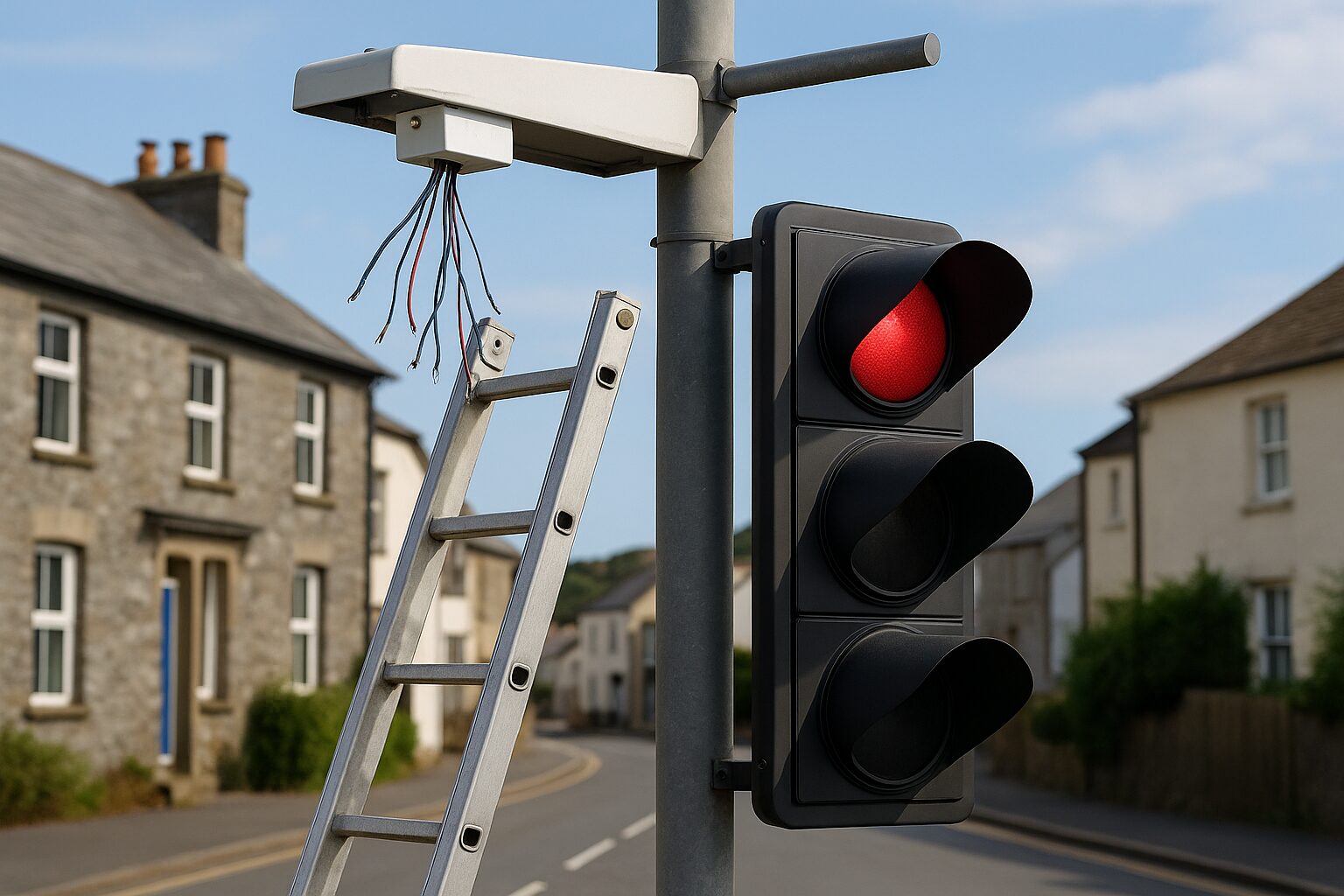
UK conspiracy theorists have targeted traffic scanners in Britain, leading to the arrest of two individuals in Ilfracombe, Devon. This follows footage that emerged showing an older woman on a ladder cutting wires from equipment above traffic lights. The video, posted on social media on 28 August, featured a grey-haired man assisting her while others recorded the incident, with one voice reportedly urging, “Just cut the wires.”
A woman in her 60s and a man in their 70s were subsequently arrested and released on bail on suspicion of criminal damage and endangerment to road users. Their identities have not been disclosed and the allegations remain untested in court. The footage incited mixed reactions online, including praise, with one commenter stating, “Not all heroes wear capes,” and others advocating for similar actions in Bideford and Barnstaple.
The activities in Ilfracombe are part of a broader pattern of vandalism against traffic-detection equipment across the UK, associated with the movement known as the ‘Blade Runners’. Earlier this year, police in Cambridge issued appeals for information after nearly 200 traffic-detection units were damaged. In Sleaford, Lincolnshire, ten units were vandalised within a week, prompting local officials to dismiss the conspiracy claims surrounding the technology as “ridiculous.” A pensioner in County Durham is facing trial for allegedly damaging traffic light units at eight locations.
Incidents have also been reported concerning Ulez cameras in London and 5G infrastructure amid unfounded conspiracy theories linking them to COVID-19. Activists have specifically described traffic scanners as “phased array electronic assault weapons,” claiming they facilitate mass surveillance and can lead to serious health problems, including cancer and dementia. However, these assertions are not supported by factual evidence.
Susan Grant-Muller, a professor at the University of Leeds’s Institute for Transport Studies, explained that the technology in question has been in use since the late 1970s. She noted that the sensors above traffic lights help monitor vehicle and pedestrian numbers, allowing traffic signals to be adjusted accordingly. “The cameras aren’t recording any personal information at all,” she affirmed, noting that they only detect the presence of vehicles or pedestrians.
The concept of better monitoring for improving road safety is also supported by the charity Living Streets. Its director of external affairs, Tanya Braun, suggested that such technology could enhance safety at crossings when integrated into a smarter road safety approach.
Despite these explanations, individuals who believe in the scanners’ nefarious purposes continue to voice their concerns. Clare Birchall, a professor at King’s College London, noted that these theories reflect fears of surveillance and individual freedoms, tying into what some refer to as a “super-conspiracy.” Stephan Lewandowsky, a professor at the University of Bristol, added that conspiracy theories often arise from fear and uncertainty, serving as a coping mechanism.
The repercussions of these actions have been tangible, with damage to traffic equipment and ongoing police investigations. The evidence to date has not validated the conspiracy theories regarding health risks or surveillance capabilities associated with traffic scanning technology. Nonetheless, the strong public suspicion of such technology has translated into physical attacks on critical infrastructure on British roads.
Source: read the original report.
What this means for your site
The incidents involving damage to traffic scanners highlight significant deficiencies in risk management and infrastructure protection that could be addressed under relevant UK health and safety legislation. The Health and Safety at Work etc. Act 1974 emphasizes the need for employers and those in control of premises to ensure the safety of others who may be affected by their activities. In this case, stronger oversight and proactive measures could have prevented these acts of vandalism that endanger public safety. The Management of Health and Safety at Work Regulations 1999 additionally mandates risk assessments to identify potential hazards, which in this instance should include public discontent surrounding surveillance technology. A concrete step to enhance safety could involve conducting community engagement initiatives to address public concerns regarding traffic scanners, thereby fostering trust and deterring vandalism. Furthermore, regular inspections of traffic infrastructure, combined with CCTV surveillance and security personnel, could serve as a deterrent against such acts and ensure prompt reporting of any suspicious activities. Implementing these strategies could help mitigate future risks and protect critical infrastructure from damage and disruption.