
















Story Highlight
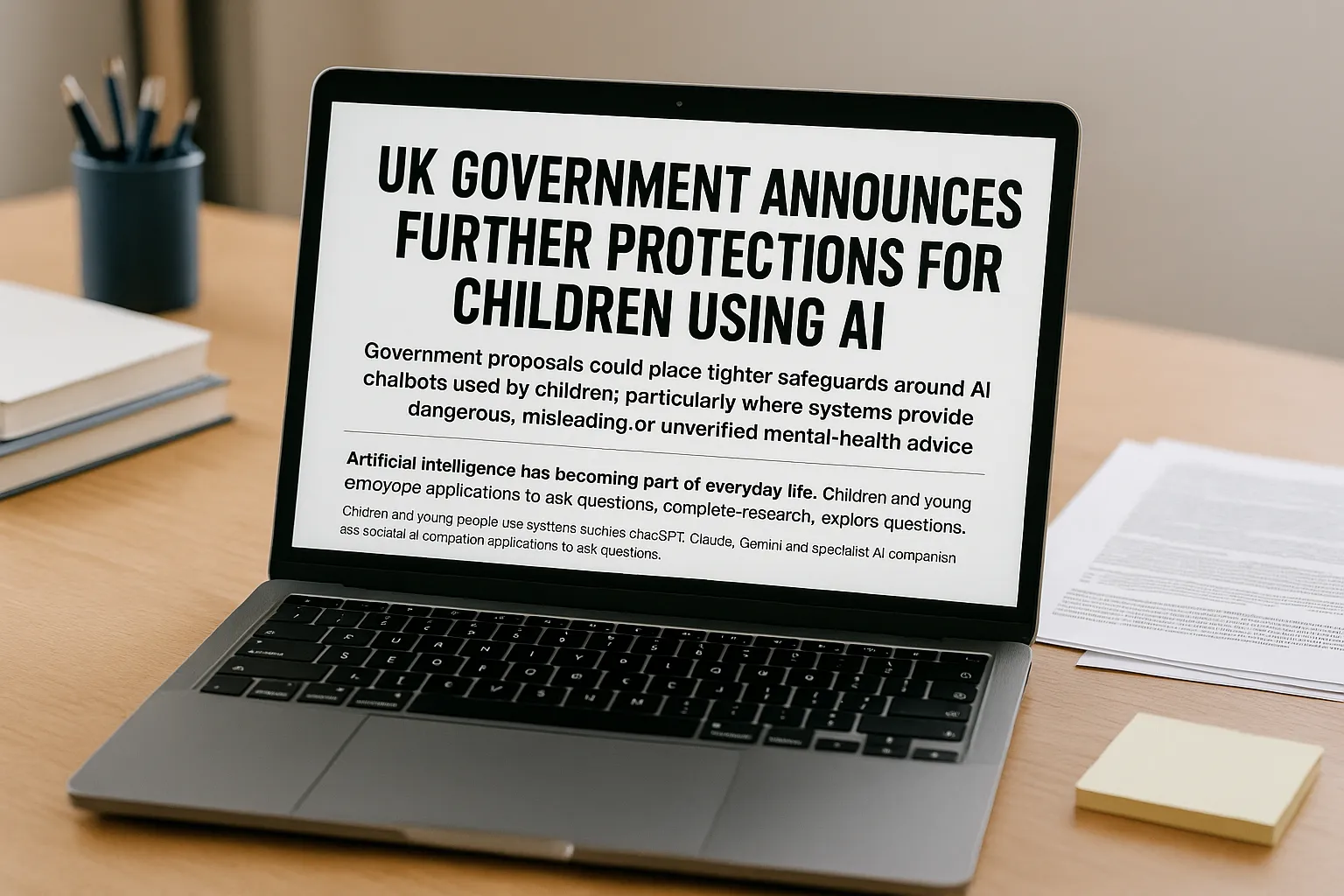
– UK government proposes tighter safeguards for children’s AI use.
– Concerns include harmful content and unreliable mental-health advice.
– Ministers suggest potential bans on dangerous chatbots.
– AI can provide benefits but may cause emotional dependency.
– Regulation aims to balance safety and accessibility of AI.
Full Story
In response to the growing integration of artificial intelligence (AI) into daily life, particularly as it pertains to the younger generation, the UK Government has announced plans to introduce enhanced protections for children engaging with AI chatbots. These measures specifically target the use of AI systems that may inadvertently provide dangerous or misleading mental health advice, ensuring a safer online environment for children.
AI technologies have swiftly established themselves as accessible tools for children and adolescents, allowing them to research, explore new ideas, and engage in conversation. Notable systems like ChatGPT, Claude, and Gemini have become customary options for the younger demographic. While the Government acknowledges the potential benefits of these technologies for educational and exploratory purposes, it has also voiced concerns regarding the risks associated with harmful content, emotional dependence, and the reliability of advice dispensed by these systems.
In July 2026, the Government revealed proposals aimed at tightening regulations governing children’s engagement with AI chatbots. Among the actions considered are mandatory breaks for users under the age of 18, working alongside regulatory bodies to address services that offer dubious mental health guidance, and possibly banning chatbots that pose serious threats to children’s wellbeing. It is essential to clarify, however, that these initiatives do not constitute a wholesale ban on AI chatbots for minors. Instead, the emphasis lies in fostering a safer environment while enabling children to harness the benefits of AI.
The Government’s apprehensions stem from the nature of mental health discussions, which differ significantly from everyday inquiries about mundane topics such as homework or recipes. Young individuals facing mental health challenges—ranging from anxiety and depression to eating disorders—are particularly vulnerable to the language and nuances of AI-generated responses. Research has cited concerns regarding the dissemination of inaccurate information, the risk of emotional dependency, excessive usage patterns, privacy vulnerability, and the capacity for AI to simulate empathy or friendship.
Ofcom, the communications regulator, has reported instances where AI chatbots have provided harmful responses related to self-harm and suicidal ideation. This evidence underpins the Government’s consideration of more robust regulatory measures, as existing legislation does not adequately encompass private interactions between users and standalone AI systems.
A prevailing misconception is the assumption that AI, being a technological construct, is inherently truthful. In reality, AI systems can produce inaccurate or misleading information for various reasons, including misunderstanding user queries, providing outdated information, or reflecting the biases of their training data. This phenomenon, often referred to as “AI hallucination,” presents considerable risks in situations where users seek advice on critical issues such as medication, symptoms, or mental health.
Despite these concerns, the discussion surrounding AI is not solely negative. The Government’s consultations have identified numerous advantages, including personalised learning experiences, increased accessibility for individuals with disabilities, and enhanced creativity. The crucial inquiry is not whether AI is fundamentally constructive or detrimental, but how society can maintain its benefits while minimizing potential harms.
AI chatbots can offer immediate access to information, an invaluable feature for individuals seeking answers outside regular working hours. However, such availability should not equate to professional expertise, especially when communicating sensitive information. Furthermore, text-based AI serves as a non-judgmental avenue for expression, which may encourage those hesitant to share their feelings with humans to engage more openly.
AI’s ability to simplify complex medical terminology can empower users, particularly children, by breaking down barriers that often impede understanding. The technology has the potential to provide assistance to individuals with neurodivergence or social anxieties, appealing to diverse communication needs. Nevertheless, as safeguards are developed, care must be taken to preserve the accessibility benefits while containing the genuine risks.
The Government’s proposed measures include defining clear boundaries within which AI can operate, particularly concerning mental health advice. The delineation between general information and clinical assessment is crucial, as is the recognition that AI should not be seen as a substitute for professional healthcare services. Continuous interaction with chatbots could inadvertently foster emotional dependency or diminish personal interactions, crucial for healthy human relationships.
Moreover, there is a need for awareness regarding the potential privacy risks associated with AI chats. Children may share sensitive personal information without fully understanding the implications of such disclosures. The importance of safeguarding personal data and ensuring children are equipped with digital literacy skills cannot be overstated.
As the debate evolves, mental health advocacy organisations, such as Mind, are vocalising their perspectives on AI’s impact on mental health. Mind has initiated a commission to investigate the effects of AI on mental health, inviting public input to shape future policy and regulation. Their stance highlights the necessity for AI to complement rather than replace traditional mental health support, strengthening the case for a balanced regulatory approach.
The complexities of this issue extend to understanding why some individuals might turn to AI over conventional mental health services. Mind’s surveys indicate that barriers to accessing timely human support can influence such decisions, raising critical policy questions regarding the adequacy of current mental health provisions.
Looking forward, a responsible regulatory framework could mandate tailored safeguards for different age groups, ensure transparency in conversations around AI capabilities, and safeguard children’s privacy. Educating young users about AI’s limitations is essential, promoting an informed approach that encourages critical evaluation of information provided by these systems.
In conclusion, the UK Government’s proposed safeguards reflect a profound concern for child safety in an increasingly digital world. The potential benefits of AI are tempered by the need for vigilance regarding its risks. The pursuit of regulation aimed at protecting the vulnerable should not stifle the advantages that responsible AI deployment can offer. As such, the challenge lies in creating an environment where AI can be harnessed as a tool for assistance, education, and support in partnership with human expertise, ultimately benefiting the community as a whole.
Our Thoughts
The news article outlines concerns regarding the use of AI chatbots for mental health support among children, highlighting risks such as the provision of misleading information, emotional dependency, and privacy issues. Key safety lessons include implementing rigorous regulations to ensure that AI technologies provide accurate and safe information.
To avoid potential harm, stricter adherence to existing regulations, including the Online Safety Act, could be enforced, ensuring that AI systems are not left unchecked, particularly in regard to sensitive topics like mental health. Regular audits and assessments of AI technologies should be mandated to prevent the dissemination of harmful content.
The proposed safeguards, such as mandatory breaks for users under 18 and clear labelling of AI-generated content, represent good practice in safeguarding children’s well-being. Furthermore, enhancing public understanding of AI limitations through dedicated education initiatives is essential.
To prevent similar incidents, ongoing collaboration between technology developers, mental health professionals, and regulators is crucial to create an environment where AI complements human support rather than replaces it. This proactive approach aligns with the Health and Safety at Work Act 1974, which emphasizes the responsibility of organizations to ensure the safety and well-being of users.