













Story Highlight
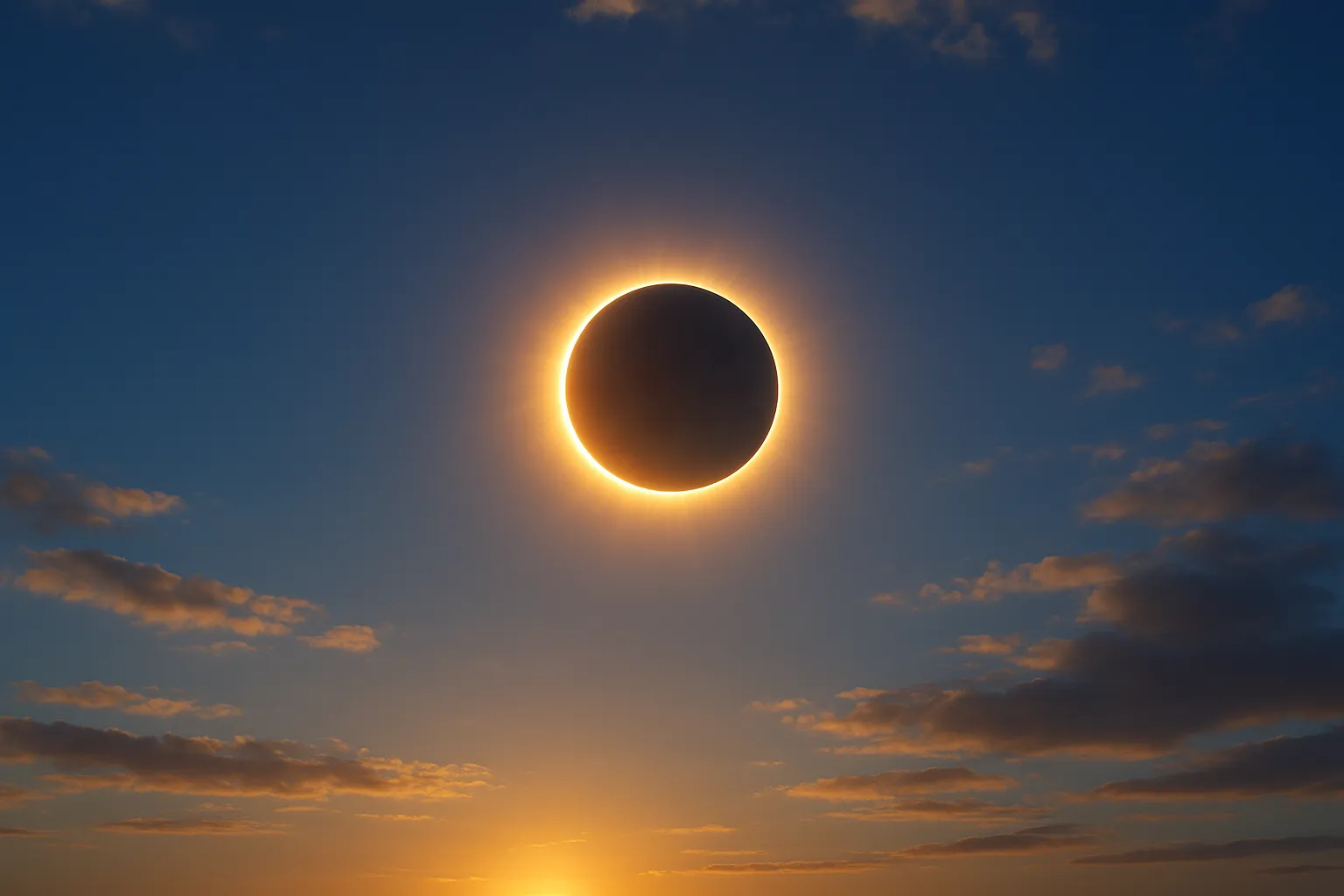
– Dramatic solar eclipse to occur on August 12, 2023.
– Over 90% of the Sun will be obscured.
– Looking directly at the Sun can cause severe eye damage.
– Use ISO 12312–2 certified eclipse glasses for safety.
– Pinhole viewers and household items can safely observe eclipse.
Full Story
On Wednesday, millions of people across the UK are expected to experience a stunning natural phenomenon as a significant solar eclipse occurs, marking the most notable event of its kind since 1999. During the eclipse, approximately 90 per cent of the Sun will be obscured by the Moon between 6:17 PM and 8:06 PM, offering a rare opportunity for sky watchers.
While the sight is anticipated to be breathtaking, experts are warning that direct observation of the Sun, even during an eclipse, can lead to severe eye damage. Caution is advised as the risks associated with improper viewing practices are considerable.
Standard sunglasses, no matter how dark or effective they may appear, provide insufficient protection against the harmful rays emitted by the Sun. Those looking for visual enjoyment of the eclipse should refrain from using binoculars, telescopes, or any optical devices that allow direct viewing.
The Royal College of Ophthalmologists (RCO) has previously documented instances of eye injuries linked to the viewing of solar eclipses. Following the total solar eclipse of 1999, they reported around 70 cases of individuals suffering from vision impairments, with many having looked at the Sun for less than a minute. This alarming statistic highlights the importance of taking necessary precautions.
Consultant ophthalmologist Mohamed Elalfy, who serves as president of the RCO, commented on the potential dangers: “The safest way to enjoy the eclipse is to observe it indirectly, such as by watching a live broadcast. Looking directly at the Sun can result in serious retina damage, impacting the central vision cells, often without immediate pain due to the absence of pain receptors in the retina. Symptoms can take hours to manifest, possibly leading to blurred vision or a central dark spot.”
Elalfy elaborated on the symptoms one might experience after exposure, which include distorted vision and increased sensitivity to light. “While some individuals may recover over a time period of weeks to months, others could face permanent visual impairments,” he cautioned.
Kyla Black, director of optical practice at Boots Opticians, added to this discourse, saying, “A common misconception is that multiple layers of sunglasses can safeguard from harmful UV light. This is incorrect; only specially designed eclipse glasses should be used for viewing an eclipse safely.”
Experts recommend glasses explicitly designed for solar observation, identified with the ISO 12312-2 safety standard. These glasses, reminiscent of 3D cinema glasses, contain a special coating that reduces sunlight intensity by a factor of 100,000, ensuring safe viewing.
However, the demand for these protective glasses has surged, leading many retailers to sell out, with delivery options for those who do find them often associated with steep fees. In light of this, the UK Health Security Agency (UKHSA) has provided alternative methods for safely viewing the eclipse without special glasses.
One practical and accessible option is to create a pinhole viewer. This device can be fashioned easily at home using two pieces of card. Users should poke a small hole in one card and position this so that it faces the Sun while standing with their back to it. The light filtered through the pinhole can then be projected onto the other card, allowing individuals to observe the eclipse without risking eye damage.
Other creative methods include using household items like a colander. Imo Bell, an astronomer at the Royal Observatory Greenwich, explained, “If you use a colander or any item with multiple holes, you can project the image of the eclipse onto the ground or another surface.”
Seeing the solar eclipse through these indirect methods can still deliver a uniquely fascinating experience. “It’s crucial not to miss this opportunity and to prepare adequately,” Bell emphasised. “One should not simply venture out expecting to observe the eclipse without taking due precautions, as it poses significant risks to eye health.”
The solar eclipse promises to be a captivating event for those in the UK. With careful attention to safety measures and inventive viewing techniques, it can be a memorable occasion for individuals and families alike. As the date approaches, communities are encouraged to participate in educational programs about solar phenomena and vision safety, ensuring that the beauty of the eclipse is enjoyed by all without compromising eye health.
In summary, while the solar spectacle presents a momentous occasion for amateur astronomers and curious onlookers, understanding how to view it safely remains paramount. In doing so, the astronomical beauty of the eclipse can be respected and enjoyed fully by all participants.
Our Thoughts
To prevent eye injuries during solar eclipses, key safety measures should include widespread public education on the dangers of viewing the Sun directly. The Health and Safety at Work Act 1974 mandates employers to ensure the health and safety of their employees and the public, which could extend to providing information on safe viewing practices. Additionally, the Provision and Use of Work Equipment Regulations 1998 (PUWER) could be applicable if businesses are involved in promoting eclipse viewing events, ensuring appropriate protective equipment, like certified eclipse glasses, is available.
Incidentally, the Royal College of Ophthalmologists reported increased cases of vision problems following previous eclipses, indicating a need for stringent public health campaigns ahead of such events. Retailers of eclipse glasses should be encouraged to comply with relevant consumer protection standards to prevent the sale of counterfeit products.
Furthermore, promoting indirect viewing methods, such as pinhole projectors and the use of household items, should be a key focus to reduce risks. Overall, enhancing public awareness and ensuring compliance with safety regulations can significantly mitigate risks associated with solar eclipses.