











Story Highlight
– Millions advised to avoid travel during partial solar eclipse.
– Eclipse could create dangerous driving conditions Wednesday evening.
– GEM warns looking at the eclipse distracts drivers severely.
– Experts caution twilight affects eyesight and spatial awareness.
– Drivers should park safely until visibility fully restored.
Full Story
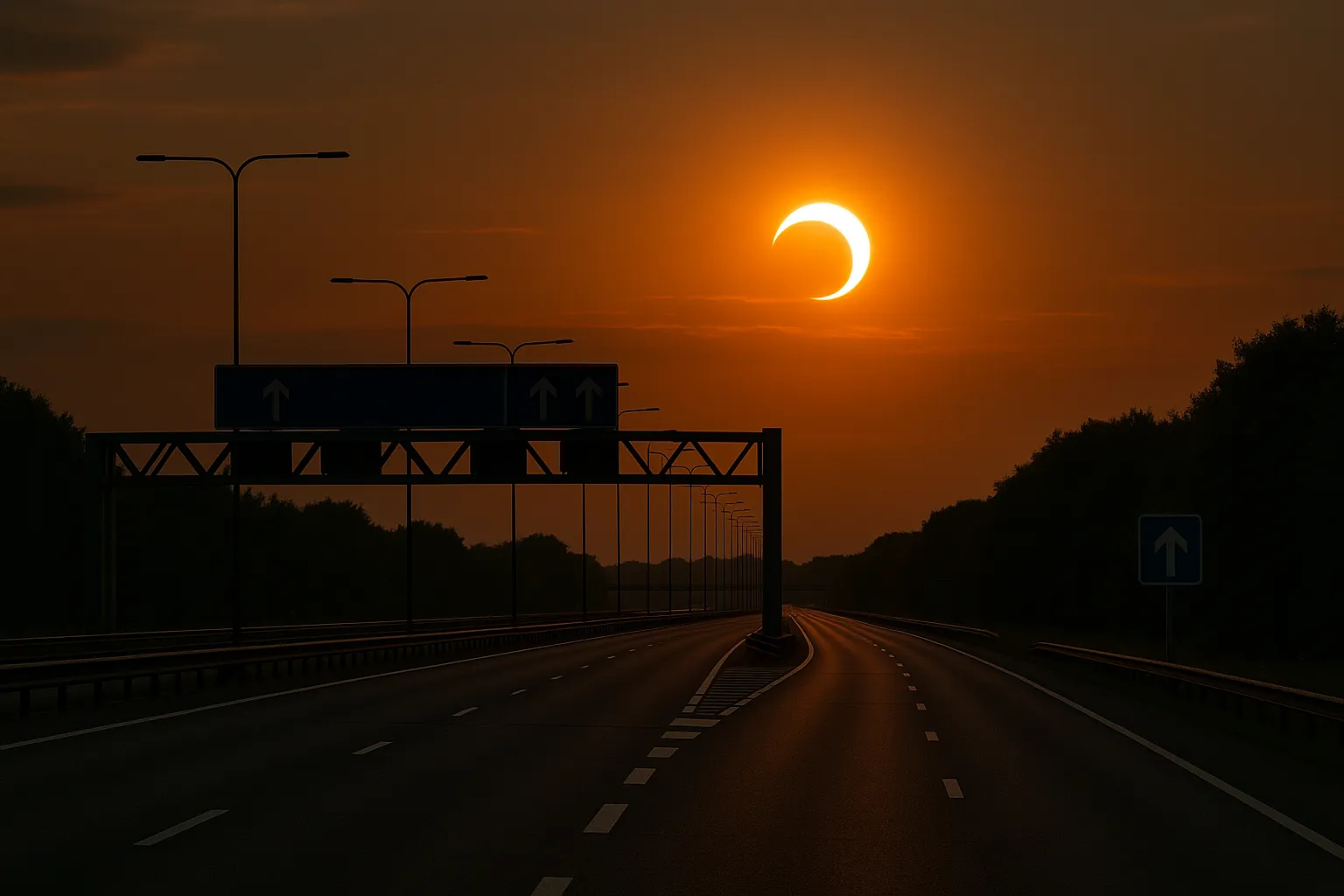
Motorists across the UK are facing urgent warnings regarding their travel plans for Wednesday evening, as significant road safety concerns arise due to an upcoming partial solar eclipse. The alignment of the moon with the sun is anticipated to create potentially perilous driving conditions, coinciding with the busy midweek rush hour.
The UK Health Security Agency has confirmed that the partial solar eclipse will reach its peak visibility over the UK, an event not seen with such significant solar coverage in over 25 years. This astronomical phenomenon has prompted experts to voice serious concerns about the implications it could have for drivers.
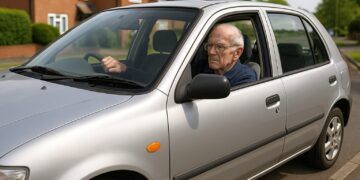
GEM Motoring Assist, a road safety charity, has issued a stark reminder to motorists. They have warned against attempting to view the eclipse while driving, advising against the use of eclipse glasses or any visual devices like mobile phones or cameras. A representative from GEM highlighted the dangers by stating, “It takes only a second of distraction for a routine journey to become a tragedy,” emphasising that even fleeting inattention can escalate into severe road incidents.
The UK Health Security Agency has provided guidance indicating that the sudden onset of twilight conditions, provoked by the eclipse, can severely disrupt human perception. Such changes can impair drivers’ spatial awareness and depth perception, particularly on high-speed roads where the stakes are considerably higher.
Complementing these warnings, the Met Office has indicated that clear skies across large parts of England and Wales could compound the issue. The absence of cloud cover may tempt drivers to glance skyward, increasing the risk of accidents during a period of otherwise normal traffic.
RAC motoring specialists have observed a behavioural trend where drivers tend to reduce their speed during notable astronomical events. This reduction, while seemingly cautious, can lead to abrupt braking and increase the likelihood of rear-end collisions, particularly on busy motorways where traffic flow is critical.
Further highlighting these safety concerns, transport analysts from the AA have pointed out that some drivers might pull over onto hard shoulders to watch the eclipse, inadvertently obstructing emergency rescue vehicles. Such actions during peak travel times pose significant hazards, not only to the drivers themselves but also to the emergency responders tasked with ensuring safety on the roads.
National Highways officials strongly recommend that motorists reconsider their travel arrangements, suggesting that essential journeys should be planned outside of the eclipse’s duration. Alternatively, they advise drivers to park safely in designated service areas well in advance of the eclipse to avoid potential hazards.
Reinforcing these warnings, representatives from the Department for Transport noted that drivers caught filming the eclipse with mobile phones whilst behind the wheel risk severe penalties. Fixed fines, points on their driving licence, and other legal repercussions await those who fail to adhere to established road safety laws during this event.
Go Stargazing, an initiative dedicated to promoting astronomical events, has also stressed the importance of prioritising road safety. They highlighted the aesthetic allure of the twilight produced by the eclipse but underscored that maintaining safe driving practices must be paramount during the event.
As the country braces for this astronomical display, motoring organisations across the UK are advising drivers to remain stationary until visibility returns to its normal levels. With heightened risks expected amid the additional distractions presented by this rare celestial occurrence, ensuring the safety of all road users should take precedence.
In summary, the night of the partial solar eclipse represents both a unique opportunity for stargazing and a significant warning for motorists. With road safety experts raising alarms about potential distractions and impaired driving conditions, it is essential that drivers heed these warnings. By planning ahead and prioritising safety measures, the risks associated with the eclipse can be mitigated, ensuring that all motorists arrive at their destinations safely.
Our Thoughts
To avoid the dangers associated with the partial solar eclipse, several proactive measures could have been implemented. Firstly, public transport could have been promoted or enhanced to reduce the number of vehicles on the road during the eclipse, minimizing potential distractions and traffic congestion. Increased public awareness campaigns by relevant authorities, emphasizing the risks of looking at the eclipse while driving and advocating for complete cessation of travel during this period, could have significantly influenced driver behavior.
Key safety lessons include the importance of clear communication regarding environmental factors that could impair driving, as well as the need for drivers to be aware of their surroundings and the potential for distractions. Relevant UK regulations, such as the Road Traffic Act 1988, highlight the responsibilities drivers have to operate their vehicles safely, which includes avoiding distractions such as mobile phone use while driving. Compliance with the Health and Safety at Work Act 1974 necessitates ensuring the safety of all road users.
To prevent similar incidents in the future, comprehensive guidance should be issued prior to events known to create unusual road conditions, advising against driving during those times, while encouraging safe alternatives such as waiting until visibility is fully restored.