
















Story Highlight
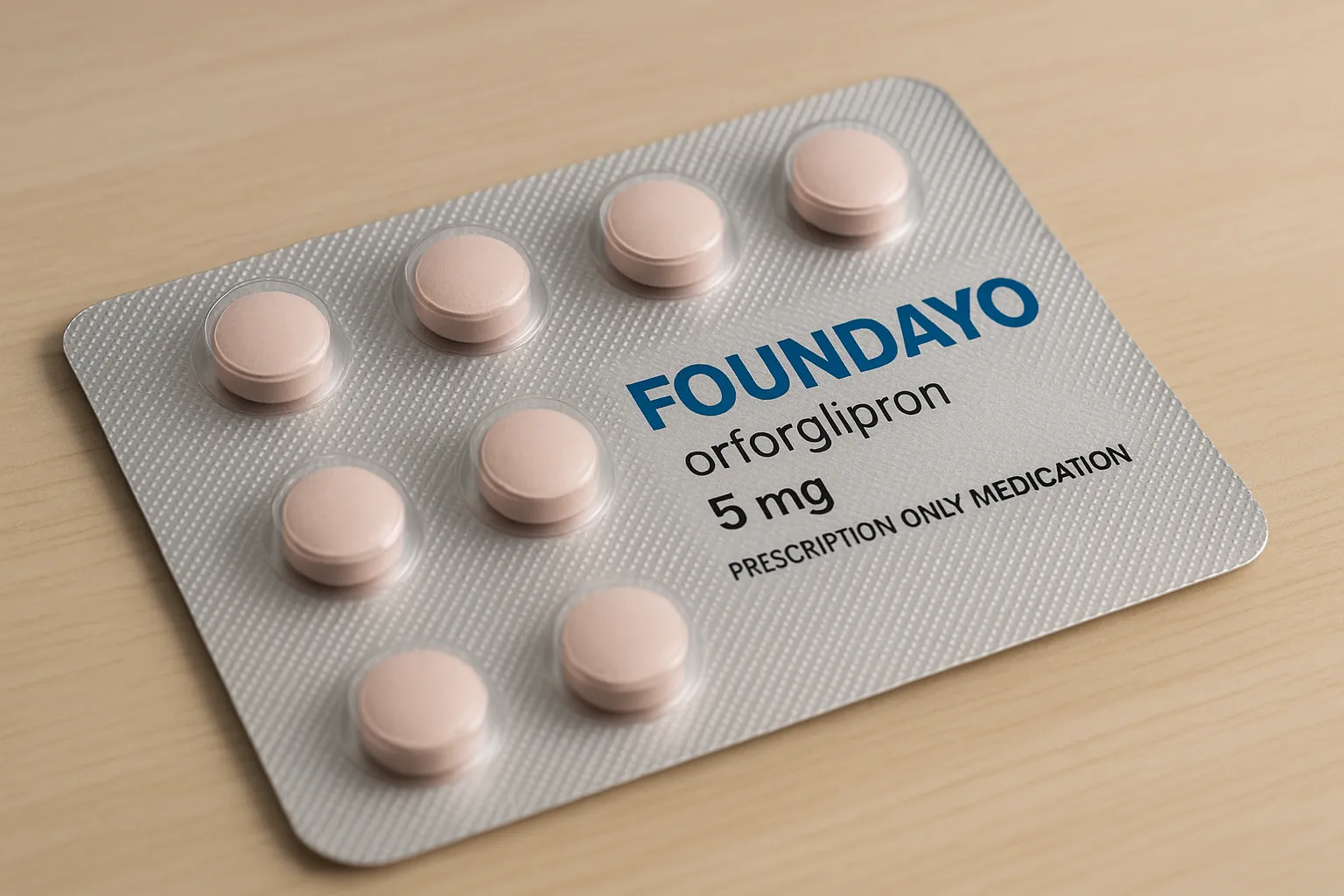
– Orforglipron pill, branded Foundayo, approved in the UK.
– Expected to be cheaper and easier than Mounjaro.
– Seven million people may use weight-loss pills by next year.
– Foundayo effective for obesity and type 2 diabetes treatment.
– Switching from injections to pills possible under medical supervision.
Full Story
A new competitor in the weight loss medication market has emerged as orforglipron, commercially known as Foundayo, receives approval in the UK. Developed by pharmaceutical giant Eli Lilly, this once-daily pill has generated much excitement, potentially rivaling the popularity of the injectable treatment Mounjaro, which has been a significant player in obesity management.
The approval from the Medicines and Healthcare products Regulatory Agency (MHRA) marks the UK as the pioneer in Europe to green-light this medication, following the recent market launch of the Wegovy pill, produced by Novo Nordisk. Experts in the field suggest that orforglipron could attract substantial interest due to its affordability and ease of use, positioning it alongside Mounjaro, often referred to as the “King Kong” of weight loss injections. Predictions indicate that by the next year, it is feasible for around seven million individuals in the UK to be utilising these weight-loss pills.
Both orforglipron and Wegovy belong to a class of medications known as GLP-1 receptor agonists, which mimic gut hormones that regulate appetite by signaling to the brain when the stomach is full. This response helps minimise overeating and promotes caloric restriction. Yet, while their mechanisms are similar, the two drugs vary in several factors, including their side effects and weight loss outcomes. Abbas Kanani, a superintendent pharmacist at Chemist Click, stated, “Although both medicines belong to the GLP-1 family and are designed to help reduce appetite and support weight loss, they aren’t identical medicines. They have some important practical differences.”
Eli Lilly has announced that Foundayo will be prescribed within the UK by the end of August. The MHRA has indicated that the pill is intended for individuals who are classified as obese or overweight and possess corresponding health conditions, a category which could encompass approximately 20 million residents in England. Julian Beach, the MHRA’s executive director for healthcare quality and access, remarked on the approval, highlighting the thorough assessment of the drug’s quality, safety, and efficiency. He added, “Following rigorous assessment of orforglipron’s safety, quality, and effectiveness, we are pleased to be the first regulator in Europe to authorise this tablet for weight management and type 2 diabetes.”
Regarding costs, the price for Foundayo has not yet been established in the UK, but initial reports from the US reveal that it is approximately half the cost of Mounjaro. Notably, Mounjaro injections can exceed £300 monthly, while Wegovy is sold privately for £50 to £150 per month. Dr Simon Cork, a senior lecturer in physiology at Anglia Ruskin University, emphasised the financial implications of the MHRA’s decision, stating, “Pill medications are much cheaper to manufacture than injectable medications.”
When comparing efficacy, studies on Wegovy reveal that patients at the highest dosage can achieve a weight loss of approximately 17% over a sustained period, whereas orforglipron users may expect around 12% weight loss on average. However, this does not negate the potential for significant weight reduction with orforglipron. Notably, research implies that the drug may be particularly beneficial for those with type 2 diabetes. Mr. Kanani pointed out the complexity of direct comparisons between the two preparations, noting, “The trials weren’t head-to-head studies, so the results can’t tell us which medicine will produce greater weight loss in an individual patient. Response can also vary considerably between people.”
An intriguing facet of Foundayo’s profile is its capacity for weight maintenance. Recent trials indicated that participants who transitioned from Mounjaro or Wegovy injections to Foundayo were able to retain about 75% of the weight they previously lost, suggesting a viable strategy for long-term management. Dr Louis Aronne, an obesity specialist at Weill Cornell Medicine in New York, remarked that daily pill regimens may represent a “treatment for life,” akin to chronic conditions like hypertension and diabetes. Dr Cork recognised the potential of Foundayo as “a much more economically viable option for long term weight management” post-injection treatment.
A clear comparison of the two medications illustrates distinct differences:
– Foundayo (orforglipron) is a small-molecule GLP-1 receptor agonist, taken once daily with no restrictions regarding food intake, and it offers average weight loss of up to 12.4% over 72 weeks.
– Wegovy (semaglutide) is a peptide GLP-1 receptor agonist, also taken once daily but must be administered in the morning on an empty stomach, with an average weight loss of approximately 13.6% over 64 weeks.
Importantly, orforglipron provides a level of convenience; it does not require fasting before administration, which could make adherence simpler for many users. Professor Naveed Sattar of the University of Glasgow noted this convenience factor, remarking, “Unlike oral semaglutide, which must be taken fasting before food, it can be taken at any time of day, making treatment simpler for some people.”
Transitioning patients from injections to the new pill format is permitted but necessitates medical oversight. Generally, patients would conclude their final injection, wait a week, and then commence the daily pill regimen with careful monitoring by their healthcare provider.
Both medications are prescribed under specific criteria based on body mass index (BMI). Individuals with a BMI of 30 or higher, or those with a BMI of 27 to 30 accompanied by at least one health-related issue, such as type 2 diabetes or hypertension, are eligible. Interestingly, Dr David Gwynne, Medical Director at Boots Online Doctor, has observed a notable engagement from male patients who previously may have shunned injections in favour of oral prescription options.
While both treatments carry potential side effects, early reports suggest that gastrointestinal issues are common with both medication types. However, experts caution against assuming that oral formulations will lessen the prevalence of such effects. In clinical trials, while most gastrointestinal disturbances were mild to moderate, a fraction of participants experienced more significant discomfort. Dr Marie Spreckley from the University of Cambridge highlighted that further long-term studies are essential for understanding the broader implications of use for orforglipron in everyday healthcare settings.
As the landscape for weight management continues to evolve, the introduction of these new oral medications is hopeful for millions seeking effective weight-loss solutions.
Our Thoughts
The approval of orforglipron (Foundayo) as a weight-loss medication in the UK presents valuable safety lessons and considerations. Key actions that could help prevent adverse effects or complications include ensuring comprehensive patient education on proper usage and potential side effects, particularly regarding gastrointestinal reactions. This aligns with the UK Health and Safety at Work Act 1974, which mandates that employers provide adequate information, instruction, and training.
Additionally, the Medicines and Healthcare products Regulatory Agency (MHRA) stresses the importance of ongoing safety evaluations, which should include post-marketing surveillance for adverse reactions. Surveillance should adhere to the principles set out under the Regulation (EU) No 536/2014 on clinical trials, which the UK can continue to observe.
Furthermore, the National Institute for Health and Care Excellence (NICE) guidelines should be followed to determine the value and cost-effectiveness of such medications before extensive NHS access. This ensures that prescribing practices protect patients’ health while maintaining economic viability.
Preventive measures for future incidents include robust clinical trials that comprehensively assess side effects, as well as reinforcing manufacturer responsibilities under the Medicines Act 1968 to ensure safety in new medications.