













Story Highlight
– Doctors dispute health funding cuts harming patient safety.
– Recruitment freezes and staffing reductions implemented by ICB.
– 88% believe funding cuts affect safe patient services.
– Doctors support industrial action to address funding issues.
– Urgent call for reversal of spending restrictions and staffing increases.
Full Story
A formal dispute has arisen between healthcare professionals in Cheshire and Merseyside and the Secretary of State for Health and Social Care concerning budgetary limitations that doctors argue are jeopardising patient safety and adversely affecting staff wellbeing.
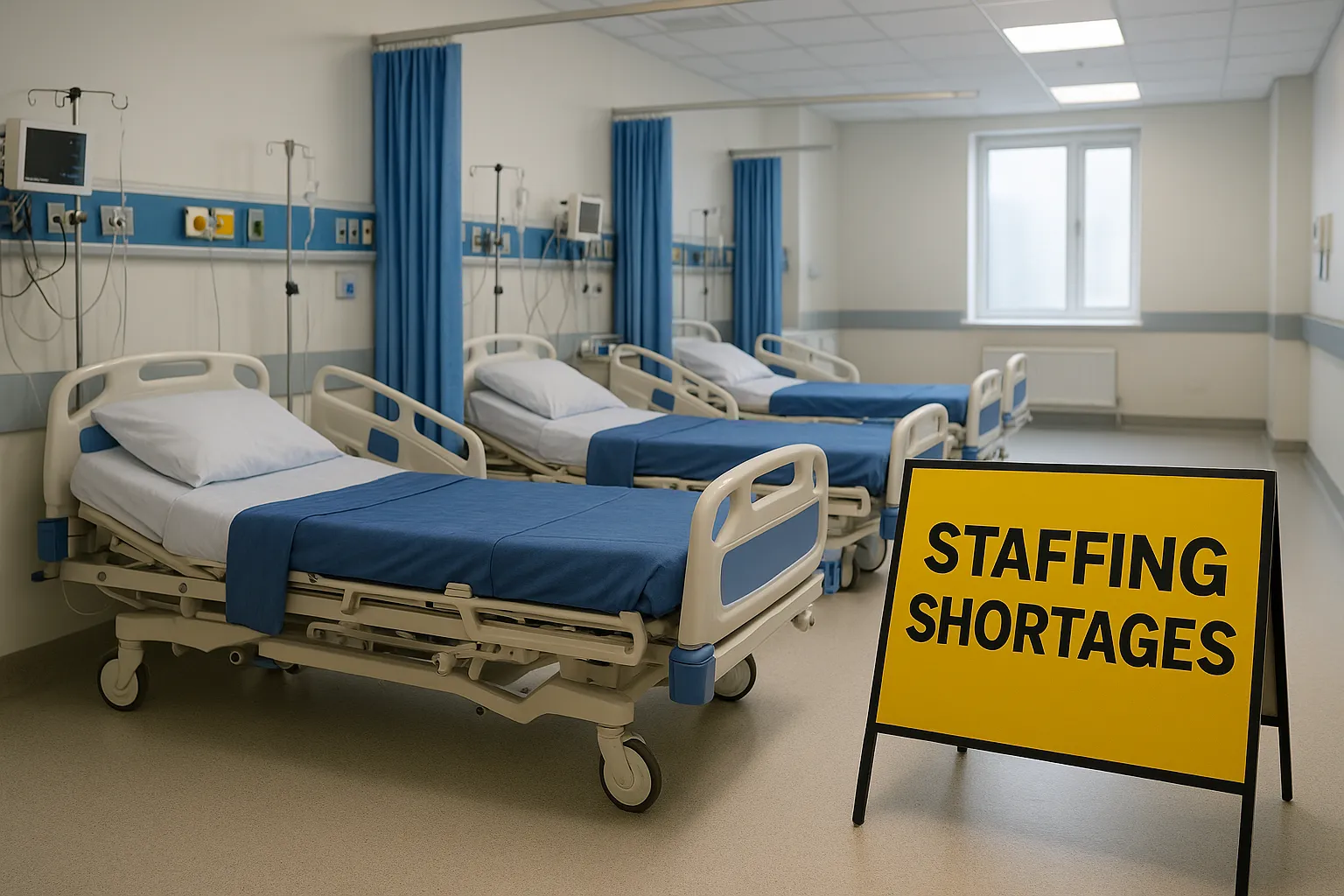
Concerns about fiscal constraints imposed by NHS England have been vocalised by practitioners earlier this year. These restrictions, directed at Integrated Care Boards (ICBs) and NHS trusts, are perceived as detrimental to local healthcare delivery. Reports indicate that in response to these funding limitations, the ICB in the Cheshire and Merseyside region has implemented recruitment freezes, plans to lower staffing numbers despite increasing workload demands, and restricted agency workers. Additionally, there has been a unilateral decrease in overtime pay rates for residents and Specialty, Associate Specialist and Specialist (SAS) doctors, with some experiencing pay reductions of up to 27%. These financial constraints have exacerbated staffing shortages, which in turn is perceived to endanger patient safety.
The British Medical Association (BMA) previously communicated these issues to the former Secretary of State, yet the reassurance sought regarding the safeguarding of patient safety and staff welfare under the present financial framework was not forthcoming. A survey conducted by the BMA earlier this year revealed that 88% of local doctors feel that funding cuts are significantly impairing the standard of patient care. Alarmingly, 92% of survey participants expressed readiness to pursue a formal trade dispute if their grievances are not satisfactorily addressed; 80% indicated they would support industrial action if deemed necessary.
Medical experts in the region have voiced dire warnings regarding the implications of widespread staff shortages in hospitals, describing the situation as a ‘catastrophe waiting to happen.’
One junior doctor, new to practice in the Cheshire and Merseyside healthcare system, articulated significant concerns regarding safety: “There just aren’t enough doctors working in our hospital and it feels very dangerous. On a typical night we are so short-staffed that we are dealing with emergencies on our own on opposite sides of the hospital when we are meant to do so as a team. When there aren’t enough of us on shift it’s hard to get to all the very unwell patients and manage their emergencies safely. Patients are slipping through the cracks and becoming very unwell as a result, which could be avoided with more staffing. To prevent critical incidents, we need to fill rota gaps, but the only way to do that is to pay doctors properly. If we don’t, it’s like a catastrophe waiting to happen.”
In light of these challenges, doctors are urging the urgent reversal of imposed financial constraints and advocating for the authority to revert to local governance best suited for tailoring healthcare improvements in the region. They assert the need for an end to recruitment freezes, the lifting of enforced staffing reduction targets, and the removal of limits on overtime remuneration.
Dr Den Langhor, chair of the BMA’s regional consultants committee and a consultant based in Merseyside, elaborated on the situation: “We enter this dispute after many months of unsuccessful engagement with local Trusts, the ICB, NHS England, and the Department of Health and Social Care. Cheshire and Merseyside has had more deficit support funding withheld than any other region in England, reinforcing our concern that national policy decisions are disproportionately impacting our region. As a result, patients are being put at risk and doctors cannot give them the care that they rightly expect and deserve.”
He highlighted the increased pressure on consultants, noting that they are being compelled to fill staffing voids while managing busy wards inadequately staffed, which affects hospital capacity and compromises care standards. “We demand that these funding cuts are immediately reversed for the sake of both staff and patients,” Dr Langhor urged.
Echoing these sentiments, Dr Kartik Goyal, co-chair of the BMA’s Mersey regional resident doctors committee, expressed a sense of urgency: “Resident doctors in the Cheshire and Mersey can’t be clearer: enough is enough. We are pushing ourselves to the brink of burnout, going above and beyond our normal hours trying to keep our patients safe. The ICB has rewarded us with cuts to overtime rates that have left shifts unfulfilled and dangerous gaps in rotas. We must return to safe staffing levels, and that means a reversal of these cuts that not only risk patient safety but also the wellbeing of all resident doctors in the region.”
As the dispute escalates, the focus remains firmly on the impact of financial decisions on patient care and the wellbeing of healthcare professionals. The situation poses an urgent challenge for local health authorities, who must navigate the complexities of staffing and funding to ensure that the quality of healthcare provided to the community does not suffer further deterioration. The doctors’ call for action highlights a critical need for resolution, prioritising both staff and patient safety in the wake of ongoing financial challenges in the NHS.
Our Thoughts
The situation in Cheshire and Merseyside highlights significant breaches of UK health and safety legislation, including the Health and Safety at Work Act 1974, which requires employers to ensure, so far as is reasonably practicable, the health, safety, and welfare of their employees and patients. Key lessons include the necessity for adequate staffing levels to maintain patient safety, which is compromised under the current financial cuts and recruitment freezes imposed by NHS England.
To prevent such incidents, integrated care systems should prioritize safe staffing policies, and financial constraints should not come at the expense of staff wellbeing and patient safety. Alternatives to budget cuts, such as effective workforce planning and engagement with medical staff to propose sustainable solutions, could mitigate risks. The enforcement of safe staffing levels should be mandated by the Care Quality Commission, and local leadership should have more autonomy to make informed staffing decisions.
The doctors’ concerns underscore the urgent need for compliance with the NHS’s duty to ensure adequate staffing and proper remuneration for work to prevent critical incidents, as highlighted by the recent high percentage of respondents in support of addressing these issues through formal channels.