













Choose an AI chat
Contraceptive linked to brain tumours sparks safety concerns among women
UK Health and Safety Latest

Contraceptive linked to brain tumours sparks safety concerns among women

by Ellie Cartwright
August 15, 2026
0

Carole Bianchi's journey from healthcare assistant to brain tumour patient underscores a troubling potential link between the contraceptive Depo-Provera and...

Read moreDetails
Calls to ban engineered quartz worktops over silicosis fears grow

Calls to ban engineered quartz worktops over silicosis fears grow

August 15, 2026
Food standards agency issues warnings over potentially hazardous products from major retailers

Food standards agency issues warnings over potentially hazardous products from major retailers

August 15, 2026
Food Standards Agency issues do not eat warnings over multiple product recalls

Food Standards Agency issues do not eat warnings over multiple product recalls

August 14, 2026
Emergency alert warns of high wildfire risk in England and Wales

Emergency alert warns of high wildfire risk in England and Wales

August 14, 2026

Archives

  • August 2026
  • July 2026
  • June 2026
  • May 2026
  • April 2026
  • March 2026
  • February 2026
  • January 2026
  • December 2025
  • November 2025
  • October 2025
  • September 2025
  • July 2025
  • August 2009

Categories

  • Health and Safety Help
  • News
  • Policies
  • UK Health and Safety Latest
  • About
  • Advertise
  • Policies
    • Privacy Policy
    • Editorial Policy
    • Corrections & Complaints policy
  • Useful Documents
    • Understanding RIDDOR
    • 10 Workplace Safety Failures
    • A Complete Guide to Reporting Safety Incidents in the UK
    • Fire Risk Assessment: Meeting the Regulatory Reform (Fire Safety) Order
    • COSHH Basics: A Practical Guide to Control of Substances Hazardous to Health
    • Working at Height in the UK: The Essentials (WAH Regulations 2005)
    • Asbestos in the Workplace: Control of Asbestos Regulations 2012 (CAR) Essentials
    • Managing Contractors Under CDM 2015: Roles, Duties & Controls
    • DSE & Ergonomics: Healthy Workstations for Office & Hybrid Teams
    • Lock out Tag out LOTO
    • Workplace Transport Safety: Forklifts, Pedestrians & Traffic Management
    • Noise & Vibration at Work: Practical Controls (2005 Regulations)
    • Confined Spaces in the UK: Safe Entry under the Confined Spaces Regulations 1997
  • Contact
  • Agent
Monday, August 17, 2026
25 °c
London
25 ° Wed
22 ° Thu
21 ° Fri
  • Login
UK Safety News
  • Home
  • News
    • All
    • UK Health and Safety Latest
    Contraceptive linked to brain tumours sparks safety concerns among women

    Contraceptive linked to brain tumours sparks safety concerns among women

    Calls to ban engineered quartz worktops over silicosis fears grow

    Calls to ban engineered quartz worktops over silicosis fears grow

    Food standards agency issues warnings over potentially hazardous products from major retailers

    Food standards agency issues warnings over potentially hazardous products from major retailers

    Food Standards Agency issues do not eat warnings over multiple product recalls

    Food Standards Agency issues do not eat warnings over multiple product recalls

    Emergency alert warns of high wildfire risk in England and Wales

    Emergency alert warns of high wildfire risk in England and Wales

    UK faces mounting crises as heatwave worsens drought, wildfires, and transport issues

    UK faces mounting crises as heatwave worsens drought, wildfires, and transport issues

    UK faces severe drought and heatwave as climate crisis escalates

    UK faces severe drought and heatwave as climate crisis escalates

    Workers call for maximum temperature regulations as heatwave intensifies

    Workers call for maximum temperature regulations as heatwave intensifies

    Heatwave drives call for maximum working temperature as workers suffer in record highs

    Heatwave drives call for maximum working temperature as workers suffer in record highs

    Urgent recall issued for Simple micellar cleansing water over eye inflammation risk

    Urgent recall issued for Simple micellar cleansing water over eye inflammation risk

    Trending Tags

No Result
View All Result
UK Safety News
No Result
View All Result
Home News UK Health and Safety Latest

Calls to ban engineered quartz worktops over silicosis fears grow

Jade Anderson by Jade Anderson
August 15, 2026
in UK Health and Safety Latest
Reading Time: 4 mins read
0
Calls to ban engineered quartz worktops over silicosis fears grow

Story Highlight

– Campaigners push for ban on engineered quartz worktops.
– Silicosis cases among workers linked to silica dust exposure.
– Australia first country to ban engineered stone products.
– Health experts stress low risk for homeowners’ use.
– Stricter safety measures urged instead of complete bans.

Full Story

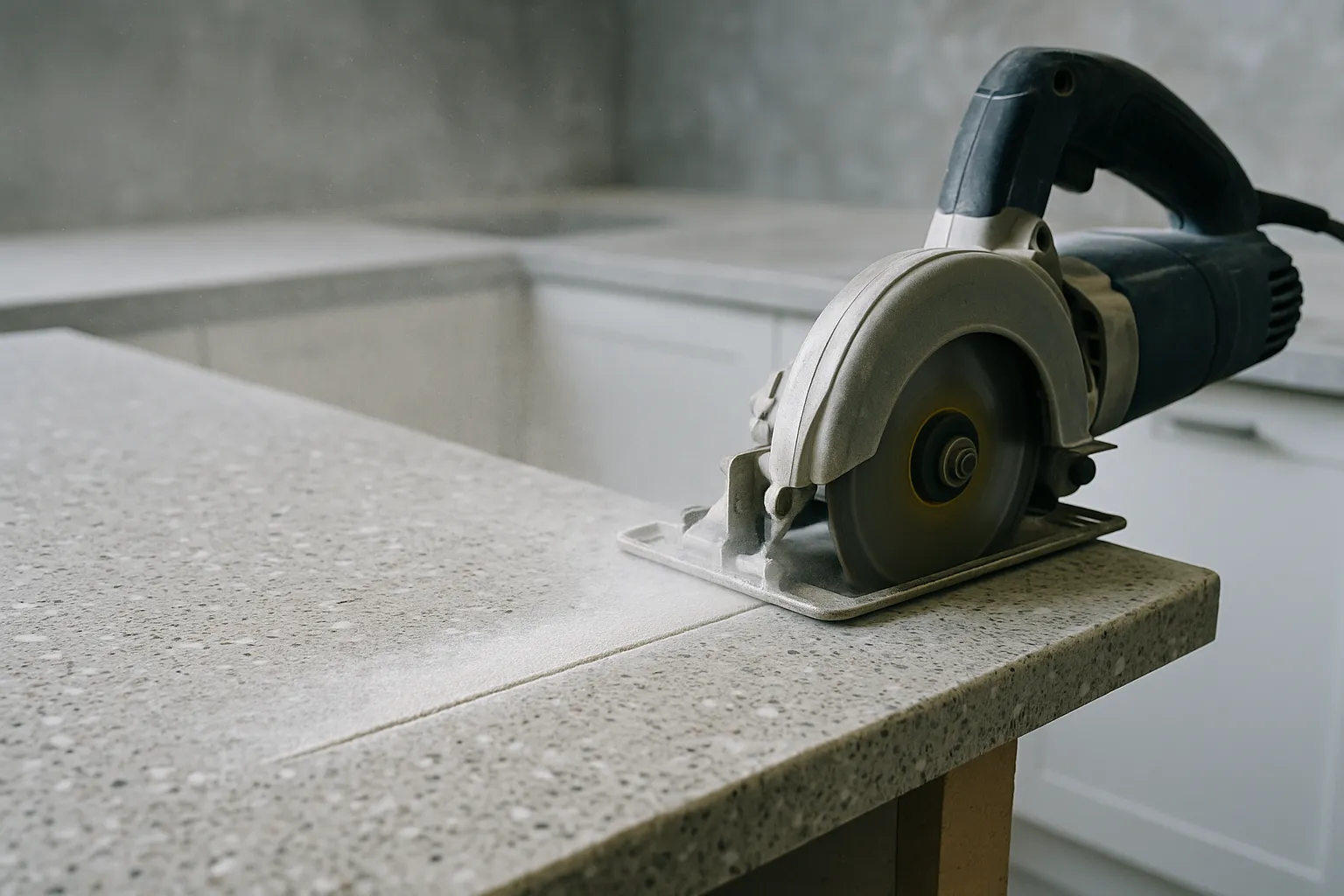
Campaigners, medical professionals, and trade unions are increasingly advocating for a prohibition on engineered quartz worktops in the UK, as incidents of silicosis—a debilitating lung disease—begin to rise among those handling the material. Known for their resilience and ease of maintenance, engineered quartz surfaces have become commonplace in contemporary kitchens. However, investigative reports from various media outlets, including Sky News and The i Paper, under the banner of “Killer Kitchens”, have unveiled alarming cases of stonemasons who have succumbed to serious respiratory illnesses following extensive exposure to silica dust during the cutting and installation of these surfaces.

While recent actions by the government have resulted in tighter safety regulations within workplaces, there remains a notable resistance against implementing a thorough ban on engineered quartz products. Advocates for stricter measures are pushing for further action, asserting that merely enhancing workplace controls does not adequately tackle the core hazards posed by the material.

Engineered quartz, despite its name, does not originate solely from natural sources. It is a composite material created by combining crushed stone with resins and pigments, with some variants containing over 90% crystalline silica, according to assessments from the British Safety Council. The risks emerge predominantly during the fabrication process; activities such as cutting, grinding, or polishing these surfaces generate fine particles of respirable crystalline silica (RCS) dust. The repeated inhalation of this dust can lead to silicosis, an irreversible condition the NHS deems preventable but currently incurable. Furthermore, silicosis increases the likelihood of developing other severe health issues, including tuberculosis, kidney disease, heart failure, and lung cancer.

Concerns regarding engineered stone have intensified since a study published in the academic journal Thorax documented eight instances of worktop-related silicosis diagnoses within the UK. Notably, these affected individuals had an average age of merely 34 and had been involved in dry-cutting practices without sufficient dust control measures in place, as highlighted by the British Safety Council.

Amid these developments, Sir Stephen Timms, the Minister for Social Security and Disability, has expressed support for enhanced guidance, advocating that every worker deserves to return home safely after their shifts. However, campaigners argue that merely enforcing stricter workplace policies does not eliminate the inherent risks associated with engineered quartz and have intensified their demands for a complete ban on the material.

Australia has set a precedent by becoming the first nation to prohibit the use, manufacture, supply, and importation of engineered stone following evidence that signalled a steep rise in silicosis cases among stonemasons. Research from Monash University indicated a staggering 27-fold increase in silicosis compensation claims in Victoria post-2014, with the overwhelming majority of the affected workers employed in the stone benchtop industry, as reported by the British Safety Council. This ban, which came into force in July 2024, was further expanded to encompass imported goods starting in January 2025. Supporters of this legislative move assert that it will significantly reduce health risks and save lives, while other jurisdictions, such as Germany, have chosen to enforce stricter exposure regulations rather than enact a blanket ban on engineered stone.

For homeowners, health experts assure that the prevailing evidence suggests that the risks associated with engineered quartz primarily pertain to occupational exposure rather than any danger from finished worktops. The NHS elaborates that silicosis usually develops after prolonged inhalation of silica dust in various sectors, including construction, mining, and stone fabrication. Once installed, a completed quartz worktop does not emit harmful levels of silica dust under normal domestic conditions. The risks arise primarily when manipulation of the material occurs, such as during cutting, drilling, or grinding.

Therefore, it is advisable that individuals planning renovations, such as the installation of a new sink or hob, refrain from attempting DIY alterations. Instead, they should engage qualified professionals who are equipped with appropriate wet-cutting methods and adequate respiratory protection to mitigate potential risks associated with silica dust exposure.

As discussions around engineered quartz worktops continue, the emphasis remains on the need for effective policy and practice interventions that safeguard workers while also ensuring that home renovations can be conducted safely. The ongoing debate highlights the critical balance between the craftsmanship that modern engineered surfaces represent and the health implications that arise when proper safety protocols are not followed.

Our Thoughts

To prevent the incidents of silicosis among workers handling engineered quartz worktops, several measures could have been implemented. Firstly, adherence to the Control of Substances Hazardous to Health (COSHH) Regulations could have been reinforced, ensuring that all employers conduct risk assessments, implement adequate dust control measures, and provide appropriate personal protective equipment (PPE) to workers.

Training programs on the dangers of respirable crystalline silica (RCS) should be mandatory, with a focus on safe handling techniques and the importance of using wet-cutting methods to mitigate dust exposure. Implementing strict exposure limits in alignment with the Health and Safety Executive’s (HSE) guidelines would have further enhanced workplace safety.

The Health and Safety at Work Act requires that employers ensure the health and safety of their employees; therefore, failure to take action against known risks represents a breach of this legislation.

Looking forward, a complete ban on engineered quartz, similar to Australia, could be considered as a long-term solution. Additionally, regular health surveillance for workers in high-risk environments can facilitate early detection of any health issues related to silica exposure. Implementing these changes could significantly reduce the occurrence of silicosis and protect worker health.


Tags: Health and SafetyHSEPPEWorkplace Safety
SummarizeShare35Share198SendSend
ADVERTISEMENT
Jade Anderson

Jade Anderson

Jade Anderson is a safety and compliance reporter specialising in UK regulatory affairs, HSE prosecutions, and workplace injury news. With experience covering health and safety law and enforcement, Jade brings in-depth analysis of court cases, fines, and lessons learned from workplace incidents across the UK.

Related Posts

Killer Kitchens campaign drives new safety kitemark to protect workers from silicosis

Killer Kitchens campaign drives new safety kitemark to protect workers from silicosis

by Ellie Cartwright
December 19, 2025
0

A new safety kitemark scheme for kitchen worktops has been launched to combat the risks of silicosis among stonemasons. This...

UK Athletics fined £350,000 over avoidable death of Paralympian Abdullah Hayayei

UK Athletics fined £350,000 over avoidable death of Paralympian Abdullah Hayayei

by Michael Harland
June 2, 2026
0

UK Athletics has been fined £350,000 following the tragic death of Paralympian Abdullah Hayayei, who was killed by a collapsing...

Leave a Reply Cancel reply

Your email address will not be published. Required fields are marked *

I agree to the Terms & Conditions and Privacy Policy.

Useful Documents

  • Understanding RIDDOR
  • 10 Workplace Safety Failures
  • A Complete Guide to Reporting Safety Incidents in the UK
  • Understanding RIDDOR
  • Fire Risk Assessment: Meeting the Regulatory Reform (Fire Safety) Order
  • COSHH Basics: A Practical Guide to Control of Substances Hazardous to Health
  • Working at Height in the UK: The Essentials (WAH Regulations 2005)
  • Lock out Tag out LOTO

Recent Posts

  • Contraceptive linked to brain tumours sparks safety concerns among women
  • Calls to ban engineered quartz worktops over silicosis fears grow
  • Food standards agency issues warnings over potentially hazardous products from major retailers
  • Food Standards Agency issues do not eat warnings over multiple product recalls
  • Emergency alert warns of high wildfire risk in England and Wales

Recent Comments

  1. Piper Douglas on Worker dies due to inadequate machinery safety measures
  2. Natalie Coleman on New housing laws aim to tackle damp and mould crisis in England
  3. Simon Barrett on Honeymoon ruined by illness as newlywed suffers severe infection in Cape Verde
  4. Nolan Barrett on Work-related ill health in Great Britain remains a concern after pandemic peak
  5. Dylan Reeves on Sickness rates among Scottish police officers soar to troubling levels
UK Safety News

Copyright © 2026
UK Safety News

Navigate Site

  • About
  • Advertise
  • Policies
  • Useful Documents
  • Contact
  • Agent

Follow Us

Welcome Back!

Login to your account below

Forgotten Password?

Retrieve your password

Please enter your username or email address to reset your password.

Log In
No Result
View All Result
  • Home
  • News

Copyright © 2026
UK Safety News

This website uses cookies. By continuing to use this website you are giving consent to cookies being used. Visit our Privacy and Cookie Policy.