














Story Highlight
– M&S challenges strict language on health claims for fibre.
– Current rules require complex terminology, hinder consumer understanding.
– 96% of UK adults consume insufficient daily fibre intake.
– Miscommunication leads to public distrust of official nutrition advice.
– Proposed review could simplify language for fibre claims.
Full Story
Retailers in the UK are facing challenges due to stringent regulations surrounding health claims related to dietary fibre; this issue has prompted Marks & Spencer (M&S) to take a stand. The supermarket’s food managing director, Alex Freudmann, alongside nutritionist Emily English and Bowel Cancer UK ambassador Dr Anisha Patel, has reached out to Health Secretary Yvette Cooper in an appeal for a review of the legislation governing such claims. Their letter, dated 6 August, carries a clear message: there exists a significant disparity between the legal language mandated for food packaging and the everyday vocabulary that consumers use.
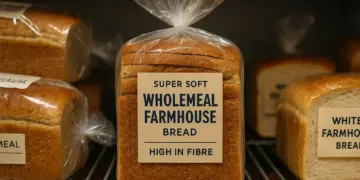
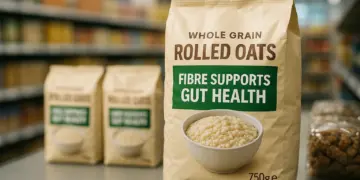
Under current guidelines, retailers can make limited claims about the benefits of fibre. For example, they may state that “barley grain fibre contributes to an increase in faecal bulk,” which is legally sanctioned but conveys little to consumers. Conversely, more accessible phrases like “fibre supports gut health” are strictly prohibited. This regulatory environment not only poses a communication barrier but also stands in the way of encouraging healthier dietary choices among the public.
Statistics highlight the urgency of addressing dietary fibre consumption in the UK. Research from the National Diet and Nutrition Survey indicates that a staggering 96% of adults fall short of the recommended daily intake of 30 grams of fibre. Furthermore, M&S’s own findings reveal that 92% of its customers express a desire to increase their fibre intake. This overwhelming desire for healthier eating is hampered by regulations that control how such information can be presented.
The restrictions on health claims have their roots in European legislation, specifically the 2006 regulation on nutrition and health claims, which was transposed into UK law after Brexit. Each approved claim underwent rigorous scientific scrutiny and was then included in a register, leaving businesses with little flexibility in the language they can use. Unfortunately, the requirements seem detached from consumer understanding, leading to a situation where the official language is far from the vernacular.
The situation extends beyond food labelling; it reflects a broader trend within various sectors in the UK where information is obscured by complex jargon. For instance, pension providers are required to deliver verbose “wake-up packs” to savers before retirement, which can often reach 40 pages and risk overwhelming the reader. Similarly, medical information leaflets are fraught with extensive warnings that are often printed in minuscule font, making them difficult to interpret. In financial services, key information documents manage to be both obligatory and largely unread.
While the rationale behind strict language in marketing is rooted in consumer protection against misleading information, such as claims commonly associated with unscrupulous products from historical quackery, there is a significant difference between preventing falsehoods and enforcing incomprehensible verbiage. An assertion like “fibre supports gut health” is scientifically valid and easy to grasp, but legal stipulations that require convoluted phrasing risk alienating consumers rather than protecting them.
Moreover, if the gap widens between official statements and public comprehension, it can breed distrust towards trusted institutions. As individuals seek nutritional guidance, they may turn to influencers or personalities making accessible claims online, rather than relying on credible sources. This drift creates a fertile ground for the spread of misinformation.
The potential solutions to this issue are straightforward and feasible. Since the UK separated from the EU, it has maintained its own nutrition and health claims register, enabling a review of the permissible wording without the constraints of earlier EU proclamations. The UK Nutrition and Health Claims Committee and the Scientific Advisory Committee on Nutrition now have the capacity to assess the existing claims and consider alternative, clearer expressions of the same scientific truths.
The objective should be to maintain the integrity of health claims while ensuring they are expressed in an accessible manner. By pursuing plain language alternatives that are still backed by scientific evidence, the government can empower consumers to make informed dietary choices without the burden of perplexing terminology.
M&S’s initiative to advocate for clearer fibre-related health claims merits support not only from within its own industry but from the broader public as well. As the supermarket chain strives to help customers improve their fibre consumption, action must be taken at the regulatory level to bridge the gap between legal language and consumer understanding. The challenge before us is not merely about compliance but fostering healthier eating habits across the nation, ultimately contributing to better public health outcomes.
Our Thoughts
The article highlights the absurdity of current UK regulations around nutrition and health claims, particularly regarding fibre. While there are no direct breaches of health and safety legislation, significant lessons can be drawn.
To avoid the disconnect between consumers and retailers, health claim regulations should be reviewed to ensure clarity and public understanding. This aligns with the Health and Safety at Work Act 1974, which emphasizes effective communication of health-related information to the public.
Improving the wording of health claims using plain language could enhance consumer awareness and dietary choices, fostering better public health. Engaging with stakeholders like M&S, nutritionists, and public health organizations can facilitate sensible regulatory changes, making health information more accessible.
Moreover, educating retailers on how to communicate health benefits effectively would support compliance with relevant trading standards. Establishing a clearer connection between approved claims and consumer-friendly language can minimize misinformation and promote healthier dietary habits, ultimately contributing to better public health outcomes.