














Story Highlight
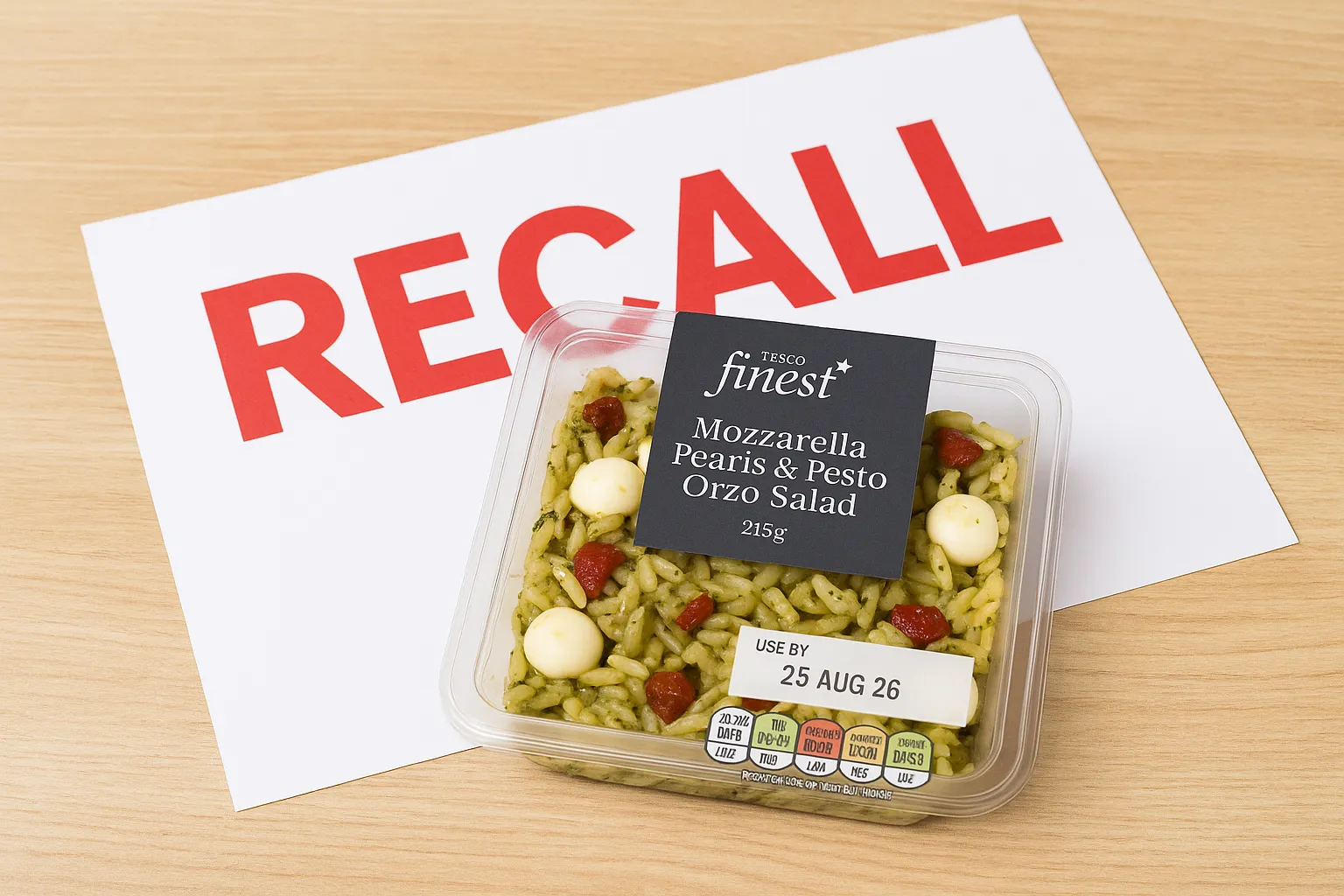
– Tesco recalls Mozzarella Pearls and Pesto Orzo Salad.
– Products may be contaminated with E. coli bacteria.
– Iceland recalls multiple chicken wraps due to health risks.
– Simple Cleansing Water faces recall over microbiological concerns.
– Customers advised to stop using affected products immediately.
Full Story
Major supermarket chains Tesco and Iceland have recently alerted customers to potential health risks associated with several food products sold in their stores. This announcement comes amid concerns over contamination with E. coli, a bacterium known to cause food poisoning, prompting immediate recalls of specific items.
Tesco has initiated a recall of its Finest Mozzarella Pearls and Pesto Orzo Salad, which weighs 215g. The affected products, marked with best-before dates of August 25, 26, and 27, 2026, may still be lingering in shoppers’ homes despite having surpassed these dates. The Food Standards Agency (FSA) issued a safety warning to consumers, highlighting the potential presence of Shiga toxin-producing E. coli (STEC). This variant of E. coli can lead to severe gastrointestinal distress, marked by symptoms such as intense abdominal pain, diarrhea (which could be bloody), vomiting, and in some instances, it may develop into haemolytic uremic syndrome (HUS)—a serious condition that poses risk of kidney failure and can be fatal.
The FSA’s alert advises that those exhibiting symptoms should refrain from attending school, work, or nursery for at least 48 hours post-symptom resolution to prevent spreading the illness. In relation to this recall, Tesco issued a statement confirming: “We are recalling three date codes of Tesco Finest Mozzarella Pearls and Pesto Orzo Salad 215g due to the possible presence of Shiga toxin-producing E. coli (STEC), which can cause illness if consumed. No other products sold at Tesco are affected by this recall.”
In a parallel situation, Iceland has also announced recalls affecting a range of chicken wraps primarily attributed to the same E. coli concerns. The affected items include the Snacksters Chicken Fajita Wrap, Snacksters Hoi Sin Wrap, East Street Deli Sweet Chilli Chicken Wrap, and Target a Snack Chicken Fajita Wrap. The recall covers all products with use-by dates up to and including September 5, 2026. Consumers who have purchased these wraps are advised not to consume them and to dispose of the items immediately. To obtain a refund, shoppers must provide proof of purchase to Summit Foods, either via email at sales@summitfoods.co.uk, along with details regarding the time and place of their purchase.
Iceland’s communication echoed a commitment to safety: “If you have purchased, please dispose of [the wraps] immediately and DO NOT CONSUME. We apologise for any inconvenience caused and ask for your understanding.”
Separately, the well-known skincare brand Simple has taken precautionary measures by recalling one of its popular products due to concerns of microbiological contamination that could pose risks to users’ skin. The Simple Kind to Skin Micellar Cleansing Water, available in 200ml, 400ml, and 730ml bottles, could potentially lead to eye inflammation among users. Following initial recalls earlier this month that pertained to one bottle size, additional sizes were added to the recall list, affecting customers across both the UK and the Republic of Ireland.
Simple issued a statement emphasizing their priority on consumer safety: “We are recalling these products because the safety of the people who buy and use our products is our top priority. Other Simple products are not affected by this issue. We understand that product recalls can be concerning, and we are sorry for any concern or inconvenience this may have caused.”
Consumers are advised to check batch codes printed on the bottom of each bottle. For further assistance or to request a refund, affected customers may reach Simple’s Consumer Careline through email at ukicare@unilever.com or by calling 0800 146 252 in the UK, or 1800 604 060 in the Republic of Ireland.
These announcements serve as crucial reminders for consumers about the importance of food and product safety. Shoppers are encouraged to remain vigilant about checking expiry dates and product recalls to safeguard their health. The recalls have sparked discussions around food safety standards and the responsibilities of manufacturers and retailers in ensuring the well-being of consumers.
As the situation develops, both Tesco and Iceland stress their dedication to quality and safety, reassuring customers that quality control measures are in place to prevent similar occurrences in the future. The FSA and relevant health agencies continue to monitor the situation, given the significant public health implications of bacteria like E. coli and the importance of swift action in protecting consumers from health hazards.
Our Thoughts
To avoid the incidents described in the article, stricter adherence to the Food Safety Act 1990 and the General Food Law Regulation (EC 178/2002) could have been implemented. These regulations mandate that food businesses ensure products are safe to consume and free from contaminants. Proper risk assessments and robust quality control measures, including regular microbial testing, should be mandatory to prevent the contamination of products with harmful bacteria like E. coli.
The recalls highlight inadequate safety checks before products reached consumers. Enhanced training for staff on hygiene practices and risk management could mitigate such risks in the future. The presence of Shiga toxin-producing E. coli indicates a failure in food safety management systems, which should have detected these risks during production.
For the skincare products, compliance with the Cosmetic Products Regulation (EC 1223/2009) is critical, requiring safety assessments prior to market release. Implementing strict product testing protocols would help prevent microbiological risks.
To prevent similar incidents, an emphasis on safety culture within retail organizations, including regular audits and consumer feedback mechanisms, should be strengthened, ensuring that all safety concerns are promptly addressed.