















Story Highlight
– Fish processing company fined £451,500 for safety failings.
– Worker Curtis New suffered life-threatening injuries from machine.
– Incident occurred while clearing blockage on 10 October 2024.
– Safety measures reinstated post-investigation; access rules updated.
– HSE emphasized need for proper maintenance of safety systems.
Full Story
A fish processing firm located in Shetland has faced significant penalties following a serious workplace accident that resulted in life-threatening injuries to a staff member. The incident occurred at Pelagia Shetland Limited’s facility in Lerwick on 10 October 2024, when Curtis New, a 41-year-old forklift supervisor, became seriously injured while attempting to resolve a machine blockage.
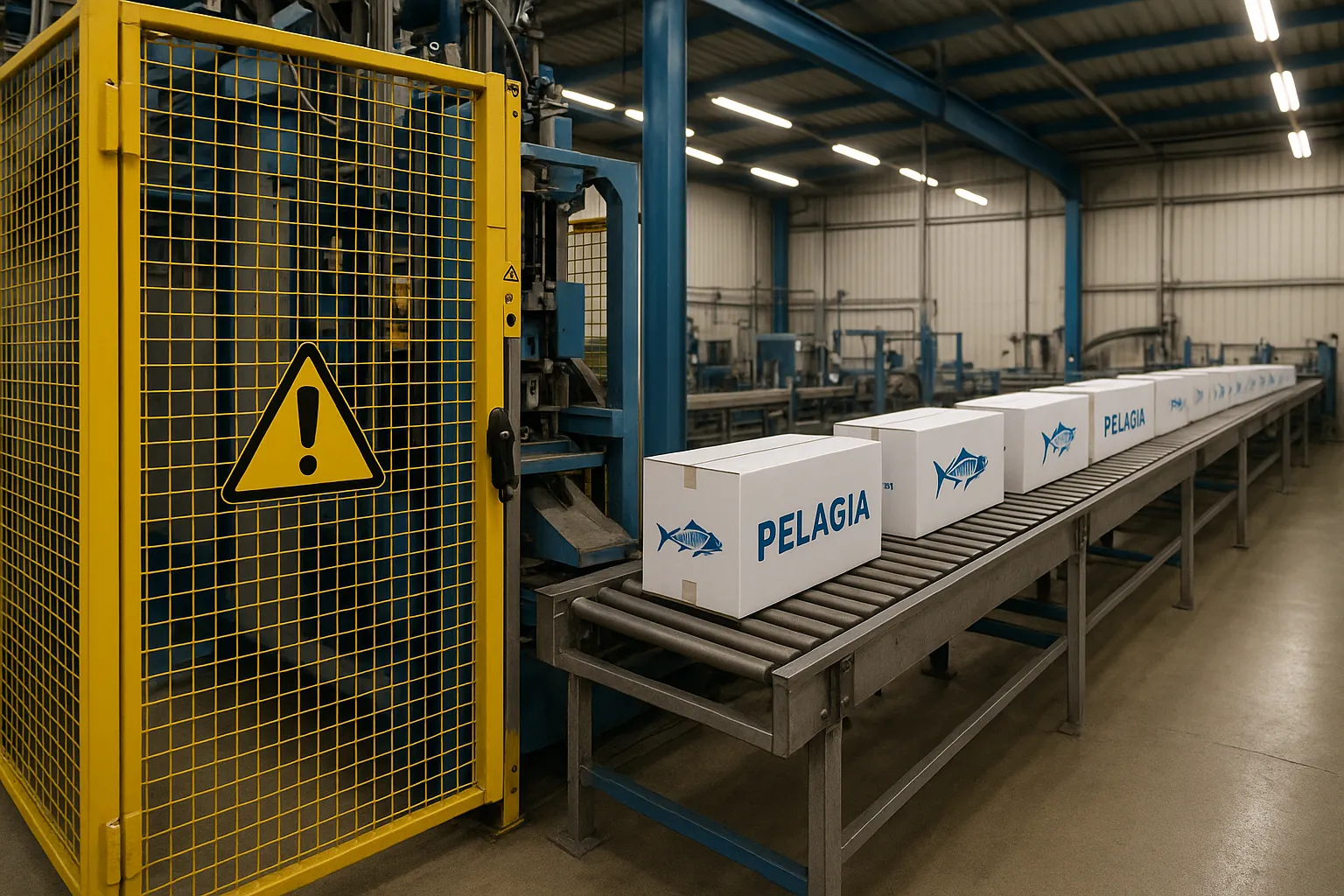
According to reports, New was engaged in addressing an obstruction in the palletiser machine when it unexpectedly restarted, leading to him being struck multiple times by its operational components. Following the incident, he was quickly airlifted to a medical facility, where he was treated for severe injuries including several fractures and two collapsed lungs.
The firm ultimately entered a guilty plea concerning breaches of health and safety regulations and was subsequently fined £451,500 following a hearing at Lerwick Sheriff Court. The Health and Safety Executive (HSE), which investigated the incident, determined that New had been summoned to manage a blockage but encountered difficulties with the machine’s interlocking safety mechanism. In efforts to clear the blockage, New removed a machine panel and entered the danger zone. As he traversed the stationary conveyor, he inadvertently triggered a sensor that restarted the machinery, resulting in him being repeatedly impacted by its pushers before a colleague was able to activate an emergency stop mechanism.
On-site first aid responders tended to New prior to his airlift to Aberdeen Royal Infirmary, where he remained for a total of 20 days—10 of those in intensive care followed by 10 more in a high dependency unit. His injuries were substantial, including eight broken ribs, a pelvis fractured in five locations, fractures to both the clavicle and scapula, as well as the life-threatening collapse of two lungs. Following intensive care, he was moved to Gilbert Bain Hospital in Lerwick to continue his recovery. New has subsequently expressed a desire to leave his position at the company, reflecting on the severity of the incident.
Investigators from HSE identified that the perimeter safety fencing, intended to cut off the machine’s power when the safety gate was utilized, had become compromised due to damage sustained earlier in 2024. This damage rendered the gate difficult to operate. Consequently, instead of employing the safety gate, two senior employees—including New—resorted to removing the damaged panel to facilitate frequent blockage clearance without first isolating the equipment’s power source.
The company did report the accident to the HSE on the same day it occurred, and following an exhaustive investigation, reinstatement of the perimeter fencing was undertaken. Currently, the safety gate serves as the sole point of access to the machine, with enhanced safety protocols implemented to ensure staff are barred from bypassing safety measures. Strict guidelines have been enacted, stipulating that failure to adhere to these protocols will result in disciplinary repercussions.
In a statement, HSE inspector Matty Spiers expressed grave concerns regarding the preventable nature of the incident, stating, “This was a wholly avoidable incident that left a man with life-threatening injuries, and it happened because a basic, well-understood safety control was allowed to fail. Curtis New is fortunate to be alive. He suffered catastrophic injuries carrying out a task that should never have been possible without the machine being isolated first. Employers have a legal duty to ensure that guarding and interlock systems are properly maintained, and any identified weaknesses must be addressed without delay.”
This incident underscores the critical importance of adhering to established safety procedures within industrial settings, particularly when operating machinery. The repercussions extend beyond financial penalties for the company, raising serious questions regarding workplace safety culture and the measures implemented to prevent such occurrences.
In related news, the HSE recently reported on other workplace safety incidents, including a dairy complex accident near Lockerbie, which resulted in injuries from a fall, and a similar case involving a fatality at a warehouse—both highlighting continuing concerns about safety standards in the workplace.
As the industry grapples with these challenges, it is imperative for companies to review and reinforce their health and safety policies, ensuring that staff are knowledgeable about risks and the importance of following safety protocols. The lessons learned from such incidents are crucial for fostering a safer environment for all employees in high-risk sectors like fish processing.
Our Thoughts
The incident at Pelagia Shetland Limited highlights significant failings in workplace health and safety practices. To avoid such occurrences, a more robust monitoring and maintenance system for safety equipment, particularly for the perimeter safety fencing and interlocking mechanisms, could have been implemented. Regular inspections and immediate repairs for damaged safety features are essential under Regulation 11 of the Provision and Use of Work Equipment Regulations 1998 (PUWER), which mandates that equipment must be maintained to ensure safety.
Key safety lessons include the absolute necessity of ensuring that all safety barriers are fully operational and that employees are trained to use them properly. The company’s failure to enforce these measures allowed staff to bypass crucial safety protocols, which violates Regulation 2 of the Health and Safety at Work Act 1974, requiring employers to ensure the health and safety of employees.
To prevent similar incidents, organizations should reinforce a culture of safety that prioritizes compliance with safety regulations, regular training for employees on the significance of safety mechanisms, and strict repercussions for those who disregard safety procedures. Ultimately, safeguarding employee well-being must take precedence over operational efficiency.