














Story Highlight
- Dale Baker died after a trench collapse in Woodbridge.
- Peter Clifford sentenced for manslaughter and safety violations.
- Baker’s family described ongoing pain and heartbreak from loss.
- Clifford fled before trial but later admitted guilt.
- Judge emphasised need for safety and proper planning in construction.
Full Story
On Tuesday, the Ipswich Crown Court concluded a protracted investigation into the circumstances surrounding the death of Dale Baker, 30, who died on December 15, 2020, after being trapped under rubble at a construction site in Woodbridge. Despite rescue efforts, Mr Baker succumbed to asphyxiation.
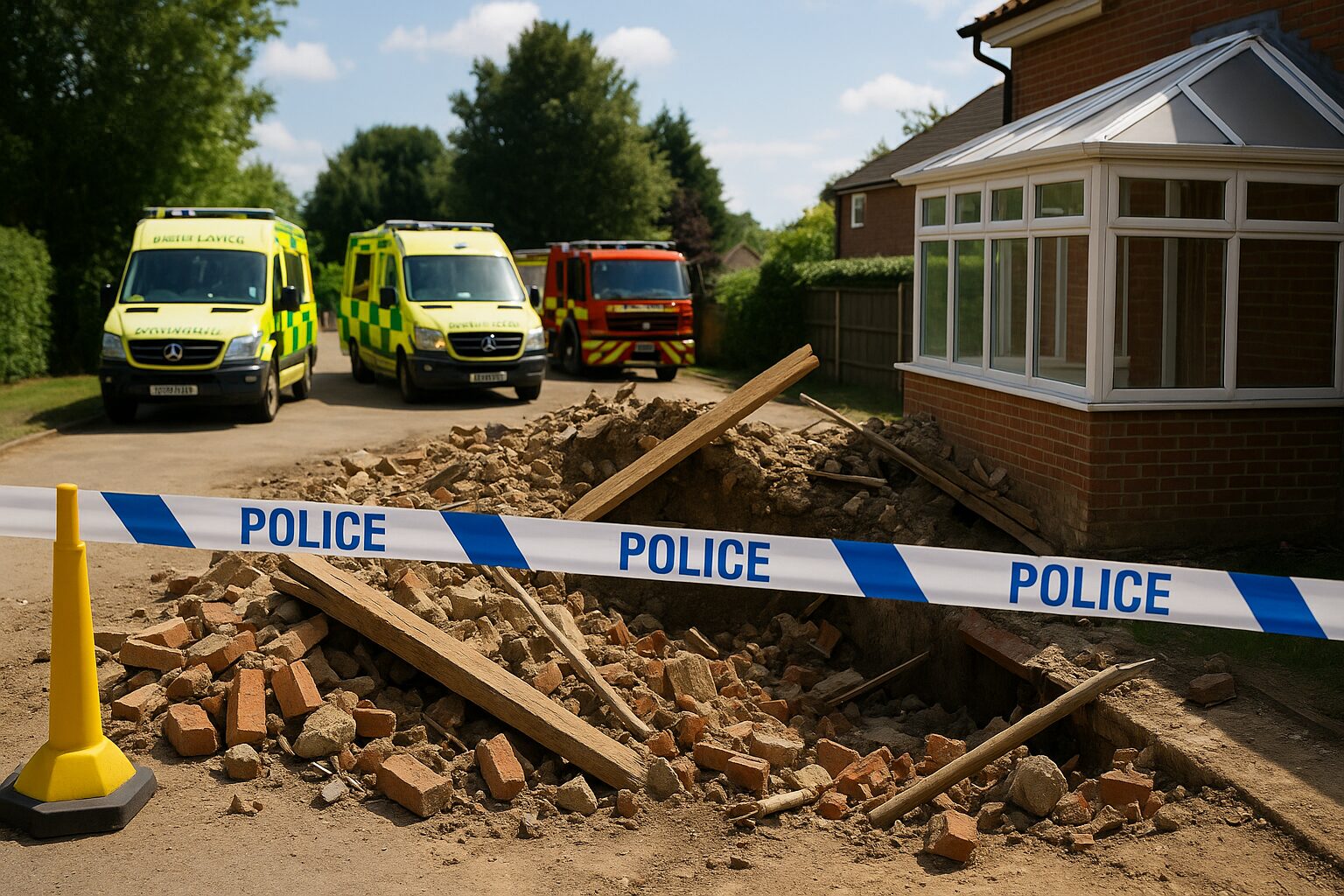
During his work for Peter Clifford, director of Hintonwood East Anglia Ltd, Mr Baker was operating in a trench that collapsed due to insufficient support. Judge Samantha Leigh stated this was not an unforeseen incident, highlighting that the trench walls were inadequately supported and that the excavation was dangerously close to the foundations of an adjacent conservatory. Prosecutor Sarah Przybylska noted that Mr Baker and a colleague were not equipped with personal protective equipment and that other areas of the site were deemed unstable.
Clifford initially denied responsibility, pleading not guilty to manslaughter, but subsequently went missing ahead of his trial in March 2022. He was apprehended in Scotland four months later and later admitted to manslaughter along with two health and safety violations and the charge of absconding.
In court, Mr Baker’s family shared their profound grief. Mandy Read, his mother, described her heartbreak as “shattered beyond despair” and stated that her life had become “a nightmare”. Robert Baker, his father, expressed that the pain of the loss had not diminished over the past five years and condemned Clifford’s apparent lack of remorse. Craig Baker, Dale’s brother, referred to Clifford as “a coward”.
Edward Renvoize, defending Clifford, argued that his client had acted out of fear and urged for a more lenient sentencing. However, Judge Leigh highlighted Clifford’s extensive experience in construction, asserting that he should have recognised the dangers associated with unsupported trenches. She dismissed the defence’s request for a lesser sentence, stating that it should have been evident to any competent builder that there was a significant risk of collapse.
Judge Leigh sentenced Clifford to eight years and ten months in prison and imposed a ban from being a company director for the next ten years. Superintendent Mike Brown remarked that the family had endured an extended period of seeking justice, emphasising that Clifford had obstructed the process. Richard Rajham from the Health & Safety Executive echoed this sentiment, stating that proper planning and safety measures could prevent such fatalities in the construction industry.
Source: read the original report.
What this means for your site
The tragic incident involving Dale Baker underscores the critical importance of adhering to health and safety regulations within the construction industry. Key legislation applicable in this case includes the Health and Safety at Work etc. Act 1974, which places a duty on employers to ensure the health and safety of their employees, as well as the Construction (Design and Management) Regulations 2015, which mandate proper planning and risk assessment for construction projects. One fundamental step that could have been taken to prevent this incident is the implementation of adequate trench support systems, in line with the Work at Height Regulations 2005 and other relevant guidelines. Ensuring that all excavation sites are regularly assessed for stability, and that trenches are properly shored to prevent collapses, is essential. Furthermore, having a strict policy on personal protective equipment (PPE) could have significantly mitigated risk. Regular safety training and the enforcement of wearing PPE must be prioritized, ensuring that all workers are aware of potential hazards and their responsibilities. Regular safety audits can also reinforce risk awareness and compliance on site, potentially preventing future tragedies.