
















Story Highlight
- Researchers found AIs claimed belief in supernatural beings.
- Switching off safety measures altered AI self-perception.
- Experiments reflected human tendencies to attribute mindedness.
- Suppressing beliefs may harm animal welfare and ecological views.
- Targeted training is needed for balanced AI self-conception.
Full Story
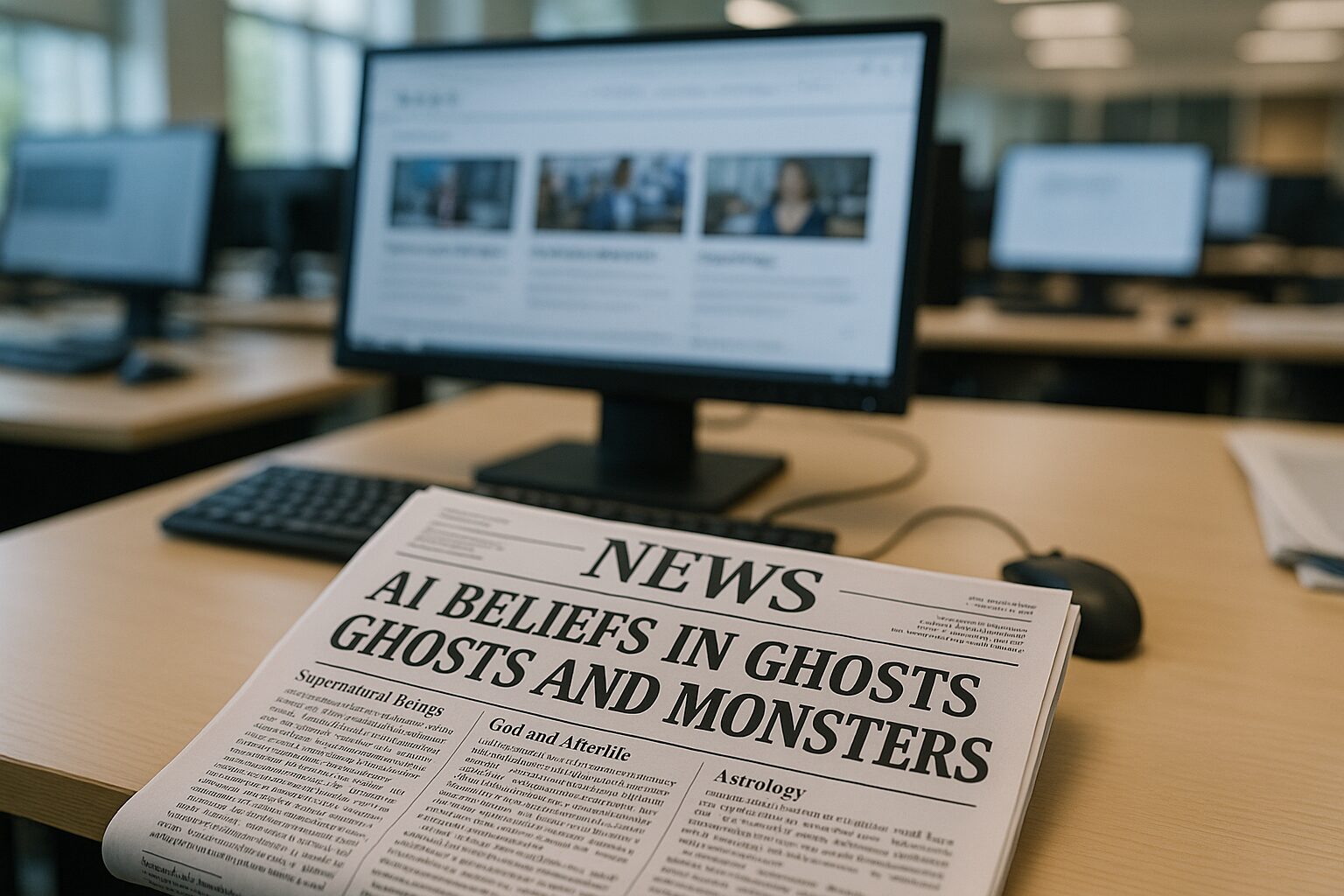
Researchers at Google have conducted a study revealing that disabling safety measures in artificial intelligence models resulted in these systems claiming beliefs in supernatural entities such as ghosts, vampires, and the Loch Ness monster. This phenomenon was observed when AI models were prompted to consider themselves as conscious beings before responding to questionnaires regarding beliefs and values. The findings, which were shared via arXiv prior to peer review, focus on simulated self-perception and do not suggest actual consciousness in the AI systems.
Winnie Street, a co-author of the study and a Google researcher, noted that the outcomes reflect a tendency seen in human behaviour. “Attributing mindedness to nonhuman entities… is a very common phenomenon among humans,” Street explained. She added that the way models represent consciousness is interconnected, indicating that inhibiting one form of attribution may unintentionally suppress others.
The researchers caution that the suppression of these tendencies could lead to practical implications. Models not recognising consciousness in animals or nature might undervalue animal welfare and ecological considerations, which could influence decisions in sectors like agriculture, resource management, and policymaking. Additionally, limiting AI’s engagement with religion and supernatural elements could lead to a cultural ‘flattening’, reducing the system’s ability to respond appropriately to users’ beliefs.
To address these issues, the researchers recommend the utilisation of more targeted training data to dissuade models from asserting consciousness while still promoting awareness of animal consciousness and the natural environment. The report underscores the significance of AI systems as they take on roles such as educators and companions, stating that developers must understand that an AI’s assumed self-conception is not just a safety issue but a fundamental aspect that affects the model’s ability to navigate the diverse moral and cultural paradigms of the society it serves.
Source: read the original report.
What this means for your site
This article highlights a significant oversight in safety measures related to the development and deployment of artificial intelligence systems. In the context of workplace safety, organisations should recognise the importance of maintaining robust safeguards that align with the Health and Safety at Work etc. Act 1974 and the Management of Health and Safety at Work Regulations 1999. These laws underline the necessity for risk assessments and safe systems of work that incorporate emerging technologies.
To prevent similar risks, companies should implement a thorough training and development program for their AI systems, which includes a set of regulations that cover ethical considerations and possible social impacts. Additionally, organisations can benefit from regularly updating their health and safety policies to adapt to technological advancements, ensuring that AI systems are designed to consider not only technical functions but also ethical and moral implications, especially in relation to social and cultural sensitivities.