















Story Highlight
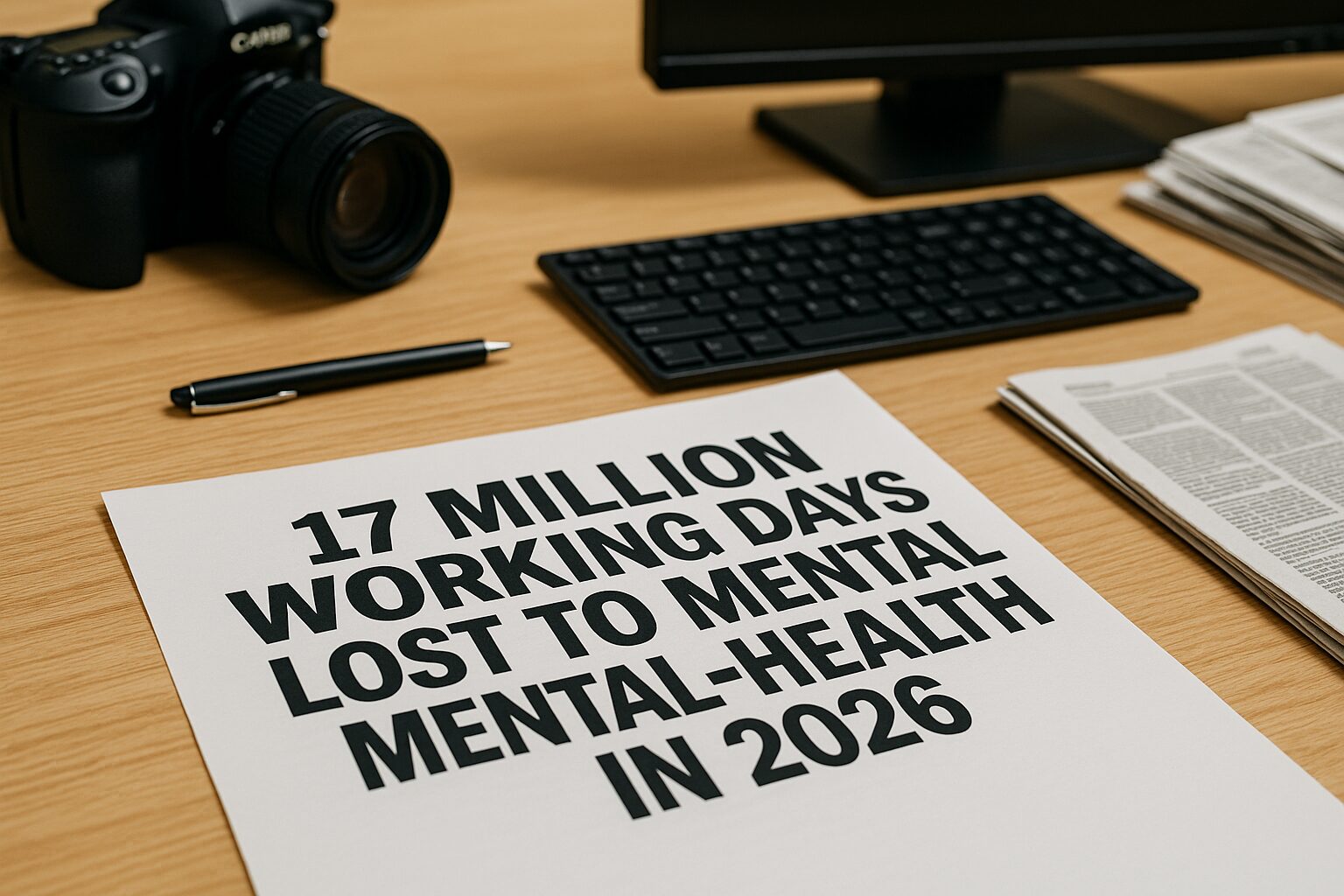
- UK lost 17 million working days to mental ill-health in 2026.
- Nearly a third of employees unaware of mental health support available.
- Mental ill-health leads long-term employee absence in the UK.
- Simplyhealth encourages managers to improve access to mental health support.
- Report highlights £17 billion economic cost from healthcare access barriers.
Full Story
According to analysis by Simplyhealth, the UK has reached 17 million working days lost to mental ill-health as of today. This milestone coincides with the approach of World Mental Health Day on Saturday. Simplyhealth reports that mental ill-health is the primary cause of long-term employee absence in the UK, and ranks as the second leading cause of short-term absence.
This figure is part of a running total published by Simplyhealth throughout the year. The company reported the eight million mark on 14 May, basing its calculations on an estimated 22.1 million working days lost to stress, depression or anxiety in 2024/25, stemming from data provided by the Health and Safety Executive. This estimate corresponds to approximately 87,500 days lost daily, covering self-reported work-related ill health in Great Britain.
The Chartered Institute of Personnel and Development noted in September 2025 that sick days have reached a 15-year high, attributing this trend to mental health issues, which are the leading cause of absences lasting four weeks or more. This information was released alongside Simplyhealth’s report, The Access Gap: Building healthcare around real working lives. The report, published on 8 September, is based on research conducted with 5,000 UK employees and 500 HR decision-makers.
The research highlighted that while 61 per cent of employers reported offering mental health support, only 41 per cent of employees acknowledged having access to such services. This disparity indicates that nearly a third of workers might have access to mental health support without realising it. Furthermore, employees expressed a desire for faster appointment times, with 14 per cent stating it would enhance their healthcare access, increasing to 19 per cent within Gen Z and 15 per cent among Millennials. Across all generations, 11 per cent cited the need for specialist services, including mental health, and 8 per cent preferred access to digital mental health support.
Employees indicated they lost an average of 2.1 working days over the past year due to difficulties in accessing healthcare. In addition, 52 per cent admitted to delaying medical care in the preceding year, with 66 per cent saying quicker access to healthcare would lead to increased productivity. The report, which includes economic analysis from WPI Economics, estimated the cost of issues surrounding healthcare access to be £17 billion for the UK economy in 2025.
Simplyhealth, a Vanguard organisation in the government’s Keep Britain Working review led by Sir Charlie Mayfield, is working to improve the accessibility of mental health support for employees. They have collaborated with Mental Health First Aid England to provide training for managers, emphasising the importance of equipping them with the skills and confidence to discuss mental health. Bree Rhodes-Wort, partnerships development manager at Simplyhealth and a trained mental health first aider, stated, “17 million working days lost to mental ill-health is a stark reminder that poor mental health has far-reaching impacts, on individuals, communities and the economy.”
Rhodes-Wort added the significance of managerial confidence in addressing mental health issues, noting that it should be complemented by accessible professional support. Vicki Cockman, director of training and consultancy at MHFA England, echoed this sentiment, suggesting that enabling managers to engage effectively is crucial and that their Workplace Mental Health First Aid Standards offer a framework for sustainable mental health provision.
Simplyhealth offers continuous mental health support and counselling, along with various health services to its members, and plans to enhance its mental health services moving forward.
Source: read the original report.
What this means for your site
The escalating issue of mental ill-health in the workplace indicates a pressing need for proactive management strategies. Employers can take several steps to address this issue more effectively. For instance, employee training initiatives should be expanded to ensure that all employees, particularly managers, recognize available mental health resources and understand how to access them. Establishing regular communication channels concerning health services can bridge the knowledge gap where nearly a third of employees remain unaware of their mental health support options.
In the UK, relevant health and safety legislation includes the Health and Safety at Work etc. Act 1974 and the Management of Health and Safety at Work Regulations 1999, both emphasizing the need for employers to ensure a safe working environment which includes mental wellbeing. Another significant piece of legislation is RIDDOR 2013, which mandates the reporting of work-related injuries and ill-health, including those related to mental health. To enhance compliance with these regulations, businesses can conduct regular training on mental health awareness, coupled with accessible mental health resources, ensuring employees are well-informed and supported, which ultimately can help mitigate the number of working days lost due to mental health issues.