












Story Highlight
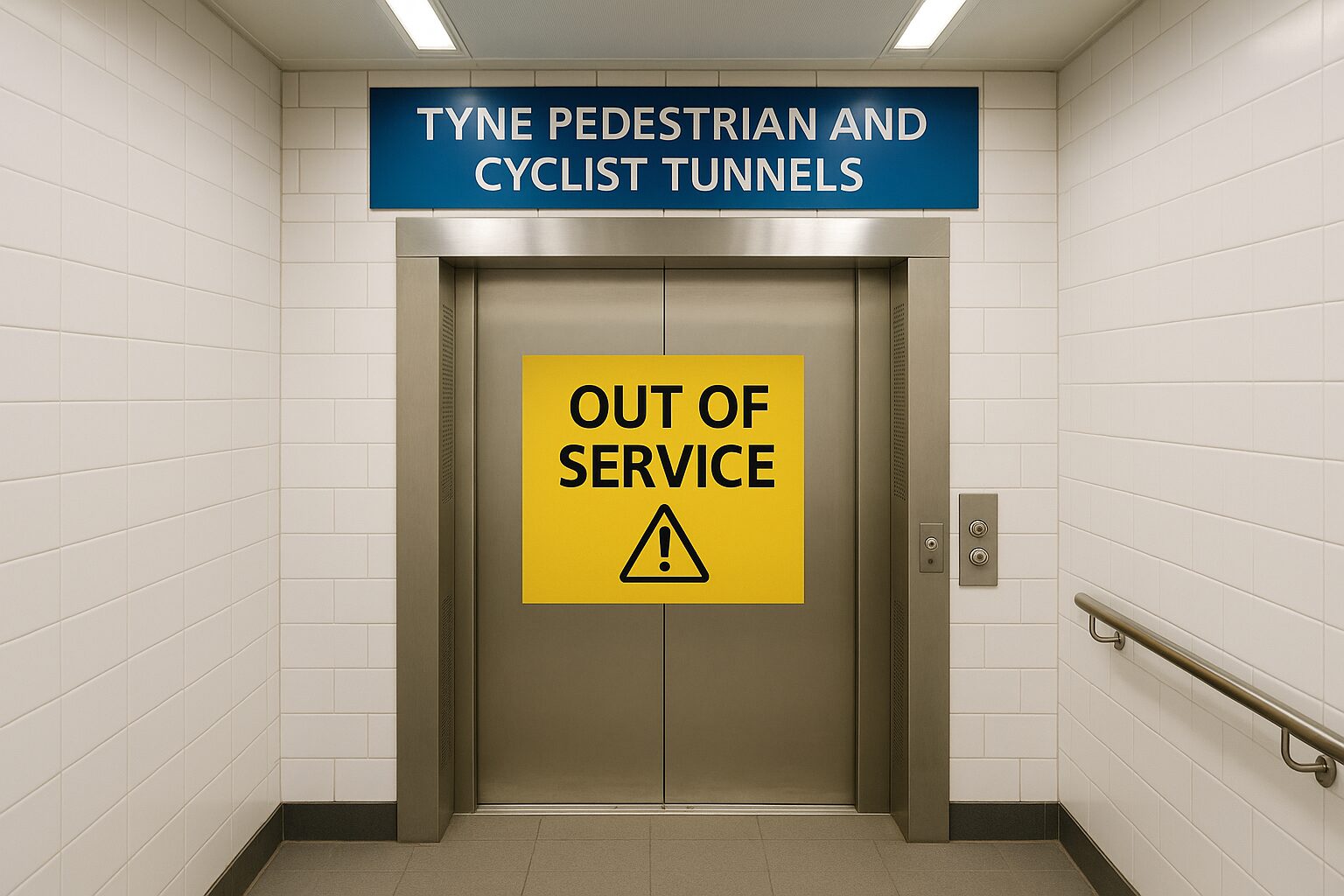
- Significant defects found at Tyne Pedestrian and Cyclist Tunnels.
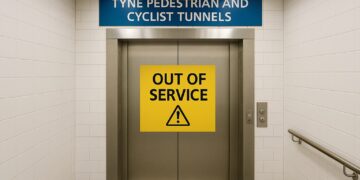
- Vertical lifts taken out of service for urgent repairs.
- Repairs to lifts expected to last several weeks.
- Inclined lifts remain operational during repair works.
- Tunnels serve over 20,000 pedestrians and cyclists monthly.
Full Story
Significant safety and operational defects have been identified at the Tyne Pedestrian and Cyclist Tunnels, resulting in the temporary closure of the two vertical lifts for urgent repairs. The lifts were taken out of service on 25 September and are expected to remain inoperable for several weeks while an £87,000 repair scheme is implemented. This situation follows a complicated renovation project that concluded in November 2024, which was notably delayed and exceeded its initial budget.
A spokesperson for the North East Mayoral Authority stated that a recent survey uncovered several issues with the vertical lifts, necessitating their withdrawal from service. During this repair period, the two inclined lifts will remain the only means for the public to access the tunnels. Additionally, these inclined lifts will not be operational on 13, 14, 20, and 21 October for scheduled servicing, during which a shuttle bus will operate between Jarrow and Howdon from 08:00 to 16:00 BST.
The North East Mayoral Authority expressed apologies for the disruptions to tunnel users, assuring that efforts are underway to expedite repairs. The tunnels are frequented by over 20,000 pedestrians and cyclists each month. Originally constructed in the 1950s, the tunnels faced substantial delays during a refurbishment project that began in May 2013. Expected to reopen in 2015, the project was hampered by the discovery of asbestos and the collapse of the main contractor, GB Building Solutions, leading to a public reopening in 2019. The total cost of the refurbishment ultimately reached £18.2 million, a significant increase from the initial budget of £6.9 million, with delays attributed to various factors including the pandemic and parts acquisition difficulties.
Source: read the original report.
What this means for your site
The significant safety and operational defects identified in the lifts at the Tyne Pedestrian and Cyclist Tunnels highlight the importance of regular maintenance and proactive risk management. A more thorough and ongoing maintenance program could have been implemented under the Management of Health and Safety at Work Regulations 1999, which emphasizes the need for effective management of health and safety risks in the workplace, including systems of work that are safe and without risks to health.
Additionally, had the Health and Safety at Work etc. Act 1974 been strictly adhered to, including ensuring that facilities and equipment are maintained to a safe standard, the risks associated with the defects may have been identified and rectified earlier, preventing disruption to users. To prevent similar incidents, sites should conduct regular and comprehensive risk assessments of all operational equipment, ensuring that any potential defects are discovered and addressed promptly. Another concrete step would be the implementation of a scheduled maintenance program, ensuring that all equipment undergoes timely servicing and inspections to uphold safety standards and prevent future operational failures.