Story Highlight
– Asbestos found in children’s sand poses health concerns.
– Educational Colours’ risk assessment was not independently verified.
– 90% of tested samples released asbestos when handled.
– Kmart and Officeworks misrepresented safety in recall notices.
– Parents demand transparency and accountability from suppliers.
Full Story
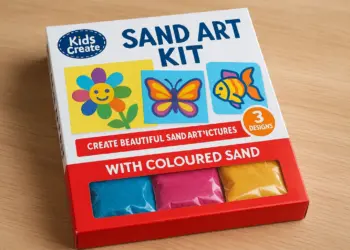
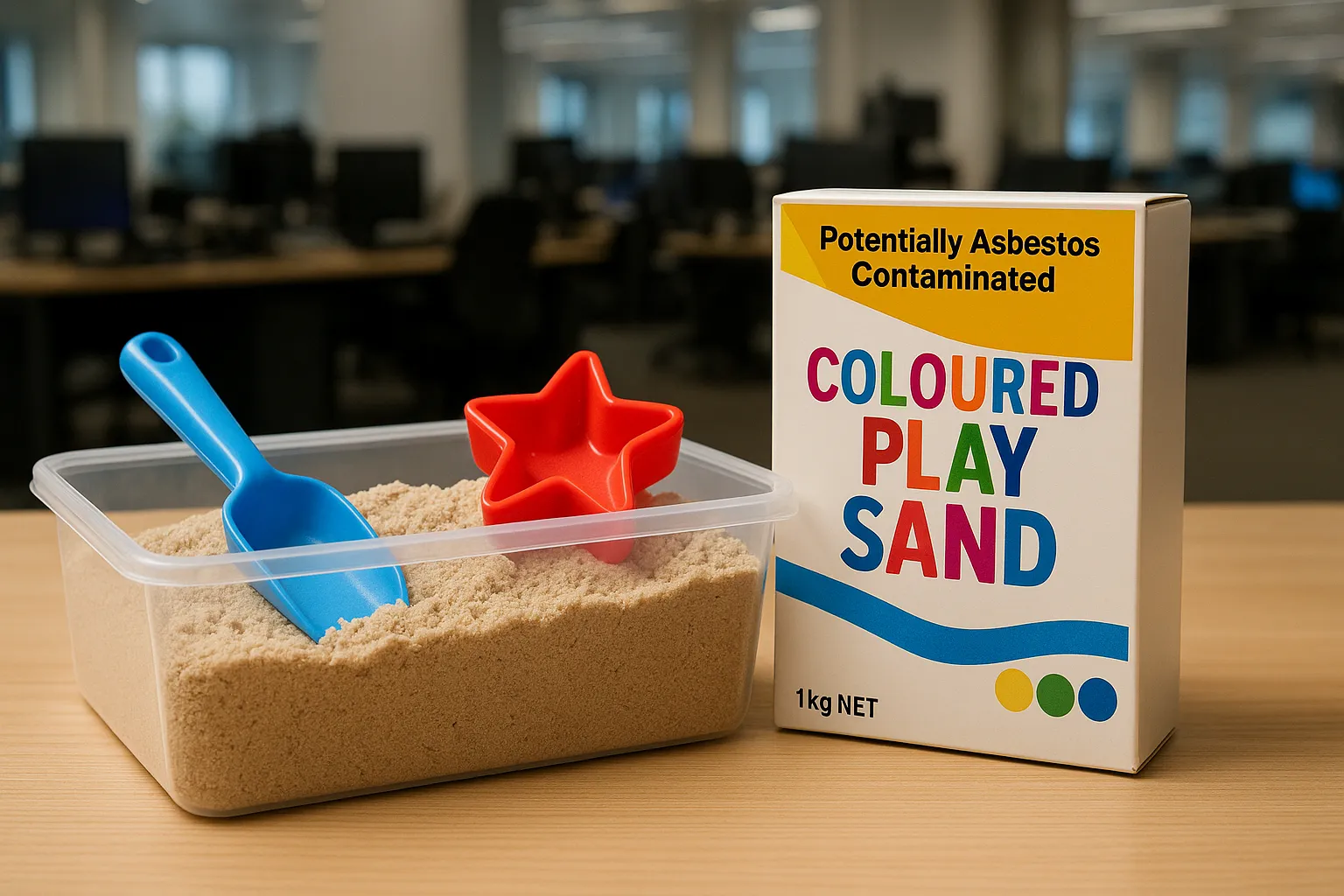
Recent revelations have cast a shadow over the safety assurances provided to Australian and New Zealand parents regarding play sand contaminated with asbestos. Following a series of product recalls prompted by the discovery of asbestos in Educational Colours’ children’s sand products in late 2025, concerns have emerged about the basis of the health guidance issued by government agencies, retailers, and schools.
Initial recalls began in November 2025 when a line of Educational Colours sand products was removed from shelves after tests identified asbestos contamination. Over the following months, more than 20 additional recalls were initiated across various brands and suppliers, indicating a widespread issue affecting many consumers across Australia and New Zealand. For a period of at least five years, tens of thousands of boxes of this potentially hazardous sand had been sold, and it found its way into numerous educational institutions and childcare facilities.
Until recently, the Australian Competition and Consumer Commission (ACCC) communicated to the public that the risk posed by the contaminated sand was “unlikely” to result in asbestos fibres being airborne unless a mechanical process, such as crushing or pulverising, was involved. This statement was rooted in a risk assessment commissioned by Educational Colours, which raised significant concerns due to a lack of independent verification or thorough testing. The findings were not made publicly accessible, raising questions regarding transparency in addressing a serious health concern.
Shockingly, updated testing by Auckland University of Technology (AUT) revealed that 90% of craft sand samples did indeed emit asbestos fibres when handled in a manner typical for children’s play. This stark discrepancy prompted New Zealand’s workplace regulator, WorkSafe NZ, to express internal concerns, indicating that it felt the Australian government’s reassurance lacked a reliable foundation. According to internal communications reviewed, representatives of WorkSafe NZ had consistently argued that any sand potentially contaminated by asbestos must be viewed and managed as hazardous material until proven otherwise.
Despite these warning signs, both Australian and New Zealand authorities, alongside schools and major retailers such as Kmart, continued to use the same reassuring language regarding the potential dangers of the sands, effectively shaping the public narrative around their safety. Kmart, despite not sourcing its sands from Educational Colours, echoed claims that products did not contain friable asbestos, stating they were “low risk” under certain conditions.
Asbestos, a well-known health hazard linked to severe diseases such as mesothelioma and lung cancer, has been prohibited in Australia since 2003, with stringent restrictions on its importation. Following the alarming discovery of asbestos in play sand, Educational Colours conducted further testing, which found that a significant portion of the sand samples was contaminated with tremolite asbestos, a type of asbestos that can cause serious health concerns.
The risk assessment from Educational Colours, which was released on 10 October 2025, described the chances of children being exposed to respiration-sized asbestos fibres as negligible under normal handling conditions. However, the report only reflected discussions between company representatives and the company’s provided laboratory results, cautioning that its conclusions should not be applied broadly.
The initial detection of asbestos by an Australian laboratory was coincidental, identified while studying samples for unrelated training and only reported after the laboratory manager addressed it in a podcast discussion. This pattern of oversight was repeated, with the contaminated products remaining on shelves for another month after the initial recall was initiated. During this time, a risk assessment firm was engaged by Educational Colours to further evaluate the risks associated with the sand.
In the aftermath of these events, parents like Elle Chrisp and David Dingwall from Christchurch have sought clarity and accountability through freedom of information requests. They expressed their disbelief at the assurances regarding the sand’s safety and questioned the validity of the risk assessment document offered by Educational Colours. Their twins had been exposed to the tainted product prior to the recalls, leading them to pursue a compensation claim against Kmart in the New Zealand disputes tribunal.
In response to growing public concern and the alarming findings from the AUT testing, the ACCC has initiated dialogue with retailers Kmart and Officeworks, who agreed to amend their recall notices. They have removed statements asserting that “importantly, respirable asbestos has not been detected” in the tested samples. The ACCC reiterated its commitment to ensuring that suppliers accurately characterise safety hazards in their recall notices.
The Australian and New Zealand governments continue to navigate the complex landscape of product safety, facing mounting pressure to deliver appropriate messaging regarding the risks associated with asbestos contamination. A spokesperson for the New Zealand government acknowledged their efforts to urge suppliers to revise safety communications, particularly in light of the new research indicating that contaminated sand can release asbestos particles even under light handling.
This evolving situation highlights the urgent need for enhanced safety protocols and transparent communication mechanisms to protect consumers, especially vulnerable populations such as children, from the deleterious effects of hazardous materials in everyday products.
Our Thoughts
The incident involving asbestos-contaminated play sand highlights significant failures in safety management and regulatory adherence. Key lessons include the necessity for independent verification of supplier assessments, especially when public health is at risk. The reliance on Educational Colours’ unverified risk assessment, which lacked external testing and oversight, represents a breach of the Health and Safety at Work Act 1974’s requirement for businesses to ensure the safety of their products.
Furthermore, the use of complacent public messaging, which stated that risks were “negligible,” was misleading and did not adequately communicate the potential hazards, contravening the Consumer Protection Act 1987. This act mandates that products must be safe for consumers, and any claims made regarding safety must be substantiated.
To prevent similar incidents, strict regulations should be enforced requiring independent testing and assessment of hazardous materials before public distribution. Enhanced training for regulators and suppliers on proper communication of risks, alongside immediate recalls of potentially hazardous products pending thorough investigations, are vital steps to improve consumer safety and avoid future health risks associated with asbestos exposure.