











Story Highlight
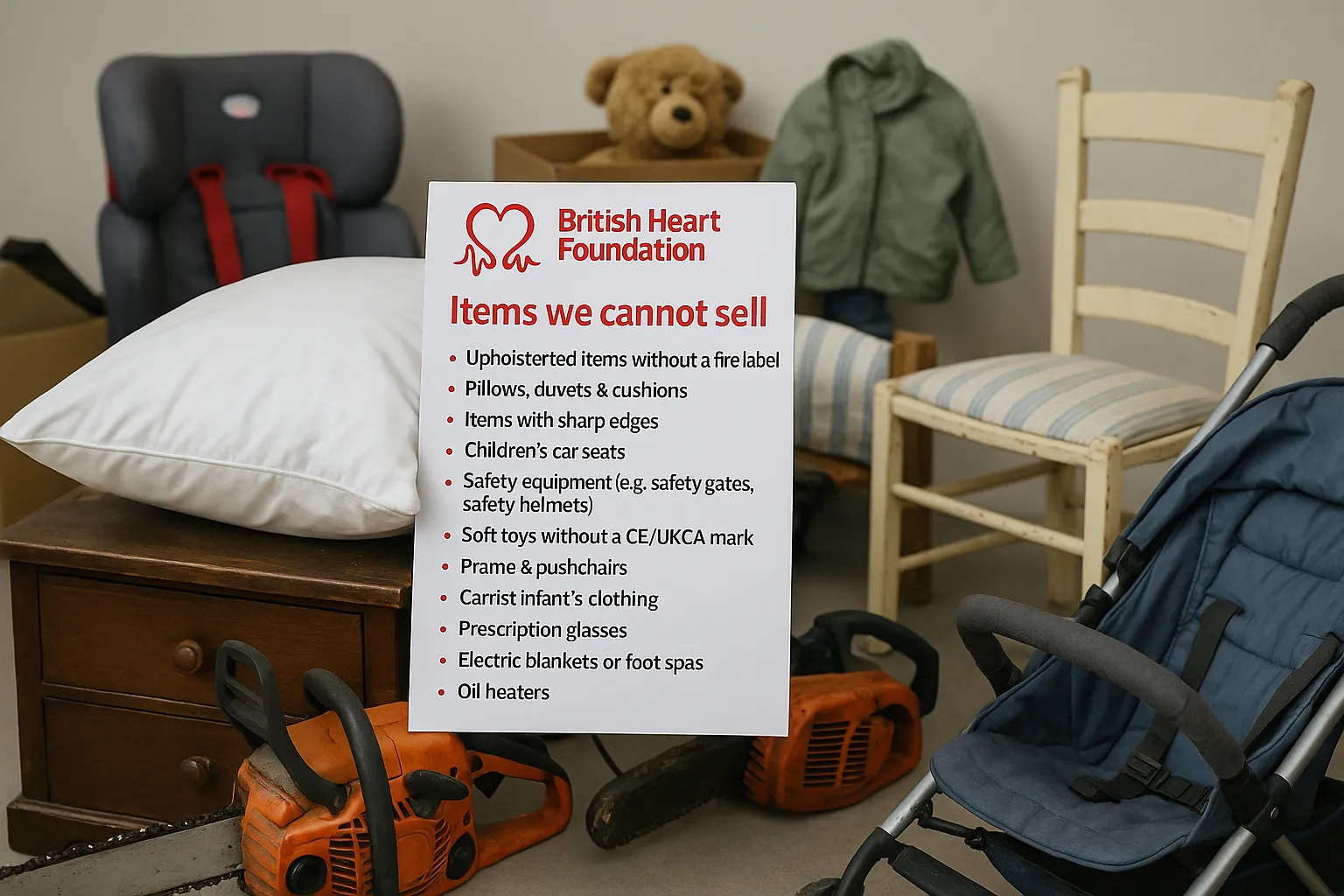
– British Heart Foundation lists banned donation items.
– Clothing regulations include safety labels and flammability warnings.
– Children’s items like car seats and cribs are prohibited.
– Furniture must meet safety standards and be in good condition.
– Hygiene concerns exclude personal appliances and hazardous items.
Full Story
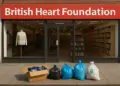
As the time for spring cleaning approaches, many individuals are often spurred into action by the urge to declutter their living spaces. This seasonal ritual, or the commitment to tidy up following New Year’s resolutions, frequently leads to increased donations to charity shops, particularly to the British Heart Foundation (BHF). This leading organisation, which has become synonymous with charitable retail in the UK, operates close to 700 shops across the nation, making it the largest chain of its kind.
While many gladly offer clothing, home goods, and various personal items to these charitable outlets, it is crucial to be aware that the BHF has specific guidelines regarding what can and cannot be accepted. These restrictions are in place to ensure safety and compliance with legal standards, as well as to avoid potential complications associated with selling certain goods.
When it comes to clothing donations, the BHF receives a multitude of garments, ranging from everyday wear to specialised attire. However, not all articles of clothing are deemed acceptable. For instance, fancy dress outfits are only permissible if they feature labels indicating low flammability or specific fire safety information. The same applies to nightwear; garments such as pyjamas and dressing gowns must also carry appropriate flammability warnings to qualify for resale.
In terms of children’s clothing, there are even stricter regulations. For example, items with drawstring hoods are outright banned due to safety concerns. Additionally, any homemade knitted items will not be accepted. These restrictions reflect the BHF’s commitment to ensuring that the wellbeing of young children is paramount in their operations.
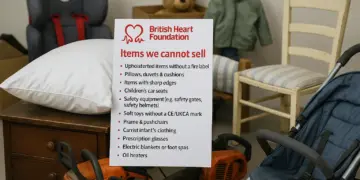
Moving beyond clothing, the British Heart Foundation has dedicated outlets focusing specifically on furniture and homeware. Here, the standards for donations are equally stringent. Items must be in good condition and possess necessary safety labels. Notably, second-hand pillows, duvets, and quilts are not accepted unless they come with fire safety warnings. Furthermore, donated furniture must be free from lead-based paint and include proper fire safety labeling to be considered for sale.
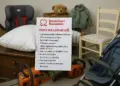
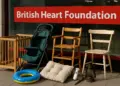
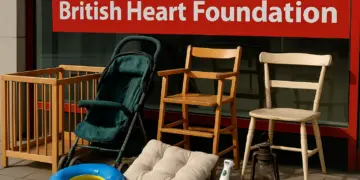
The BHF also has a thorough approach when it comes to child-related donations, as the safety of young consumers remains a top priority. As such, a wide array of baby and children’s equipment cannot be accepted. Items such as car seats and booster seats, prams, pushchairs, cots, high chairs, safety gates, and playpens are classified as unsuitable for sale due to the significant health and safety hazards they can pose when sold as pre-owned products. This policy extends to inflatable beds, dinghies, and water toys as well.
Beyond these specific categories, the British Heart Foundation also outlines other items they cannot accept for hygiene and safety reasons. Personal appliances such as electric shavers or foot spas are prohibited unless they are brand new and sealed. Moreover, all types of weapons are deemed unacceptable, alongside any equipment presenting substantial hazards, which includes certain gas or oil-powered devices. Electrical appliances like electric blankets, hoists, and cooking or washing machines fall into this category as well.
The BHF’s website provides a comprehensive list of excluded items, which serves as a useful guide for potential donors wishing to contribute. Before undertaking a trip to a local BHF shop, individuals are encouraged to check with staff regarding what items can be donated. This can help prevent unnecessary frustration and ensures that contributions adhere to the organisation’s regulations.
The importance of this awareness goes beyond mere compliance. By ensuring that only acceptable items are donated, individuals can contribute positively to the charity’s mission, helping to generate funds that support heart-related initiatives and research. Proper donations enable the BHF to maintain their operations effectively and to redirect resources into meaningful projects for public health.
As we move through the spring months and more people engage in tidying their homes, it’s vital to remember the policies in place at charity shops. By understanding what items are suitable for donation, potential supporters can play a crucial role in facilitating the charitable goals of the British Heart Foundation and similar organisations.
The act of decluttering not only helps individuals create more enjoyable living spaces, but it also provides an opportunity to support vital work in the medical field. The British Heart Foundation is committed to fighting cardiovascular diseases, and each donation, no matter how small, plays a part in funding this important mission.
Spring cleaning, therefore, can serve dual purposes: a fresh start for homes and a chance to extend a helping hand to those in need. Amidst the sorting and sifting through unwanted goods, don’t forget to respect the boundaries set by charities to ensure that every contribution has the greatest positive impact possible.
Our Thoughts
The article highlights the British Heart Foundation’s refusal to accept numerous donated items due to health and safety hazards. To prevent potential issues and ensure compliance with UK health and safety legislation, more stringent donor education and communication could be implemented. For instance, enhancing awareness about the necessity for safety labels on clothing and furniture items would reduce the likelihood of unsafe goods being donated.
Key safety lessons include the importance of vetting items for compliance with the General Product Safety Regulations 2005, which mandates that products must be safe for consumer use. Additionally, compliance with the Furniture and Furnishings (Fire) (Safety) Regulations 1988 is crucial in rejecting items that lack fire safety labels.
To reduce similar incidents, charities should provide clear guidance and display lists of unacceptable items prominently both online and in-store. Regular staff training on health and safety requirements for accepting donations would further mitigate risks and ensure a safe shopping environment. Implementing these measures would help maintain compliance with relevant regulations while protecting the safety of both donors and consumers.