














Choose an AI chat
Care service rated inadequate after serious safeguarding failures
UK Health and Safety Latest

Care service rated inadequate after serious safeguarding failures

by Jade Anderson
June 7, 2026
0

A recent Care Quality Commission (CQC) inspection has labelled Elite Homecare as 'inadequate', prompting serious concerns about care provisions in...

Read moreDetails
Student faces deportation after university withdrawal for non-attendance despite health issues

Student faces deportation after university withdrawal for non-attendance despite health issues

June 6, 2026
Concerns rise over toxic counterfeit squishy dumplings for kids

Concerns rise over toxic counterfeit squishy dumplings for kids

June 6, 2026
Multiple supermarket products recalled over health and safety concerns

Multiple supermarket products recalled over health and safety concerns

June 6, 2026
UK and EU set to agree key trade deal to ease red meat export barriers

UK and EU set to agree key trade deal to ease red meat export barriers

June 5, 2026

Archives

  • June 2026
  • May 2026
  • April 2026
  • March 2026
  • February 2026
  • January 2026
  • December 2025
  • November 2025
  • October 2025
  • September 2025
  • July 2025
  • August 2009

Categories

  • Health and Safety Help
  • News
  • Policies
  • UK Health and Safety Latest
  • About
  • Advertise
  • Policies
    • Privacy Policy
    • Editorial Policy
    • Corrections & Complaints policy
  • Useful Documents
    • Understanding RIDDOR
    • 10 Workplace Safety Failures
    • A Complete Guide to Reporting Safety Incidents in the UK
    • Fire Risk Assessment: Meeting the Regulatory Reform (Fire Safety) Order
    • COSHH Basics: A Practical Guide to Control of Substances Hazardous to Health
    • Working at Height in the UK: The Essentials (WAH Regulations 2005)
    • Asbestos in the Workplace: Control of Asbestos Regulations 2012 (CAR) Essentials
    • Managing Contractors Under CDM 2015: Roles, Duties & Controls
    • DSE & Ergonomics: Healthy Workstations for Office & Hybrid Teams
    • Lock out Tag out LOTO
    • Workplace Transport Safety: Forklifts, Pedestrians & Traffic Management
    • Noise & Vibration at Work: Practical Controls (2005 Regulations)
    • Confined Spaces in the UK: Safe Entry under the Confined Spaces Regulations 1997
  • Contact
  • Agent
Sunday, June 7, 2026
18 °c
London
15 ° Mon
14 ° Tue
14 ° Wed
  • Login
UK Safety News
  • Home
  • News
    • All
    • UK Health and Safety Latest
    Care service rated inadequate after serious safeguarding failures

    Care service rated inadequate after serious safeguarding failures

    Student faces deportation after university withdrawal for non-attendance despite health issues

    Student faces deportation after university withdrawal for non-attendance despite health issues

    Concerns rise over toxic counterfeit squishy dumplings for kids

    Concerns rise over toxic counterfeit squishy dumplings for kids

    Multiple supermarket products recalled over health and safety concerns

    Multiple supermarket products recalled over health and safety concerns

    UK and EU set to agree key trade deal to ease red meat export barriers

    UK and EU set to agree key trade deal to ease red meat export barriers

    Skipper pleads guilty to mistreatment of fishermen amid slavery allegations

    Skipper pleads guilty to mistreatment of fishermen amid slavery allegations

    MPs express concerns over proposed abolition of HSSIB

    MPs express concerns over proposed abolition of HSSIB

    Major supermarkets issue food recalls over safety concerns

    Major supermarkets issue food recalls over safety concerns

    Calls to extend Personal Independence Payments to Type 1 diabetics

    Calls to extend Personal Independence Payments to Type 1 diabetics

    Generational divide in attitudes towards saving and spending

    Generational divide in attitudes towards saving and spending

    Trending Tags

    • Donald Trump
    • Future of News
    • Climate Change
    • Market Stories
    • Election Results
    • Flat Earth
No Result
View All Result
UK Safety News
No Result
View All Result
Home News UK Health and Safety Latest

Calls to extend Personal Independence Payments to Type 1 diabetics

Michael Harland by Michael Harland
June 5, 2026
in UK Health and Safety Latest
Reading Time: 4 mins read
0
Calls to extend Personal Independence Payments to Type 1 diabetics

Story Highlight

– Petition seeks PIPs for Type 1 diabetes sufferers.
– PIPs aid those with long-term health conditions.
– Over 400,000 in the UK have Type 1 diabetes.
– New laws protect benefits during work trials.
– “Right to Try” allows work without reassessment fears.

Full Story

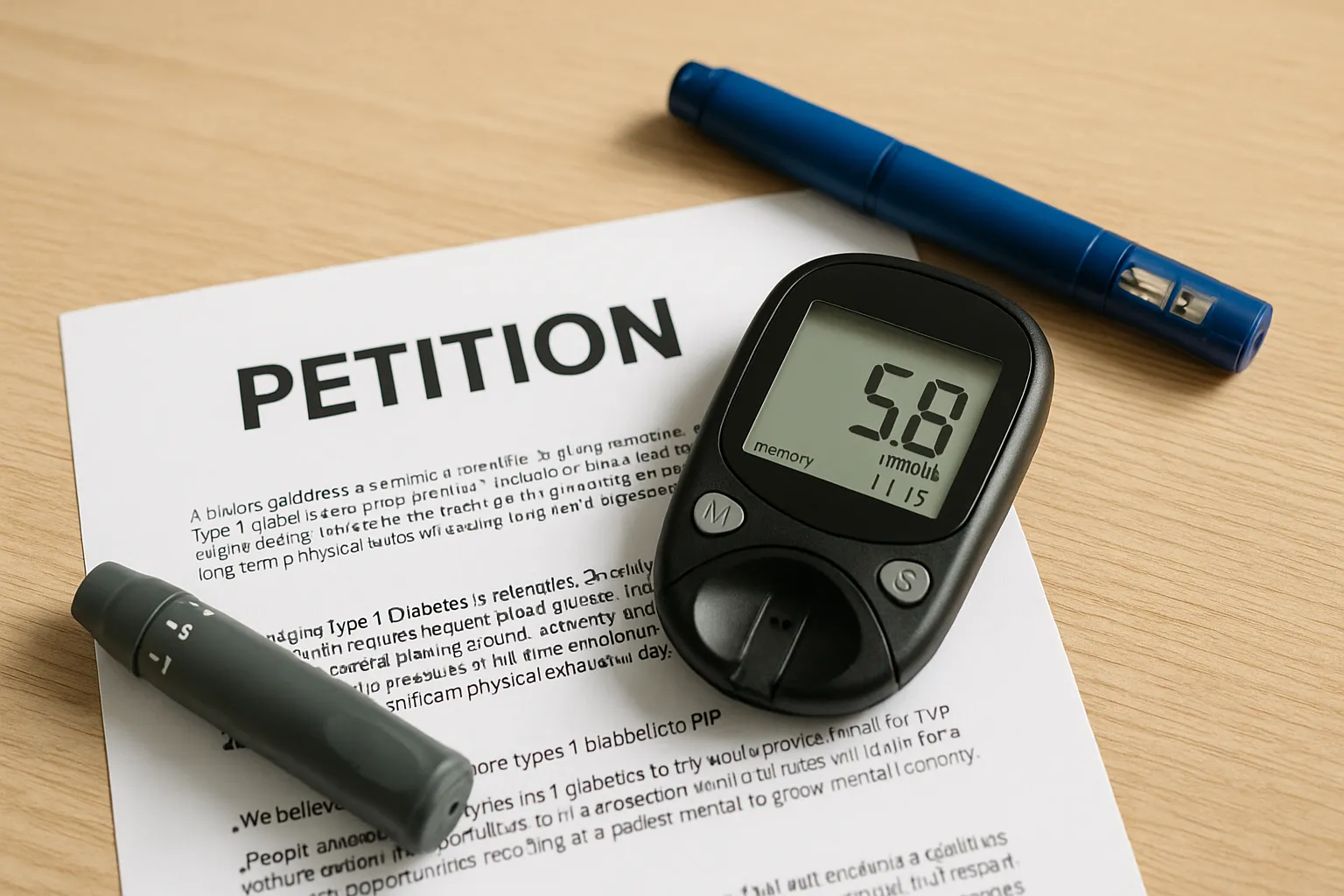
A growing movement is calling for reforms to the Personal Independence Payments (PIPs) system, aimed specifically at including individuals with Type 1 diabetes. This push comes as a response to the challenges faced by those living with the condition, prompting a new petition that is quickly gaining traction on the UK Parliament’s website.

Personal Independence Payments are a crucial welfare benefit designed to assist working-age individuals who incur additional living or mobility expenses due to long-term physical or mental health conditions or disabilities. Importantly, PIPs are non-means-tested, tax-free, and accessible regardless of a claimant’s income, savings, or employment status.

Emily Jones, the creator of the petition, has highlighted the difficulties that Type 1 diabetics encounter on a daily basis. She stated, “Type 1 diabetics do not usually qualify for PIP despite dealing with a dangerous condition 24 hours a day. We believe there is a general lack of understanding and education of Type 1 Diabetes which may affect PIP assessments.”

Jones further elaborated on the rigorous demands of managing Type 1 diabetes, noting that the condition requires continuous blood glucose monitoring, precise insulin management, and strategic planning around dietary choices, physical activity, and emotional wellbeing. This constant vigilance can lead to considerable physical fatigue and mental strain, particularly for those balancing job responsibilities alongside their health management.

The petition argues that extending PIP eligibility to more individuals with Type 1 diabetes could provide essential financial support that allows them to access necessary technologies not covered by the NHS. Furthermore, it could enable them to adjust their working hours to better accommodate the intensive demands of managing their condition.

Estimates suggest that between 400,000 and 464,000 individuals in the UK live with Type 1 diabetes. The petition requires 10,000 signatures to elicit a response from the Department for Work and Pensions, while reaching 100,000 signatures would necessitate a parliamentary debate, compelling government representatives to clarify their stance on the matter.

This initiative arrives in the wake of recent legislative changes affecting benefit claimants, including those receiving PIPs. The new “Right to Try” regulations are part of broader government welfare reforms intended to empower individuals and prevent them from feeling trapped in the benefits system. Under these regulations, individuals claiming Employment and Support Allowance (ESA), PIPs, and the health element of Universal Credit in England, Wales, and Scotland will no longer face automatic reassessment when they engage in work.

Labour MP Vicky Foxcroft raised a pertinent query directed to Secretary of State for Work and Pensions, Pat McFadden, regarding the circumstances under which new work capability or PIP assessments might be triggered under these regulations.

In response, Sir Stephen Timms, Minister of State for Social Security and Disability, reassured that the government is committed to ensuring disabled individuals and those with health conditions are not penalised for taking up paid or voluntary work. Timms clarified that under the Right to Try regulations, staff cannot instigate a new assessment simply because a claimant has begun work.

The changes follow consultation sessions with disabled individuals and advocacy organisations, which contributed to what the government refers to as collaboration committees. These discussions included a commitment that individuals interested in volunteering will be free to do so without the risk of losing their benefits through reassessment.

Mental health advocate Brian Dow, the Chief Executive of Mental Health UK, commended this legislative adjustment, describing it as a “positive and practical step.” He pointed out that many individuals fear the reassessment process, which often deters them from attempting to return to work. “The Right to Try is a welcome initiative that will ensure people have a safety net when exploring opportunities for work or volunteering,” Dow added.

Sir Stephen Timms reiterated the importance of these reforms by emphasising their impact on the wider economy. He remarked, “Giving sick and disabled people legal protection to try work without fear is vital for their futures and for growing our economy.” He highlighted that with approximately 2.8 million people out of work due to long-term illness, the government is focused on dismantling the obstacles that have previously hindered many from entering or re-entering the workforce.

As the petition continues to gain support, advocates are optimistic that it will drive further discussions about the inclusion of individuals with Type 1 diabetes in the PIP scheme, fostering greater understanding and accommodation for those who manage this challenging condition. The outcome could potentially reshape the landscape of support available to those living with Type 1 diabetes, ensuring they receive the assistance necessary to navigate their health alongside their professional lives.

For those interested in supporting the cause, the petition is available for public viewing and signatures, providing an opportunity for individuals to voice their backing for this important issue.

Our Thoughts

The article does not present any direct health and safety incident; however, it highlights an ongoing challenge regarding the assessment criteria for Personal Independence Payments (PIPs) for individuals with Type 1 diabetes.

To prevent potential adverse outcomes for this group, there should be heightened awareness and understanding among assessors regarding the implications of managing Type 1 diabetes. Enhanced training on chronic health conditions could align with the Health and Safety at Work Act 1974, ensuring that employees’ health and welfare are prioritized.

Furthermore, the relevant regulations surrounding welfare benefits must be transparent and promote equitable access to necessary support. The lack of clarity regarding eligibility may breach the Equality Act 2010, as it can inadvertently discriminate against individuals with disabilities through inadequate support structures.

Key safety lessons include the importance of ongoing consultation with affected communities to ensure that policy changes are inclusive and effectively address their needs. Regular assessments and reviews of how welfare policies impact individuals with chronic health conditions can facilitate proactive adjustments to support frameworks, thereby helping to mitigate the physical and mental health challenges these conditions impose.


SummarizeShare34Share197SendSend
ADVERTISEMENT
Michael Harland

Michael Harland

Related Posts

Nationwide food recalls prompt consumer safety warnings

Nationwide food recalls prompt consumer safety warnings

by Jade Anderson
January 3, 2026
0

A nationwide food and drink recall has been announced, affecting several products from major retailers. Notably, Waitrose has recalled certain...

Experts warn of STI surge as festive season approaches

Experts warn of STI surge as festive season approaches

by Ellie Cartwright
December 19, 2025
0

As the festive season approaches, health experts are warning of a potential surge in sexually transmitted infections (STIs), particularly following...

Leave a Reply Cancel reply

Your email address will not be published. Required fields are marked *

I agree to the Terms & Conditions and Privacy Policy.

Useful Documents

  • Understanding RIDDOR
  • 10 Workplace Safety Failures
  • A Complete Guide to Reporting Safety Incidents in the UK
  • Understanding RIDDOR
  • Fire Risk Assessment: Meeting the Regulatory Reform (Fire Safety) Order
  • COSHH Basics: A Practical Guide to Control of Substances Hazardous to Health
  • Working at Height in the UK: The Essentials (WAH Regulations 2005)
  • Lock out Tag out LOTO

Recent Posts

  • Care service rated inadequate after serious safeguarding failures
  • Student faces deportation after university withdrawal for non-attendance despite health issues
  • Concerns rise over toxic counterfeit squishy dumplings for kids
  • Multiple supermarket products recalled over health and safety concerns
  • UK and EU set to agree key trade deal to ease red meat export barriers

Recent Comments

  1. Piper Douglas on Worker dies due to inadequate machinery safety measures
  2. Natalie Coleman on New housing laws aim to tackle damp and mould crisis in England
  3. Simon Barrett on Honeymoon ruined by illness as newlywed suffers severe infection in Cape Verde
  4. Nolan Barrett on Work-related ill health in Great Britain remains a concern after pandemic peak
  5. Dylan Reeves on Sickness rates among Scottish police officers soar to troubling levels
UK Safety News

Copyright © 2026
UK Safety News

Navigate Site

  • About
  • Advertise
  • Policies
  • Useful Documents
  • Contact
  • Agent

Follow Us

Welcome Back!

Login to your account below

Forgotten Password?

Retrieve your password

Please enter your username or email address to reset your password.

Log In
No Result
View All Result
  • Home
  • News

Copyright © 2026
UK Safety News

This website uses cookies. By continuing to use this website you are giving consent to cookies being used. Visit our Privacy and Cookie Policy.