
















Story Highlight
– TOTM launches campaign for menstrual product regulation.
– Public clock counts unregulated minutes of tampon usage.
– E-petition seeks safety testing and ingredient transparency.
– Studies reveal harmful substances in some tampons.
– 100,000 signatures needed for Parliamentary debate.
Full Story
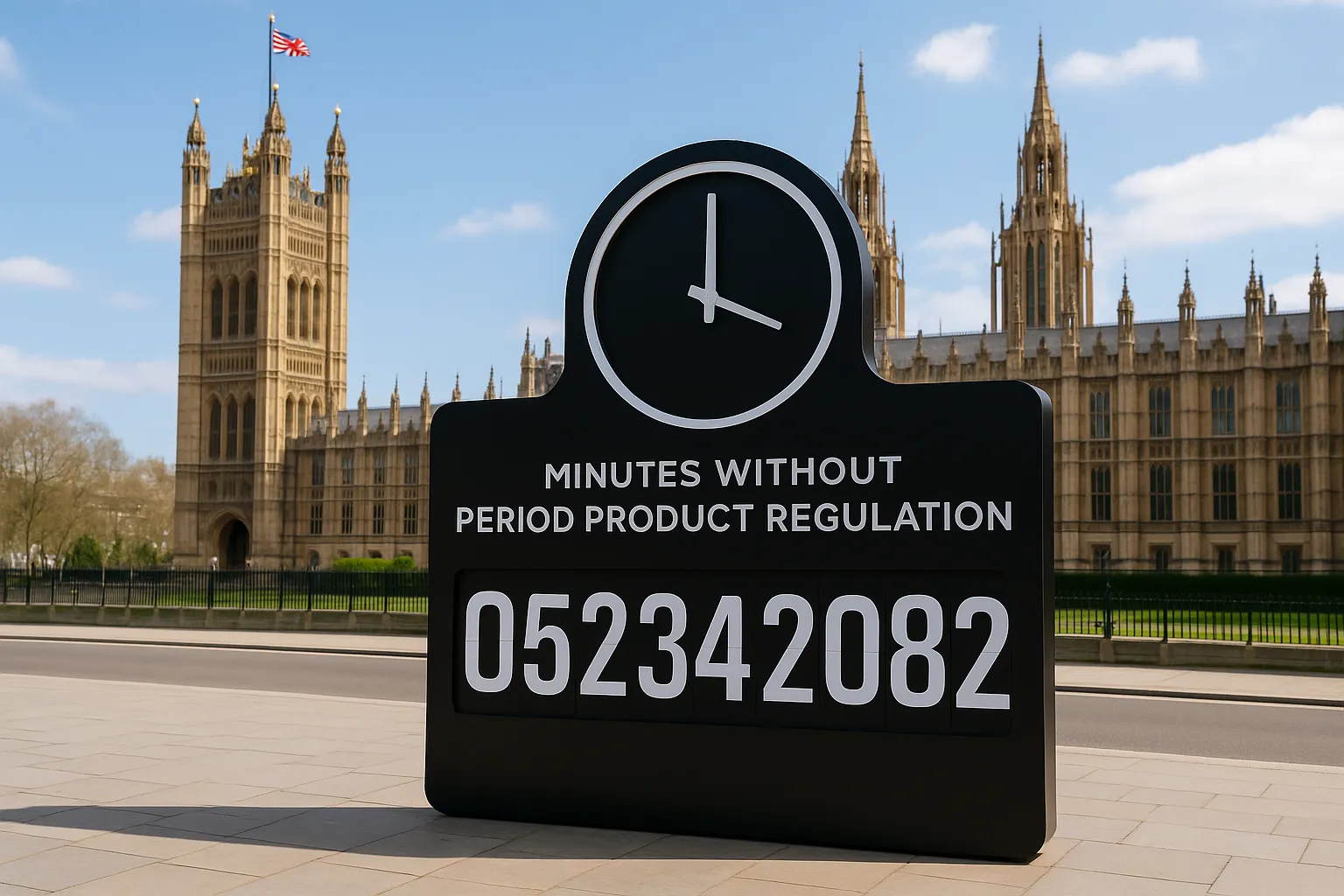
A new initiative launched by the organic period care brand TOTM (Time of the Month) aims to enforce regulatory changes for menstrual hygiene products in the UK. The campaign has gained visibility with the installation of a public clock in front of the Houses of Parliament, counting the minutes since the introduction of period products without any specific regulation. Despite nearly a century passing since the invention of tampons, there remains an absence of statutory safety testing specifically tailored for these products, and manufacturers do not have a legal obligation to disclose their ingredient composition.
Common household items, including sponges, candles, and various cosmetics, are subjected to stringent safety assessments. In contrast, tampons, which are essential for millions of individuals each month, operate under a regulatory grey area, leading to widespread ignorance regarding their unregulated status. A comprehensive study conducted by researchers at UC Berkeley in 2024 uncovered concerning levels of heavy metals—namely lead, mercury, and cadmium—in certain tampons. Additionally, findings from the Women’s Environmental Network revealed the presence of pesticides, including glyphosate, a herbicide that the World Health Organization classifies as “probably carcinogenic to humans.”
In response to these alarming discoveries, TOTM has launched an e-petition advocating for immediate government intervention. Their campaign, which has united numerous period care brands, currently needs 2,500 more signatures to compel a formal response from the government. Achieving a total of 100,000 signatures would escalate the matter to Parliament for further debate.
Vic Fytche-Crossman, who serves as the Global Health and Education Lead at TOTM, emphasised the urgency of the situation: “Transparency, safety, and regulation in period care shouldn’t be up for debate, but that’s where we find ourselves.” He remarked on the irony that while a vast array of everyday products undergoes rigorous testing processes, items designed for internal use lack similar scrutiny. This disparity is particularly troubling given that menstrual health is a critical aspect of women’s health that deserves the government’s attention and proactive measures.
As the campaign progresses, Fytche-Crossman stated, “Advocating for positive change in menstrual health policy is integral to what we do at TOTM. So this International Women’s Day, we’re calling time on unregulated period care.” With the petition nearing its deadline, he reiterated the significance of public support, urging individuals to sign and thereby move closer to establishing impactful regulatory changes for period care products. He highlighted that hitting the milestone of 100,000 signatures would mean the government could no longer ignore this pressing issue.
The movement has sparked conversations across various platforms regarding the regulation of menstrual products, which have largely escaped the scrutiny that other consumer goods face. Advocacy groups and consumers alike are increasingly demanding transparency regarding the contents of tampons and other menstrual products, leading to a growing awareness of the potential health risks involved.
Historically, the debate about the regulation of period products has been minimal in the UK, overshadowed by other pressing women’s health issues. This has changed as organisations such as TOTM bring new focus to the conversation, pushing for safety standards that protect users. The campaign aligns with a broader shift in societal attitudes towards period care, especially as issues of gender equality and women’s health are receiving heightened attention.
With mounting evidence surrounding the potential dangers lurking within unregulated menstrual products, consumers are becoming more discerning about what they choose to use. The increasing popularity of organic and natural alternatives illustrates a shift in consumer behaviour, reflecting a growing demand for safer, more transparent product offerings. As the campaign gains momentum, there is hope that regulatory changes will follow suit, ensuring that all menstrual care products meet the necessary safety standards.
The issue also invites discussions on broader public health policies and the importance of addressing women’s health needs comprehensively. As acknowledged by experts in the field, proper regulation and safety testing could lead not only to safer products but also foster greater public confidence in menstrual health solutions.
The countdown continues as the clock outside Parliament ticks away, and support for TOTM’s petition grows. Advocates for menstrual health are optimistic that as discussions unfold and awareness rises, this campaign could herald significant changes in how period products are governed in the UK, ensuring that women can prioritise their health without undue risk. Public participation in this campaign could prove pivotal, as the collective voice calls for necessary legislative changes, reflecting an urgent demand for awareness, safety, and equality in all aspects of women’s health.
Our Thoughts
The lack of statutory safety testing for tampons in the UK represents a significant gap in health and safety regulations. To avoid potential health risks associated with unregulated menstrual products, key measures should include the introduction of mandatory product-specific safety testing under the General Product Safety Regulations 2005. Additionally, compliance with the Control of Substances Hazardous to Health Regulations (COSHH) should be enforced, ensuring that manufacturers disclose hazardous substances in their products.
The presence of heavy metals and pesticides in tampons underscores the need for transparency and accurate ingredient labeling, which is currently lacking. These issues could lead to breaches of the Health and Safety at Work Act 1974, as products intended for internal use should meet higher safety standards to protect user health.
To prevent similar incidents in the future, regulatory frameworks must be updated to include rigorous safety protocols for menstrual products, similar to those in place for other consumer goods. Advocacy for such changes is essential in raising awareness and ensuring women’s health is prioritized in regulatory processes.