
















Story Highlight
– Proposed rules reduce rooftop solar panel capacity significantly.
– Small homes may struggle to fit useful solar panels.
– Social landlords face challenges reducing tenant energy bills.
– Policy clash with Future Homes Standard complicates implementation.
– HSE urged to collaborate for effective rooftop solar solutions.
Full Story
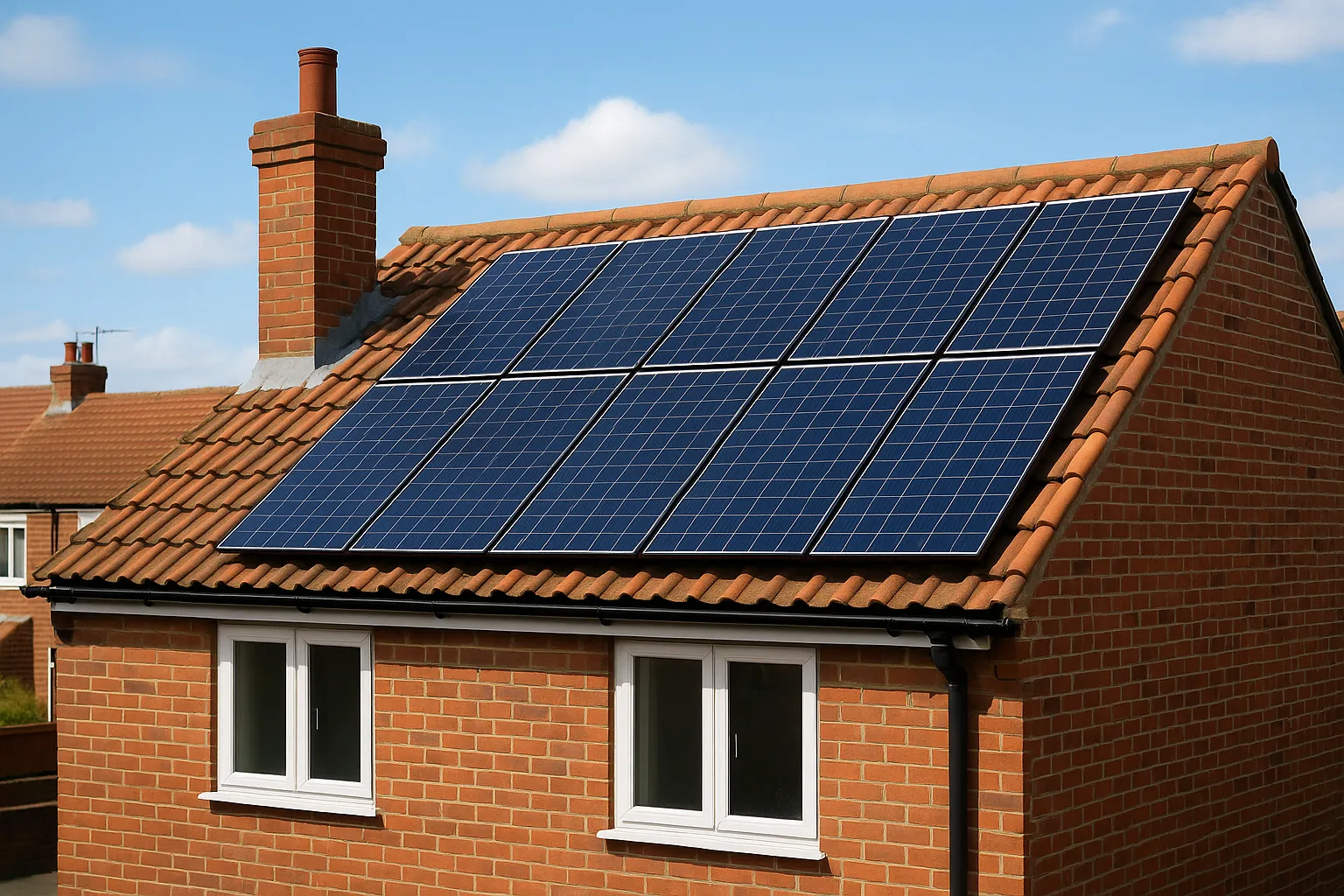
The UK’s approach to solar energy installation, particularly with respect to regulatory frameworks, has come under scrutiny following recent comments made at a housing conference. Concerns have been raised that proposed new regulations by the Health and Safety Executive (HSE) could significantly limit the potential for solar panel installations on domestic rooftops. This could have a detrimental impact, particularly for residents of smaller homes, such as terraced houses, which typically have limited roof space.
Anna Clarke, who serves as the Director of Policy and Public Affairs at The Housing Forum, expressed her reservations regarding the implications of these new rules. “The proposed new rules would significantly reduce the number of solar panels that can fit on a roof,” Clarke stated during a panel discussion at the Housing 2026 conference held on June 25. She emphasised that smaller homes would struggle to accommodate a sufficient number of solar panels, which could undermine efforts to support families looking to lessen their energy bills through solar energy.
Furthermore, Clarke pointed out potential challenges for social landlords, whose initiatives aim to diminish living costs for tenants by investing in renewable technologies. This shift in policy oversight could impede landlords from meeting critical environmental performance standards, particularly the Energy Performance Certificate (EPC) band C requirement. Additionally, Clarke warned that these restrictions may compel landlords—both public and private—to allocate more funding towards less effective energy solutions.
Clarke outlined a dissonance between the current regulatory framework and the ambitions set out in the Future Homes Standard. This standard envisions that the majority of new housing developments will source solar energy equivalent to 40% of their overall energy needs. However, she said that constraining rooftop solar installations could hinder these goals, thereby complicating the broader efforts to reduce carbon emissions across the UK.
Should the regulations persist in their current form, Clarke fears that the reliance on ground-mounted solar installations will increase as rooftops become less viable options for solar technology. “Reducing the capacity for rooftop solar will also reduce the contribution of solar to the UK’s decarbonisation efforts,” she remarked, urging for a more integrated approach between the HSE and the various governmental bodies involved in energy policy.
During the conference, these concerns were echoed by Martin McCluskey, the Minister for Energy Consumers. He acknowledged some of the existing gaps in governmental coordination regarding these issues, admitting to a lack of awareness surrounding the HSE’s consultation process. “A lot of this sits within MHCLG [the Ministry of Housing, Communities and Local Government] and not with DESNZ [the Department for Energy Security and Net Zero], and that is the problem,” McCluskey recognised, suggesting that a collaborative role might be beneficial given the overlaps in these areas.
Moreover, McCluskey reiterated the government’s commitment to facilitating the adoption of renewable technologies while ensuring safety standards are not compromised. “We obviously want to make it as quick and easy for people as possible to get these technologies rolled out, [but] we obviously have to do it in a safe and responsible way,” he commented, indicating an awareness of the need for improved coordination among the departments involved.
As the dialogue around solar energy regulations continues, experts and stakeholders within the housing sector are calling for an urgent examination of the proposed framework. The emphasis is on aligning safety with an environment where solar energy can thrive, particularly in the context of the UK’s long-term sustainability objectives.
Clarke’s appeal for the HSE to engage closely with the teams responsible for the Future Homes Standard and the Warm Homes Plan is indicative of a growing recognition that ensuring safety standards and promoting renewable energy solutions must be parallel objectives. “We urge the HSE to work closely with colleagues who have been developing the Future Homes Standard,” Clarke asserted, underscoring the importance of collaboration in policy development.
The conversation on this topic is particularly pertinent in light of the UK’s commitments to achieving net-zero emissions. Experts have noted that a robust framework for renewable energy, including rooftop solar, is vital for meeting these ambitious climate goals. As regulatory bodies examine how best to balance safety with innovation in the housing market, the focus remains on maintaining pathways that allow for effective solar technology deployment without compromising public safety.
The HSE has yet to provide an official statement regarding its proposed regulations, and inquiries to the Building Safety Regulator for comments on the matter have not yet yielded responses. The discourse surrounding solar energy and housing policy is, therefore, set to continue as stakeholders seek clarity and assurance in a rapidly evolving energy landscape.
Our Thoughts
The article highlights a clash between proposed rules limiting rooftop solar panel installations and the Future Homes Standard, which promotes higher solar energy use in new builds. To mitigate related safety and operational issues, better collaboration between relevant government bodies (HSE, MHCLG, DESNZ) is essential, as safety assessments should consider the impact on renewable energy initiatives. The absence of a comprehensive coordination strategy may breach the Health and Safety at Work Etc. Act 1974, which obligates organizations to ensure the health and safety of workers and the public.
Key lessons include the importance of integrating environmental policies with safety regulations to ensure compliance and achieve decarbonization goals. This could involve ongoing assessments of guidance and regulations to align safety standards with renewable energy advancements. To prevent similar incidents, developing clearer communication channels for stakeholders and continuous safety training on new technologies is crucial. Moreover, regular consultations with the Health and Safety Executive could enhance proactive safety measures while maximizing renewable energy potential on rooftops.