







Story Highlight
– New rules may limit rooftop solar panel installations.
– Small terraced houses face reduced solar panel capacity.
– Social landlords struggle to reduce tenants’ energy bills.
– Policy clash with Future Homes Standard noted by Clarke.
– Minister McCluskey acknowledges oversight issues in consultation.
Full Story
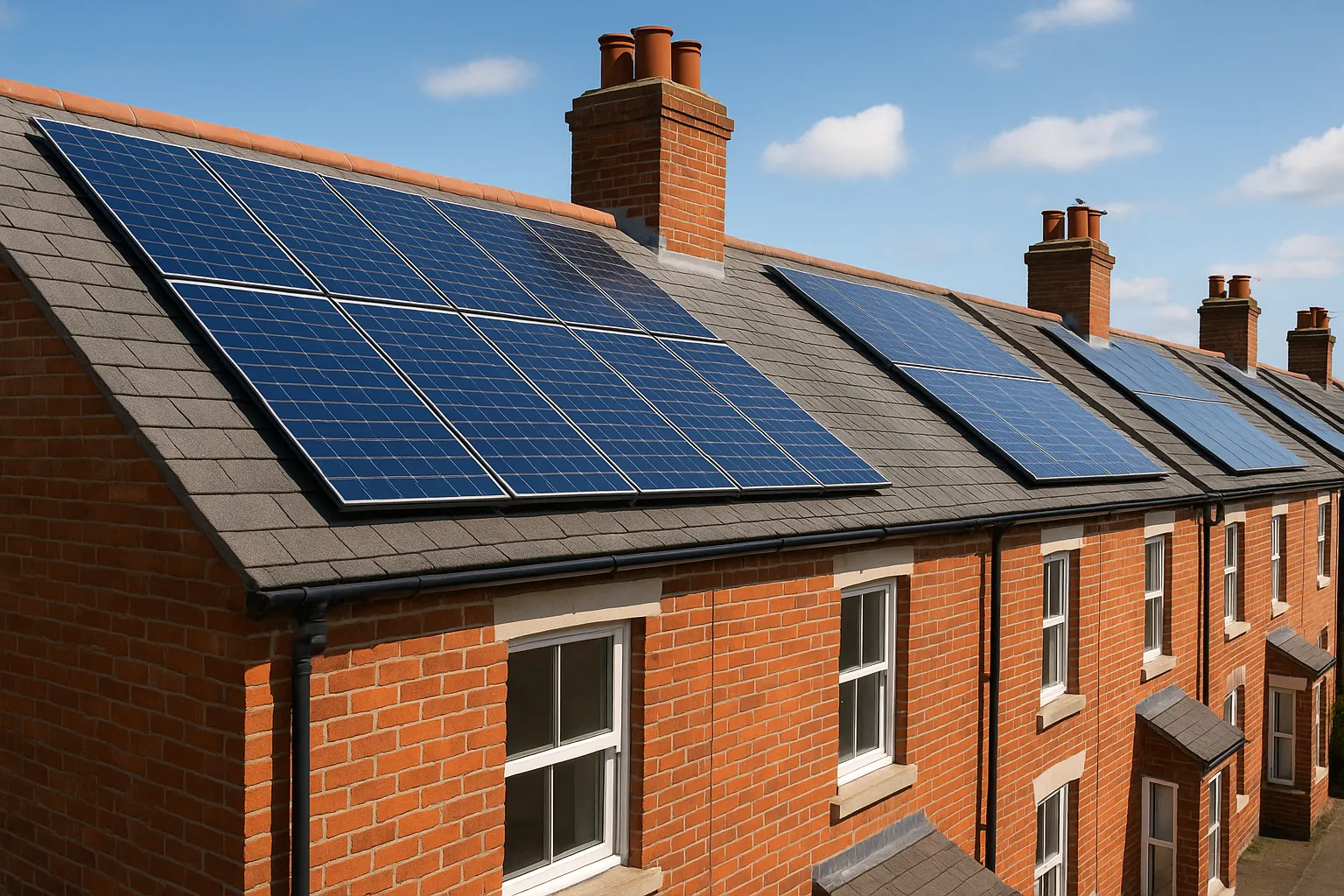
In a lively discussion at the Housing 2026 conference, concerns were raised regarding new proposed regulations that could limit the installation of solar panels on residential roofs. Anna Clarke, who serves as the director of policy and public affairs at The Housing Forum, voiced her apprehensions about the potential implications for homeowners, particularly those living in small terraced houses.
Clarke stated that the anticipated rules might drastically reduce the number of solar panels that could legally be installed on roofs, effectively curtailing the ability for many residents to harness solar energy. “This will mean that people in small terraced houses find they cannot fit a useful number of panels,” she explained, highlighting the unique challenges faced by this demographic.
Moreover, Clarke emphasised that these limitations could negatively impact social landlords who are striving to reduce energy bills for their tenants by deploying solar technology. She underlined the risk that social and private landlords may find it increasingly difficult to comply with the Energy Performance Certificate (EPC) C requirement due to these restrictions. This may compel them to invest more resources into alternative energy measures that may not be as effective.
“There is clearly a policy clash here with the Future Homes Standard,” Clarke pointed out, referencing the government’s initiative which aims for the majority of new homes to include solar provisions equivalent to 40% of their footprint. If rooftop installations become less viable, there is a concern that solar energy production will need to shift to ground installations, which may not be as efficient or beneficial for urban environments.
Addressing the urgency of the situation, Clarke urged the Health and Safety Executive (HSE) to collaborate closely with entities developing the Future Homes Standard, alongside the Department for Energy Security and Net Zero (DESNZ), which oversees initiatives like the Warm Homes Plan. “We urge the HSE to find ways to ensure safety alongside a future that maximises the potential for rooftop solar,” she stated, indicating a need for a balanced approach that promotes safety while encouraging renewable energy solutions.
During the conference, Clarke shared her insights directly with Martin McCluskey, the minister for energy consumers. McCluskey confessed that he was previously unaware of the HSE’s consultation process regarding these new regulations and acknowledged the complexity of the situation. “A lot of this sits within MHCLG [the Ministry of Housing, Communities and Local Government] and not with DESNZ, and that is the problem,” he reflected, suggesting that perhaps coordinating across these departments might yield a more effective strategy.
McCluskey remarked, “I’ve often thought that maybe this role should be a joint role with MHCLG because there are so many dependencies.” His commitment to reassessing the collaboration between departments was evident, as he expressed a desire to facilitate a faster rollout of solar technologies while maintaining public safety. “We obviously want to make it as quick and easy for people as possible to get these technologies rolled out, but we obviously have to do it in a safe and responsible way,” he added.
The implications of such developments resonate not only for individual homeowners but also for broader environmental goals, as the UK seeks to enhance its decarbonisation efforts. The strategic placement and installation of solar panels represent a significant leap toward reducing the carbon footprint of residential properties. However, if new regulations hinder this potential, local and national energy targets could be jeopardised.
While the HSE opted not to provide commentary on the evolving situation for this article, there remains a critical need for stakeholder engagement to address the concerns raised regarding the sustainability of urban energy solutions. The Building Safety Regulator has been contacted for comment, but clarity on how these regulations might unfold remains uncertain.
As discussions about energy consumption and sustainability become ever more central in policy spheres, the balance between safety regulations and the promotion of renewable energy technologies will be pivotal. Clarke’s remarks at the conference reflect not only the technical challenges associated with solar energy installations but also the wider implications for energy equity and environmental health across the UK.
The dialogue initiated by Clarke and continued by McCluskey underscores the necessity for a comprehensive approach that integrates safety with progressive energy policies. As stakeholders continue to advocate for the importance of rooftop solar, it remains imperative for regulatory bodies to consider both the immediate implications for housing as well as the long-term vision for the UK’s renewable energy landscape.
Our Thoughts
To avoid the issues highlighted in the article regarding rooftop solar panel regulations, several key safety and regulatory considerations need to be addressed.
Firstly, better collaboration between the Health and Safety Executive (HSE), the Ministry of Housing, Communities and Local Government (MHCLG), and the Department for Energy Security and Net Zero (DESNZ) is essential. This would ensure safety standards are aligned with decarbonisation goals and the Future Homes Standard.
Secondly, adherence to the Health and Safety at Work Act 1974 should be emphasized, which mandates ensuring safe working conditions for installation processes. Proper risk assessments and mitigation strategies should be in place prior to implementing any new policies that may impact installation feasibility.
Additionally, the requirement for installations to comply with the Building Regulations would ensure that any structural modifications necessary for solar panels are safe and effective.
In conclusion, increased interagency cooperation, thorough risk assessments, and strict adherence to existing health and safety legislation would help prevent similar issues and ensure that solar panel initiatives are both safe and effective in achieving energy efficiency and sustainability objectives.