










Story Highlight
– Council votes to remove stepping stones for safety concerns.
– £100,000 footbridge will replace the stones.
– Legal liability issues influenced the decision to remove.
– Eroded steps leading to the river deemed dangerous.
– River Hogsmill is a habitat for rare wildlife.
Full Story
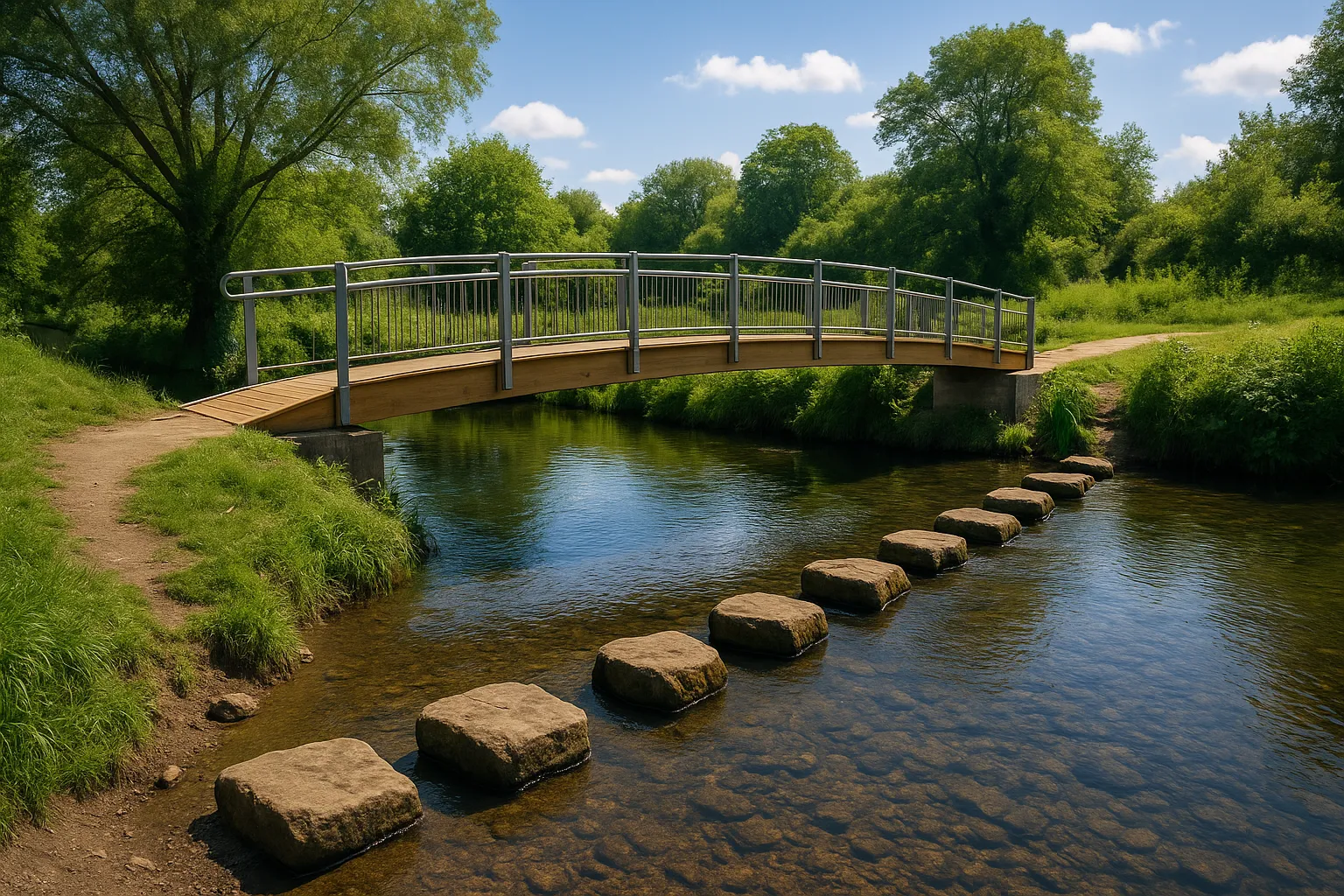
Epsom and Ewell Borough Council has decided to remove stepping stones from the Hogsmill River due to safety concerns, opting instead to construct a footbridge at a cost of £100,000. The resolution was passed during the council’s meeting on Tuesday, following recommendations from an investigation conducted by the Environment Agency, which identified a potential risk of slips and falls associated with the stones.
The stepping stones, which have been part of the landscape since 1983, frequently find themselves submerged, raising worries about their safety, particularly for families and younger children. The council’s environmental committee ultimately determined that the legal implications of maintaining the stones outweighed the benefits of keeping them, leading to the decision for their removal.
Chair of the environmental committee, Councillor Liz Frost, stated that “a range of options” had been considered. She expressed sympathy for those who might be disheartened by this decision but emphasized that a footbridge represents a long-term solution that would ensure safer access for individuals of all ages and abilities. “This initiative will allow people to continue enjoying this beautiful setting for many years to come,” Frost noted.
Critics of the decision included Deputy Mayor Julie Morris, who pointed out that she had not encountered anyone in favour of completely eliminating the stepping stones. She acknowledged that while enhancing access is vital, it is equally important to preserve the enjoyment that comes from crossing the river in a playful manner.
Labour councillor Rob Geleit also expressed his concern about losing the stepping stones, remarking, “There is always an element of risk in places where children play, especially when there’s water.” Geleit lamented the decision but recognized the need for safety improvements. However, his colleague, councillor Rachel King, raised significant legal concerns regarding liability, arguing that even with safety warnings posted, the council would still be held accountable for any accidents. “You cannot sign your way out of liability,” she remarked, reinforcing the administrative burden on the council should injuries occur.
The decision follows numerous accidents reported over the years, where individuals have slipped on the stones or fallen off them while attempting to cross the waterway. Such incidents have increasingly highlighted the urgent need for alternative crossing solutions to balance safety and leisure.
Local environmental advocates have expressed disappointment, emphasising the stepping stones as a cherished aspect of the river experience. The Hogsmill River, renowned for being one of only 200 chalk streams in the world, plays host to a rich diversity of wildlife, including kingfishers and various native plants, contributing to the area’s natural beauty.
Responses from community members have been mixed, with some individuals suggesting that compromised enjoyment and natural interaction with the river would result from replacing the stones with a bridge. Advocates for maintaining the stones argue that they provide a unique interaction with nature, especially for children and families. They highlight the importance of preserving such interactive experiences in an age where digital distractions are prevalent.
The council’s position underscores a growing trend among local authorities to prioritise public safety over recreational enjoyment in natural spaces. Councillor Frost outlined the need for responsible governance in her remarks, reinforcing the notion that safeguarding residents from potential harm is paramount.
While the stepping stones may soon be a memory, this new footbridge aims to strike a balance between enabling continued public access to the river and ensuring the safety of those who wish to enjoy it. Early designs suggest that the bridge will not only provide a stable crossing point but could also enhance the aesthetic appeal of the surrounding area.
As a next step, the council will enter discussions regarding the footbridge’s design, ensuring it aligns with the natural environment objectives and community desires. There is an expectation that construction will begin shortly after the design phase is completed, allowing residents and visitors to utilise the new crossing within the coming months.
Given the historic appeal of the Hogsmill River as a locality for tourists and residents alike, the forthcoming bridge may provide a means for sustained engagement with this unique ecological area, albeit in a different form than the beloved stepping stones.
The controversy surrounding this decision has ignited conversations about balancing ecological preservation, recreation, and community safety in local governance. As this situation develops, all eyes will be on Epsom and Ewell Borough Council to see how they navigate future challenges in maintaining their cherished public spaces while adhering to safety regulations.
Our Thoughts
To avoid the incident regarding the stepping stones on the Hogsmill River, the Epsom and Ewell Borough Council could have taken several preventive measures. First, the council should have conducted a more thorough risk assessment in line with the Management of Health and Safety at Work Regulations 1999, focusing on slips and falls associated with the submerged stones.
Regular maintenance and inspections could have identified the potential hazards, prompting timely interventions such as installing non-slip surfaces or handrails, which are mentioned in the Health and Safety at Work Act 1974. Instead of eliminating the stepping stones entirely, providing adequate safety measures such as safety signage, lighting, and maintenance protocols could have mitigated risks while preserving the crossing’s recreational value.
The decision to remove the stones highlights a breach of the council’s duty to ensure public safety without fully exploring reasonable alternatives. Future similar incidents could be prevented by ensuring that all potential safety solutions are thoroughly considered and evaluated before significant changes are made to public spaces.