















Story Highlight
– Esso fined £1m after LPG release incident.
– Structural collapse due to long-standing corrosion identified in 2010.
– 2.4 tonnes of LPG released; no injuries reported.
– Emergency measures successfully reduced gas spread risks.
– HSE emphasized the need for better risk management.
Full Story
Esso has been penalised with a fine of £1 million following a significant structural failure at its Fawley Oil Refinery, which resulted in the release of approximately 2.4 tonnes of liquid petroleum gas (LPG), according to findings from an investigation conducted by the Health and Safety Executive (HSE).
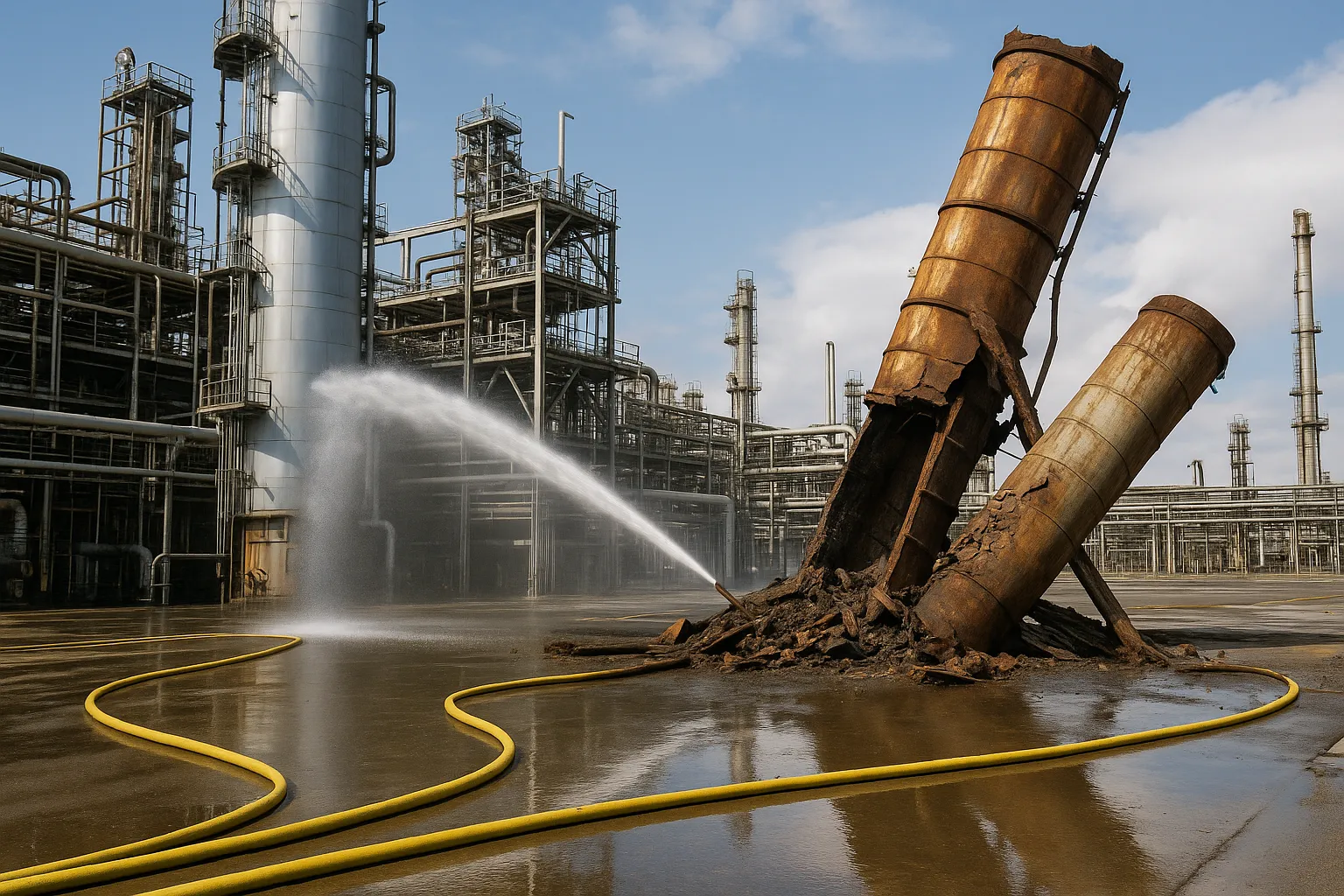
The incident, which occurred on 8 November 2022, was presented during proceedings at Southampton Magistrates’ Court. There, it was revealed that the company had pleaded guilty to a breach of health and safety regulations. The investigation established that long-standing corrosion of a critical steel tower had not been adequately addressed, exposing both employees and the public to serious safety risks.
According to the HSE, the issues surrounding the structural integrity of the facility had been noted as early as 2010, but Esso failed to implement necessary actions to control the corrosion and mitigate associated risks. This oversight is particularly troubling given that it could have led to an even more catastrophic situation.
During the collapse, an estimated 400 kilograms of gas was released within just over half an hour, which contributed to a total of 2.4 tonnes escaping over a prolonged 33-hour duration. Remarkably, no injuries were reported among the workers present in the vicinity of the incident. However, they faced a perilous situation, particularly from the potential for injury due to falling debris and the risk of gas ignition.
In response to the emergence of vapour from the collapse, emergency protocols were activated. This included the deployment of water curtains designed to limit the dispersion of the highly flammable gas. It took a dedicated effort over about 33 hours to isolate the affected process and to safely direct any remaining substances to the refinery’s flare system.
Following the hearing, the total financial penalty imposed on Esso was £1 million, in addition to £12,277 in court costs. Amanda Huff, an inspector with HSE’s specialist chemicals, explosives, and major hazards division, remarked on the gravity of the incident. She noted, “This incident resulted in the uncontrolled release of a large quantity of flammable gas, which exposed workers to very real and potentially life-threatening risks.”
Huff emphasized the critical importance of managing the integrity of equipment and machinery, stating that despite early warnings regarding corrosion, Esso failed to take adequate preventative measures. “Workers and the wider public have every right to assume that sites processing large quantities of highly flammable chemicals are being properly managed,” she added. “It is vital for companies to ensure that robust systems are in place to maintain critical infrastructure safely.”
Reflecting on the potential consequences of the incident, Huff stated, “This incident could have been far worse, and today’s sentence reflects the seriousness of the breaches our investigation uncovered.”
In light of the incident, a spokesperson for ExxonMobil shared the company’s commitment to safety, stating, “Safety is our number one priority and we acknowledge this incident fell short of the standards expected.” They also indicated that Esso had fully cooperated with the authorities throughout the investigation and highlighted that measures have since been implemented to prevent similar occurrences in the future.
The case has drawn attention not only for the immediate safety implications but also as a reminder of the ongoing responsibility that industrial companies hold in maintaining operational safety standards. Given that the refinery processes large quantities of flammable materials, this incident serves as a critical lesson in the importance of proactive risk management.
Local residents and workers in the area have expressed their concerns following the incident, underscoring the need for rigorous oversight in facilities like Fawley. There are calls from community members for enhanced safety protocols and greater transparency regarding the operations of local refineries, particularly in light of the potential risks they pose.
As industry experts weigh in on the implications of such incidents, the narrative continues to focus on the balance between industrial output and public safety. The Fawley incident highlights the need for continual assessment and improvement of infrastructure and safety processes in oil refineries and similar facilities.
In conclusion, the substantial fine levied against Esso serves as a pointed reminder of the importance of accountability and thorough oversight in industrial operations. The incident at Fawley not only raises questions about the management of aging infrastructure but also reinforces the necessity of stringent health and safety practices in protecting workers and communities alike.
Our Thoughts
The incident at Fawley Oil Refinery underscores significant lapses in health and safety management, specifically regarding the integrity of plant infrastructure. The key takeaway is the critical importance of regular maintenance and immediate action upon identifying hazards, as long-standing corrosion was noted but not addressed since 2010.
The failure to control this risk breaches regulations under the Health and Safety at Work Act 1974, particularly the duty to ensure the health and safety of employees and others affected by work activities. Additionally, the Control of Major Accident Hazards Regulations (COMAH) require robust safety management systems for facilities dealing with hazardous substances, which were evidently lacking.
To prevent similar incidents, companies must implement rigorous inspection and maintenance schedules, respond promptly to identified hazards, and foster a culture of safety where risks are actively managed. Training employees to recognize and report potential hazards can further enhance workplace safety, ensuring that sites dealing with flammable materials are maintained to the highest standards. Regular audits of safety protocols could also reinforce compliance with legal obligations, safeguarding employees and the public.