















Story Highlight
– FDA accuses Novo Nordisk of serious safety reporting violations.
– Three patient deaths involving Ozempic were unreported.
– Inspections revealed repeated failure to meet reporting deadlines.
– New research links GLP-1 drugs to vision loss risks.
– Legal pressure builds with thousands of pending lawsuits.
Full Story
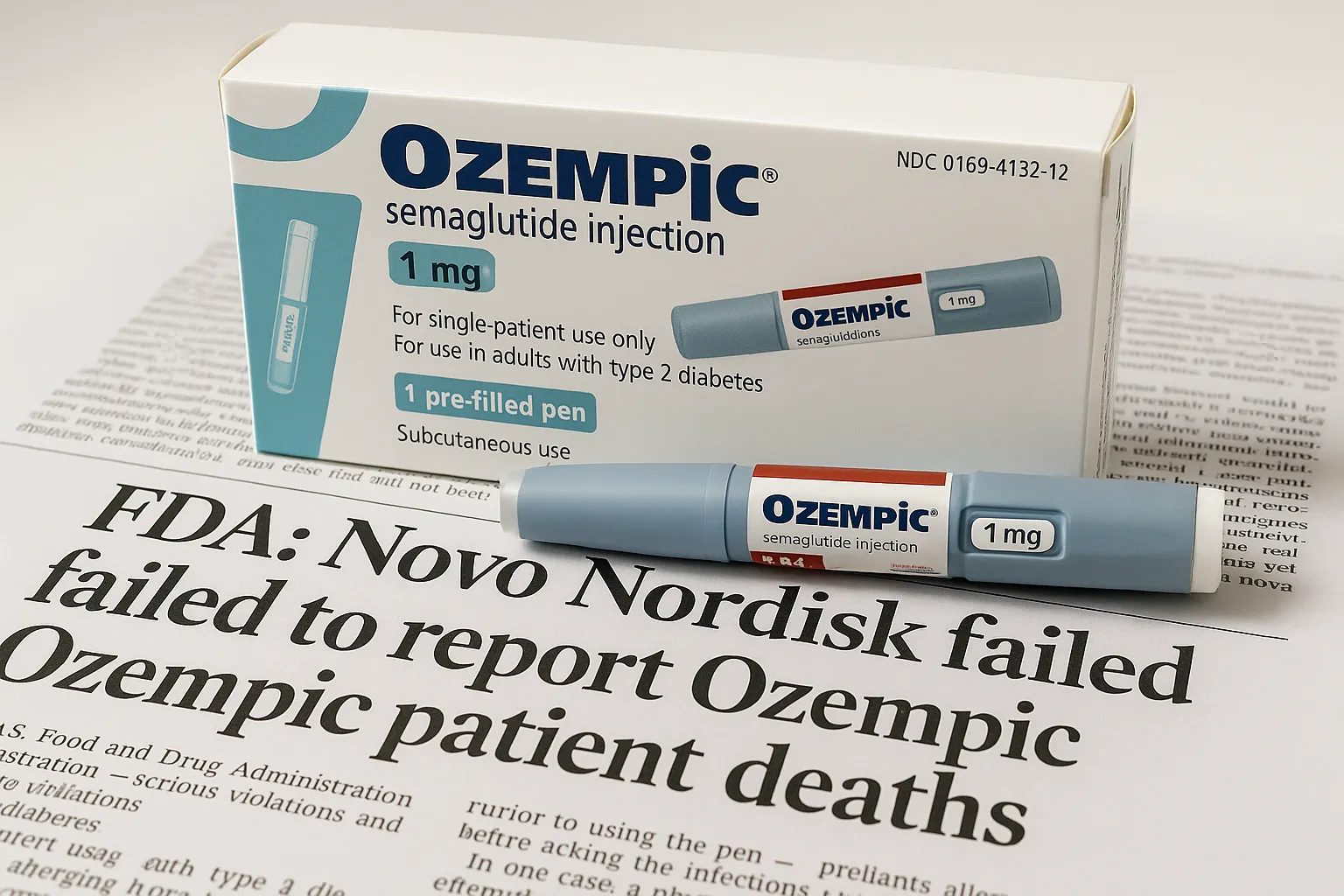
The US Food and Drug Administration (FDA) has raised significant concerns regarding Novo Nordisk’s compliance with safety reporting regulations. In a warning letter dated 5 March, the FDA highlighted what it termed ‘serious violations’ in the Danish pharmaceutical company’s procedures for reporting adverse events related to its widely used diabetes medication, Ozempic. Notably, the FDA did not attribute the deaths of three patients directly to the drug, but the findings shed light on deeper issues within Novo Nordisk’s monitoring processes.
Investigators at the FDA conducted an inspection of the company’s facility in Plainsboro, New Jersey, from 13 January to 7 February 2025. Their report indicated that Novo Nordisk failed to notify the FDA of serious and unexpected adverse events within the required 15-day timeframe, a crucial compliance expectation set by federal regulations. Among the unreported incidents were two patient deaths and one suicide connected to semaglutide, the active compound present in both Ozempic and its weight-loss alternative, Wegovy. In a particularly troubling case, a physician had informed Novo Nordisk that a patient who was experiencing depression had taken their own life. However, the company did not record any follow-up on this report, and as of the issuance of the warning letter, it had still not been submitted to the FDA.
The FDA’s letter further revealed a troubling aspect of Novo Nordisk’s internal reporting procedures: if reporters assessed an event as unrelated to the drug, their reports were either rejected or omitted. This practice directly conflicts with FDA requirements, which mandate that all adverse events be communicated to the agency, irrespective of any perceived connection to the medication. The FDA noted in its correspondence, “Your written procedure excluded reports from the definition of adverse reaction if the reporters specifically state that they believe the events to be unrelated. This definition is inconsistent with FDA regulations.”
Timely reporting of adverse events is vital for regulatory oversight, helping the FDA identify emerging safety issues across vast patient populations. Lapses in reporting can obscure potential risks associated with medications, inhibiting the agency’s ability to safeguard public health. Beyond the three deaths, reports indicated that Novo Nordisk had also failed to report at least ten additional serious adverse events, suggesting that the problems with its safety reporting could be more widespread than initially thought.
Compounding the situation, recent research has revealed concerning associations between glucagon-like peptide-1 (GLP-1) drugs and eye health complications. A study highlighted at the October 2025 meeting of the American Academy of Ophthalmology found patients on GLP-1 medications were 68.6 times more likely to suffer from non-arteritic anterior ischemic optic neuropathy (NAION) compared to those using other diabetes treatments. This condition, characterised by sudden and often permanent vision loss due to blocked blood flow to the optic nerve, prompted the European Medicines Agency to list NAION as a ‘very rare’ side effect for semaglutide-containing products.
As pressure mounts from both regulatory bodies and the research community, Novo Nordisk is also facing a growing number of lawsuits. By early March, there were 3,363 cases in federal multidistrict litigation (MDL) based in the Eastern District of Pennsylvania. These lawsuits include claims that the company did not adequately warn patients about risks such as gastroparesis and bowel obstruction. Additionally, a separate MDL focused on vision loss claims has 54 cases pending, both overseen by Judge Karen Spencer Marston.
The FDA’s scrutiny of Novo Nordisk comes at a time when the demand for GLP-1 medications is soaring, with many patients seeking these drugs through unregulated channels. A report by The Pharmacist noted that approximately one in five users of weight loss medications in the UK had obtained their drugs without a prescription, with 31% purchasing through social media platforms. This trend raises additional concerns about the safety and authenticity of such medications, especially following a global alert issued by the World Health Organisation in 2024 regarding counterfeit Ozempic products. Reports of fake injection pens surfaced from various locations, including Brazil, the UK, and Northern Ireland.
In response to the FDA’s warning, Novo Nordisk has been granted a 15-business-day window to outline the corrective actions it intends to implement. Anna Windle, who leads clinical development, medical, and regulatory affairs at Novo Nordisk US, stated that the company “takes PADE reporting requirements seriously” and is committed to addressing the FDA’s concerns in a comprehensive manner. Notably, Novo Nordisk indicated that it has already submitted several updates to the FDA following the initial inspection in 2025, but it must provide assurances of accurate safety data collection by the looming deadline of 26 March.
As the scrutiny intensifies, both the regulatory landscape and the ongoing litigation may necessitate a rethink by Novo Nordisk regarding its approach to safety and compliance. The overarching implications of these developments underscore the critical importance of robust pharmacovigilance systems designed to track and report adverse event data effectively, which is essential to protecting patient health and maintaining public trust in pharmaceutical products.
Our Thoughts
Novo Nordisk’s failure to report adverse events associated with Ozempic raises significant concerns regarding compliance with health and safety regulations. The company breached the requirement to report serious adverse events to the FDA within 15 calendar days, as outlined in the Medicines and Healthcare products Regulatory Agency (MHRA) guidelines under the UK Medicines Act 1968. The internal procedures that allowed for adverse events to be dismissed if deemed unrelated undermine the principles of comprehensive safety monitoring and reporting mandated by MHRA regulations.
To prevent such incidents, a robust training program on regulatory compliance and internal reporting protocols should have been implemented. A dedicated, independent safety monitoring team could ensure all adverse events are reviewed without bias, fostering an organizational culture committed to patient safety over perceived causality. Regular audits and an effective whistleblowing mechanism could also enhance oversight and accountability within reporting systems.
Ultimately, timely reporting of adverse events is critical for protecting patient safety and maintaining public trust; thus, adherence to legislation and proactive measures are vital in averting similar failures in the future.