















Story Highlight
– Syngenta to open BioStar lab in Berkshire by 2028.
– Facility will employ 300 scientists for crop protection.
– UK regulatory approach influenced Syngenta’s investment decision.
– BioStar aims to advance agricultural innovation using AI.
– Research focuses on sustainable crop solutions and resilience.
Full Story
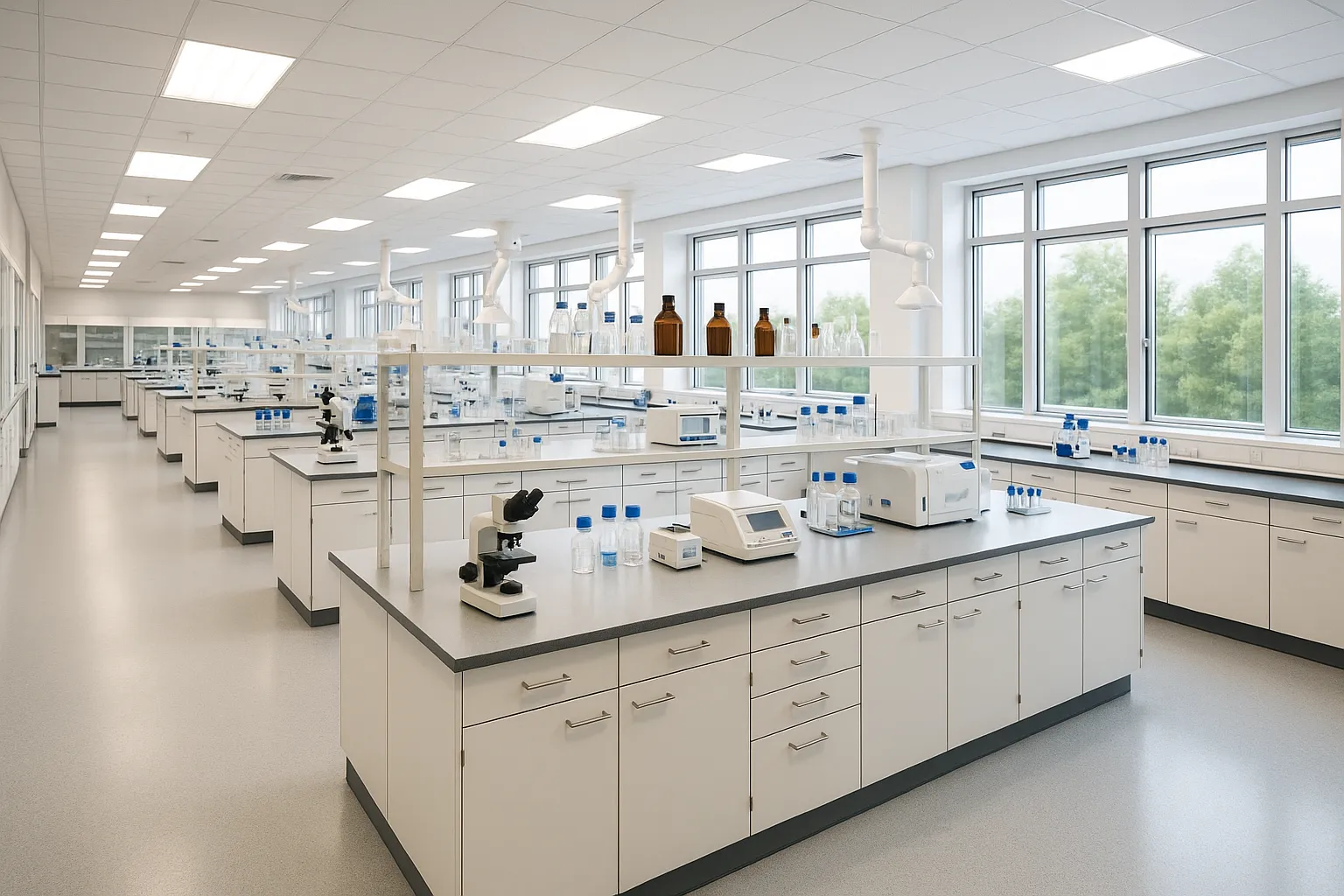
In a significant move for the UK’s agricultural research landscape, Syngenta is set to invest in a new biological sciences facility known as BioStar, which will open its doors at Jealott’s Hill, Berkshire, in 2028. This ambitious project will house approximately 300 scientists dedicated to advancing crop protection technologies and integrating artificial intelligence into agricultural practices.
Camilla Corsi, Syngenta’s global leader in crop protection research and development, emphasised that the decision to establish this facility stems from the UK’s historical strengths in agricultural innovation and its science-oriented regulatory framework. Corsi outlined that this commercial decision was made without the inclusion of state subsidies, further reinforcing Syngenta’s commitment to operate within a business-friendly environment. She noted, “I consider the UK regulatory system a big part of [government] support,” highlighting the streamlined processes that have emerged in the post-Brexit landscape.
Distinctively, the UK has shown a capability to expedite approvals for new agricultural products. Corsi mentioned that the Health and Safety Executive’s rapid approval of Adepidyn—a new fungicide—is a testament to this efficiency, a contrast to the more bureaucratic processes still in place within the EU. This accelerated route for agricultural product approval could position the UK favourably in attracting innovations in crop protection technologies.
Dave Bench, the chief executive of CropLife UK, remarked that Syngenta’s move is encouraging amidst a backdrop where similar research establishments in other sectors are leaving British shores. He pointed out that the UK’s regulatory framework for innovative agricultural chemistry is ahead of its peers, enabling quicker market entry for new products based on a more scientifically proportionate regulatory approach. “As well as our lead on cutting-edge science, the UK regulation of innovative chemistry means that products can enter the market with the support of a more proportional, science-led regulatory regime,” he stated.
However, there are concerns regarding the broader life sciences landscape. Joe Edwards, head of international policy at the Association of the British Pharmaceutical Industry (ABPI), acknowledged the UK’s robust research capabilities but highlighted systemic issues related to investor sentiment. He lamented the longstanding weaknesses in the UK’s investment attractiveness and recognised the critical need to improve access to medicines for patients while also addressing the government’s unpredictable payment structures for pharmaceuticals.
Edwards further noted a concerning trend, referencing Merck’s previous decision to shut down its £1 billion research centre in London last autumn. His remarks serve as a stark reminder that while the agricultural sector may be seeing investment, broader structural issues need urgent addressing to ensure the UK remains an appealing prospect for high-quality investment.
BioStar’s construction is notable as it marks a century since the inception of the first research station at Jealott’s Hill by ICI, one of Syngenta’s historical predecessors. Reflecting on the mission of the new facility, Corsi indicated that the researchers would utilise a multidisciplinary approach, amalgamating biology, chemistry, and artificial intelligence to develop a new array of solutions aimed at shielding crops from various threats including pests, diseases, and environmental stressors such as drought and extreme temperatures. She stated, “Understanding how organisms interact with each other and the environment reveals specific points of intervention, from pest control and plant growth stimulus to greater natural resilience,” thus illuminating the complex interplay that underpins agricultural practices.
Syngenta’s trajectory reflects its robust standing in the global marketplace. Following ChemChina’s acquisition of Syngenta for $44 billion in 2017, the company has maintained its operational independence, with its headquarters based in Basel, Switzerland. Recent reports showcased Syngenta’s impressive financial performance, with global sales hitting $20.9 billion in the first nine months of 2025. Furthermore, anticipated listing activities in Hong Kong could bolster the company’s financial strategy, potentially raising up to $10 billion through the floatation of 20 percent of its equity—a development still unconfirmed by the company.
The significance of Syngenta’s investment resonates beyond just a singular corporate achievement. Anthony Hall, a renowned professor of plant genetics at the Earlham Institute in Norwich, praised the establishment of BioStar, asserting that it underscores the UK’s prominent role in global plant science research. Hall stated, “I see this as a positive signal for the wider agritech sector, with the potential to strengthen and support a vibrant UK start-up ecosystem.” His involvement as co-founder of TraitSeq, an Earlham spin-off collaborating with Syngenta, further emphasises the collaborative potential in cultivating innovation within the UK’s agritech framework.
In conclusion, as the UK carves its path post-Brexit, Syngenta’s BioStar facility emerges as a beacon of hope for the agricultural research community, potentially revitalising investment in the sector and paving the way for groundbreaking advancements in crop protection technologies. This initiative signals a commitment to modernising agricultural practices while reinforcing the importance of a conducive regulatory environment that supports scientific advancement and sustainable agricultural solutions.
Our Thoughts
The article does not present any incidents related to health and safety breaches or emergencies. However, relevant lessons can be inferred regarding the establishment and operation of the new BioStar facility. Key safety considerations should include thorough risk assessments in line with the Management of Health and Safety at Work Regulations 1999, ensuring proper training for scientists and staff pursuant to the Provision and Use of Work Equipment Regulations (PUWER) 1998, and adherence to the Control of Substances Hazardous to Health Regulations (COSHH) when working with chemicals.
Additionally, regular safety audits and compliance checks with the Health and Safety at Work Act 1974 would be crucial to preemptively identify and mitigate potential hazards in a research environment. Effective communication and training protocols should be established to promote a culture of safety. By proactively addressing these regulations and safety protocols, similar incidents can be minimized in the facility’s operation in the future.