













Story Highlight
– Fire scorched 220 hectares in South Wales, ongoing response.
– Public urged to avoid area for safety.
– Specialists monitor air quality, provide health guidance.
– Political debate on improving wildfire response in Wales.
– Firefighters praised for coordinated multi-agency effort.
Full Story
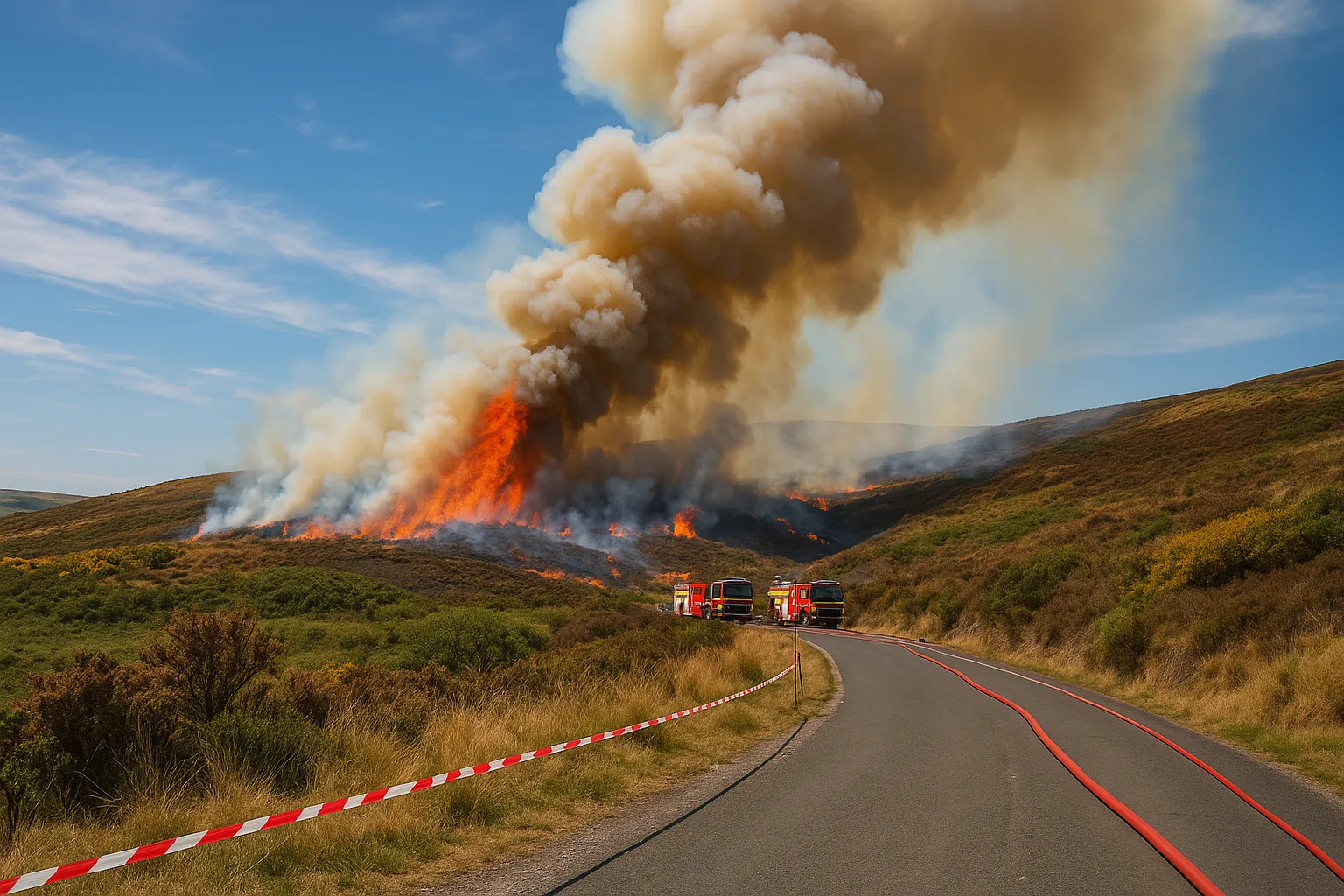
A significant wildfire in South Wales has been raging for over five days, consuming approximately 220 hectares of varied terrain, including bracken, gorse, and grassland. Firefighters and support teams are actively engaged in efforts to contain the ongoing blaze, which is expected to persist for several more days.
The South Wales Fire and Rescue Service (SWFRS) is leading a multi-agency response to the fire, with personnel deployed to maintain control and mitigate the fire’s effects. Smoke from the wildfire has spread across the region, prompting authorities to issue warnings and advice to the public regarding safety and air quality.
In response to the blaze, which has sparked considerable smoke and ash, SWFRS personnel have established a complete perimeter around the affected area. The public is being urged to steer clear of the vicinity not only for their safety but also to facilitate the ongoing work of emergency responders. A spokesperson from SWFRS reiterated their commitment to managing the situation effectively, stating: “Crews remain in attendance for as long as necessary to ensure the incident is brought to a safe conclusion. We are extremely grateful for the kindness and support shown to our crews. However, we ask that the public continue to avoid the area and allow emergency services to carry out their work safely and effectively.”
To bolster public safety alongside firefighting efforts, Gwent Police has been involved in managing traffic and ensuring that emergency access remains unobstructed. In addition, specially trained teams are working in the area, aiming to raise awareness about fire prevention tactics and the heightened risks associated with hot, dry weather conditions. The SWFRS has advocated for the Wildfire Wise initiative, which advises individuals to refrain from lighting barbecues and open fires in outdoor settings, particularly during periods of dry weather.
Public Health Wales is closely monitoring air quality in relation to the smoke emanating from the fire. Residents have been advised to stay indoors, keep windows and doors shut, and limit outdoor activities to mitigate potential health impacts. Vulnerable groups, including children, pregnant women, and those with respiratory conditions, are particularly at risk and advised to take precautions.
Joseph Carter, from Asthma + Lung UK Cymru, highlighted the substantial impact that smoke from wildfires can have on vulnerable populations. “Smoke from wildfires causes air pollution that can make lung condition symptoms worse, such as coughing, wheezing, and breathlessness,” he stated. “This can lead to a flare-up or an asthma attack, which can be life-threatening.” In light of these health concerns, the public is encouraged to carry reliever inhalers and keep vehicle windows closed when traversing affected areas, especially for those using air conditioning systems that may draw in outside air.
Firefighting efforts have included creating firebreaks and dampening hotspots to halt the spread of the wildfire. A specialist firefighting helicopter is set to assist crews tackling another significant wildfire in the Rhinogydd area of North Wales, with its deployment subject to ongoing assessments based on operational requirements throughout Wales and the broader UK.
The Brecon Beacons National Park Authority has taken preventive measures by closing the Keepers Pond car park. This action allows firefighting teams to source water from the pond effectively, critical for their ongoing battle against the flames. Local farmers have also played a supportive role, working to halt the fire’s advance toward nearby forested regions.
The wildfire situation has ignited discussions within local politics, leading to calls for an emergency session within the Senedd to evaluate Wales’ current wildfire response strategies, resilience measures, and the need for enhanced aerial firefighting resources. Minister for Local Government, Housing and Planning, Siân Gwenllian, acknowledged the commendable efforts of the firefighting teams while emphasizing that the response has been efficiently coordinated through established mutual-aid frameworks. These arrangements allow for the swift mobilization of additional resources from various parts of Wales and England if necessary.
While there is currently no direct threat to life or property from the Blaenavon fire, Ms Gwenllian cautioned the public to remain vigilant and adhere to safety guidelines. She expressed appreciation for the calm and collaborative spirit exhibited by the local community during this challenging situation, noting that this support has greatly facilitated operations as teams confront the fire under difficult conditions.
As the fire continues to burn, emergency services remain committed to managing the scene, and the cooperation of residents is instrumental in ensuring safety and effectiveness in their response efforts. The situation remains fluid, with ongoing assessments dictating the resources and personnel required to combat the wildfire effectively in the coming days.
Our Thoughts
To avoid the wildfire incident described, enhanced public awareness and adherence to safety regulations regarding outdoor fire usage could have played a crucial role. Specifically, the enforcement of the Health and Safety at Work Act 1974 could have mandated stricter guidelines on activities in fire-prone areas during high-risk periods, such as prohibiting barbecues and open flames.
Key safety lessons include the importance of effective communication about fire risks during dry weather, which is supported by initiatives like the Wildfire Wise campaign. There should be regular public safety campaigns to educate communities about fire dangers and appropriate behaviour in outdoor spaces, which may prevent similar occurrences.
Regarding regulations, any failure to comply with established safety measures, such as those outlined in the Environmental Protection Act 1990 concerning pollution control, could be seen as a breach. The coordination among emergency services and local authorities should also uphold the Civil Contingencies Act 2004, ensuring preparedness and response capabilities are robust.
To prevent future incidents, proactive measures such as improved surveillance of high-risk areas, community engagement in fire risk management, and investment in aerial firefighting resources would be essential.