













Story Highlight
- FSA warns customers about several food product recalls.
- Tesco recalls coleslaw due to undeclared mustard allergen risk.
- Sainsbury’s recalls olives due to Listeria contamination concerns.
- Waitrose recalls rhubarb crumble for undeclared gluten allergy risk.
- Customers advised to return products for full refunds.
Full Story
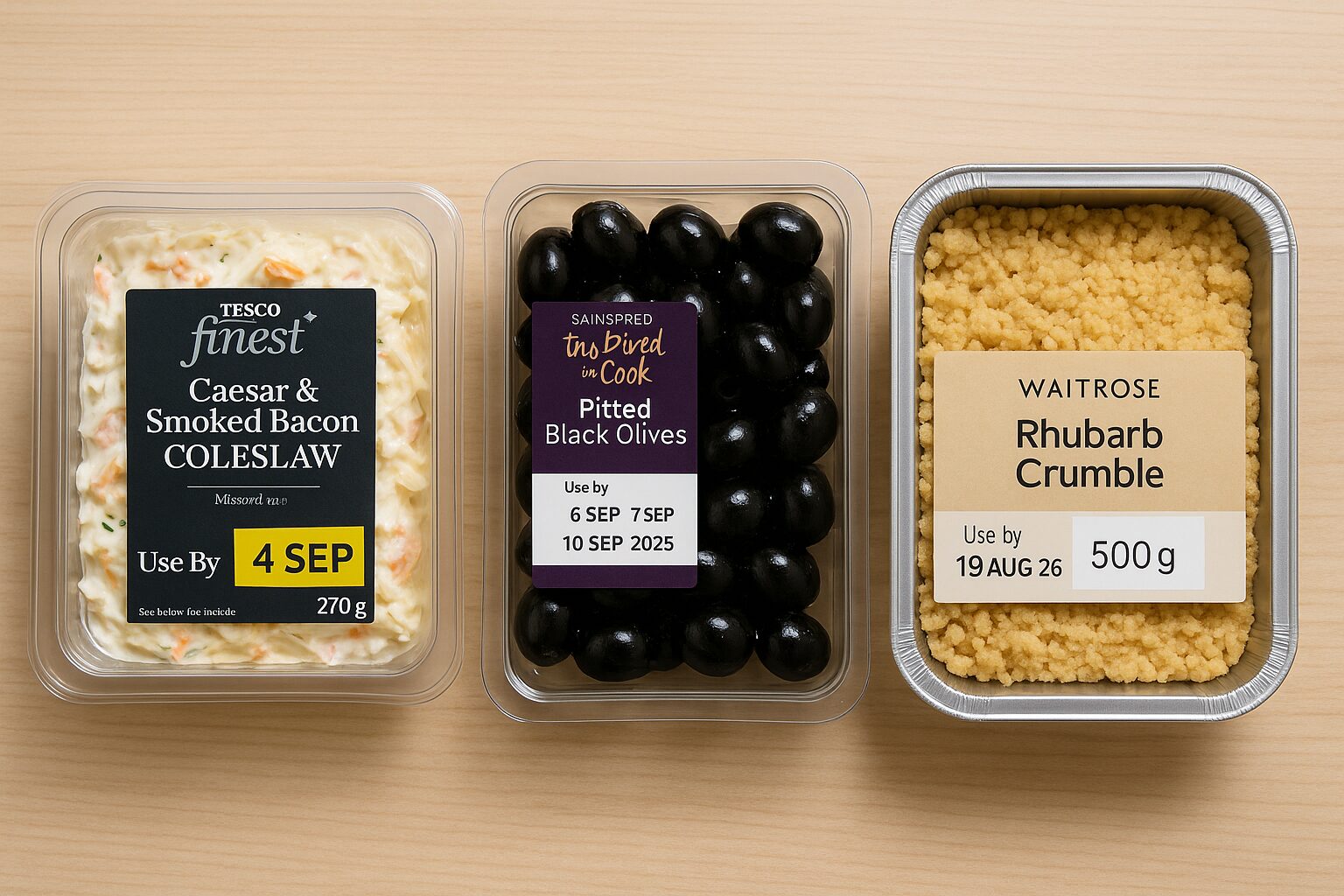
The Food Standards Agency has issued warnings regarding specific food products from leading supermarkets due to health risks associated with allergens and bacteria. Tesco has recalled its Finest Caesar and Smoked Bacon Coleslaw after a packaging error resulted in mustard being included in the product. This poses a significant risk for customers with mustard allergies. The recall affects 270g packs that have a use-by date of September 4.
In another alert, Sainsbury’s is recalling its Inspired to Cook Pitted Black Olives after testing identified the presence of Listeria monocytogenes, a bacteria that can lead to serious health issues. The affected 120g packs have use-by dates of September 6, 7, and 10, 2026.
Additionally, Waitrose has announced a recall of its Rhubarb Crumble due to gluten not being declared on the packaging. This recall involves 500g packs with a use-by date of August 19, 2026, which could pose health risks for individuals with gluten allergies or coeliac disease.
All customers are advised not to consume the affected products and to return them to their respective stores for a full refund. Tesco has specifically requested that customers who have purchased the coleslaw return it to a Tesco store if they have a mustard allergy. Meanwhile, Waitrose urges customers to check their freezers for the Rhubarb Crumble and return it for a refund.
For further inquiries, Sainsbury’s customers can visit their website or contact their careline for assistance.
Source: read the original report.
What this means for your site
The recent recalls of Tesco’s Finest Caesar & Smoked Bacon Coleslaw, Sainsbury’s Pitted Black Olives, and Waitrose’s Rhubarb Crumble highlight crucial gaps in food safety management systems that could be addressed. Adequate labeling and thorough allergen management are essential to prevent risks associated with undeclared ingredients. Preventative measures should include enhancing employee training on allergen awareness and product safety, as well as rigorous checks in the production and packaging processes.
Relevant UK health and safety legislation includes the Food Safety Act 1990, which mandates that food must be safe to eat, and the Food Hygiene (England) Regulations 2013, which require food business operators to ensure food is handled safely to prevent contamination. Compliance with these regulations is critical to mitigate risks of allergic reactions and foodborne illnesses.
To prevent similar incidents, a site could implement a robust system for allergen control that includes regular audits of packaging accuracy and clear communication of allergen information on product labels. Additionally, fostering a culture of safety where all employees are encouraged to report potential hazards can further enhance food safety standards.