















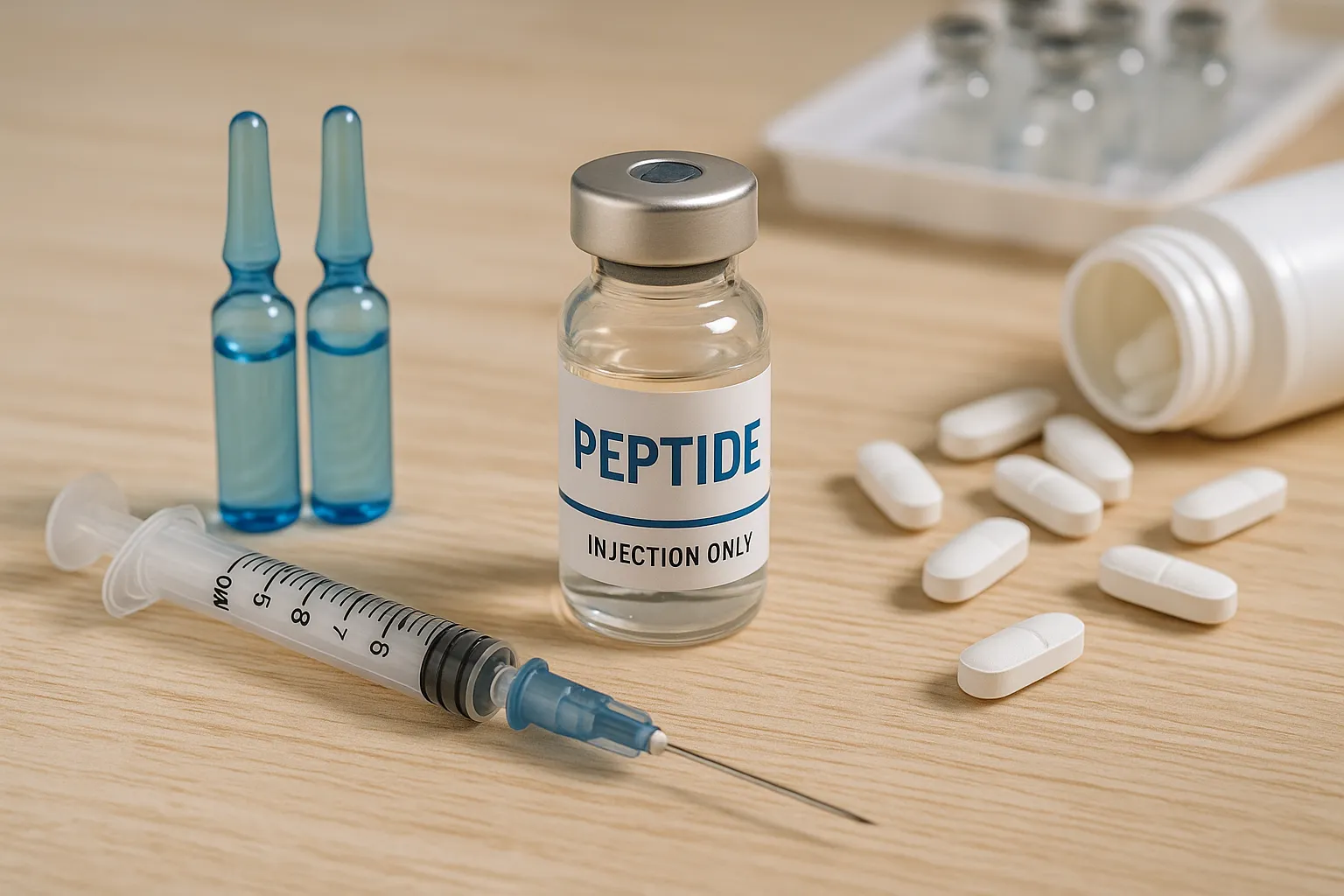
Story Highlight
– High-profile figures promote peptides for wellness benefits.
– Peptides are short chains of amino acids with varied functions.
– Many peptides sold are unregulated and experimental.
– Little scientific evidence supports claims of efficacy.
– Experts warn of potential health risks from usage.
Full Story
In recent years, peptides have garnered significant attention from a range of high-profile individuals, including influencers and athletes, who advocate for their potential benefits concerning wellness. These compounds are increasingly associated with various health-related claims, such as enhancing injury recovery, aiding weight loss, improving mood, and combating the effects of ageing. This article explores the nature of peptides, examines the burgeoning yet controversial market surrounding them, and considers expert opinions on their safety and efficacy.
Peptides, which are essentially short chains of amino acids, play critical roles in numerous biological functions within the human body. For instance, hormones like insulin, oxytocin, and vasopressin are naturally occurring peptides vital for managing blood glucose levels, facilitating social interactions, and regulating blood pressure and fluid balance, respectively. The body also produces other peptides during the digestion of proteins. However, a growing trend has emerged in the therapeutic use of synthetic peptides, aimed at addressing various health concerns, including obesity and age-related decline.
Approved pharmaceuticals utilizing synthetic peptides have made headlines for their weight-loss capabilities. Notably, medications such as semaglutide—marketed under the name Wegovy—and tirzepatide, sold as Mounjaro, are designed to mimic the action of naturally occurring hormones involved in appetite regulation. Nonetheless, the market is inundated with a multitude of experimental peptides that lack robust regulatory oversight. Many such peptides are available for self-administration, often posing considerable health risks due to their unregulated nature.
The initial adoption of peptides can be traced back to niche communities, including bodybuilders and powerlifters, primarily during the 2010s. Dr Luke Turnock, a senior lecturer in criminology at the University of Lincoln, describes this early interest as focussed on specific peptides like GHRP-2 and GHRP-6, known for their potential to enhance muscle growth and recovery. The novelty of emerging options, such as TB-500, attracted attention, particularly due to the alleged ability of such substances to alleviate withdrawal symptoms experienced by steroid users. Recently, however, there has been a significant surge in interest across various platforms, including social media, which now buzzes with discussions on the use, purchasing, and administration of peptides.
Prominent public figures such as US podcaster Joe Rogan have further popularised certain peptides, notably BPC-157 and TB-500, often referring to them as part of the “Wolverine stack” in reference to the comic book character renowned for rapid healing abilities. Other substances gaining traction include CJC-1295, MK-677, and ipamorelin, associated with muscle-building effects, as well as GHK-Cu, which is marketed for its anti-ageing properties. Dr Turnock notes that the primary demographic interested in these products remains health and fitness enthusiasts who frequently seek ways to enhance their wellbeing.
However, scientific scrutiny of these experimental peptides has revealed significant gaps in evidence supporting the myriad claims associated with them. Many studies touted by marketers are restricted to animal research or in vitro experiments. A review conducted by US researchers assessing peptides marketed for musculoskeletal injuries expresses caution, stating that while BPC-157 demonstrates potential in promoting tendon and muscle repair, these findings are largely unsubstantiated by rigorous human trials. Similarly, the peptides TB-4 and TB-500 have shown some promise in laboratory settings but lack validated data from human studies, a crucial factor in understanding their potential risks and benefits.
The legal status of peptides in the UK presents another layer of complexity. Many of these products do not meet the criteria for classification as medicines, rendering them unregulated by the Medicines and Healthcare products Regulatory Agency (MHRA). However, claims regarding medicinal effects can change a product’s categorisation. Lynda Scammell, head of borderline products at the MHRA, asserts that if a peptide is marketed with medicinal claims, it must possess appropriate marketing authorisation for legal sale. Without such authorisation, the MHRA retains the authority to remove products from the market.
Concerns surrounding the use of unregulated peptides extend beyond legalities to involve potential health risks. Prof Adam Taylor from Lancaster University highlights that findings from pre-clinical studies do not guarantee similar benefits for human users. The safety profile of drugs approved for human use often entails exhaustive testing for purity and potential side effects, while many experimental peptides may include untested substances or dangerous contaminants. Additionally, the body maintains specific homeostatic levels of naturally occurring peptides, and introducing external sources could disrupt biological balance.
Dr Taylor raises alarm about the notion that some peptides might be produced in excess within certain tumours. Though there is no current evidence linking peptide use to these tumours, the theoretical risk remains, particularly if an individual has low-grade inflammation or early-stage cancer. He points out that injecting these substances could inadvertently exacerbate underlying health issues.
Moreover, self-administration poses unique challenges and risks, including the potential for injecting air or other harmful substances. The long-term monitoring of peptide usage is insufficient, which raises concerns regarding the undetected progression of adverse effects. Dr Taylor elaborates that while immediate problems might not be apparent, slow-developing issues could result in significant harm over time.
In summary, while the therapeutic potential of peptides is being enthusiastically embraced by some, extensive caution and further investigation are essential to understand their true efficacy and safety comprehensively. The allure of peptides as a health and wellness quick fix, alongside the lack of robust evidence and regulatory strictures, necessitates a discerning approach for anyone considering their use.
Our Thoughts
To prevent incidents related to the use of unregulated peptides, several key actions could have been taken. Firstly, rigorous regulation and enforcement of existing legislation under the Human Medicines Regulations 2012 could ensure that all peptide products sold for human use are properly approved and carefully monitored for safety and efficacy. The Medicines and Healthcare products Regulatory Agency (MHRA) should enhance its oversight of online markets and social media to promptly address the promotion and sale of unregulated peptides, particularly those with medicinal claims.
Secondly, improving public education on the risks associated with self-injection and the use of unverified substances would mitigate potential health hazards. Public health campaigns could highlight the importance of relying on scientifically validated treatments and the dangers of using experimental substances without regulatory approval.
Lastly, it’s essential to promote a culture of professional consultation prior to using such substances, ensuring that individuals seek advice from qualified health care providers rather than influencers or anecdotal sources. Implementing these strategies could significantly reduce the risks associated with unregulated peptide use and ensure better health outcomes for the public.