
















Story Highlight
– Guildford postcode among UK’s worst dog attack hotspots.
– 2,019 dog attacks reported on postal staff last year.
– 53 attacks occurred in GU area, second highest postcode.
– Majority of attacks happened at front door (52%).
– Royal Mail urges dog owners to ensure safety measures.
Full Story
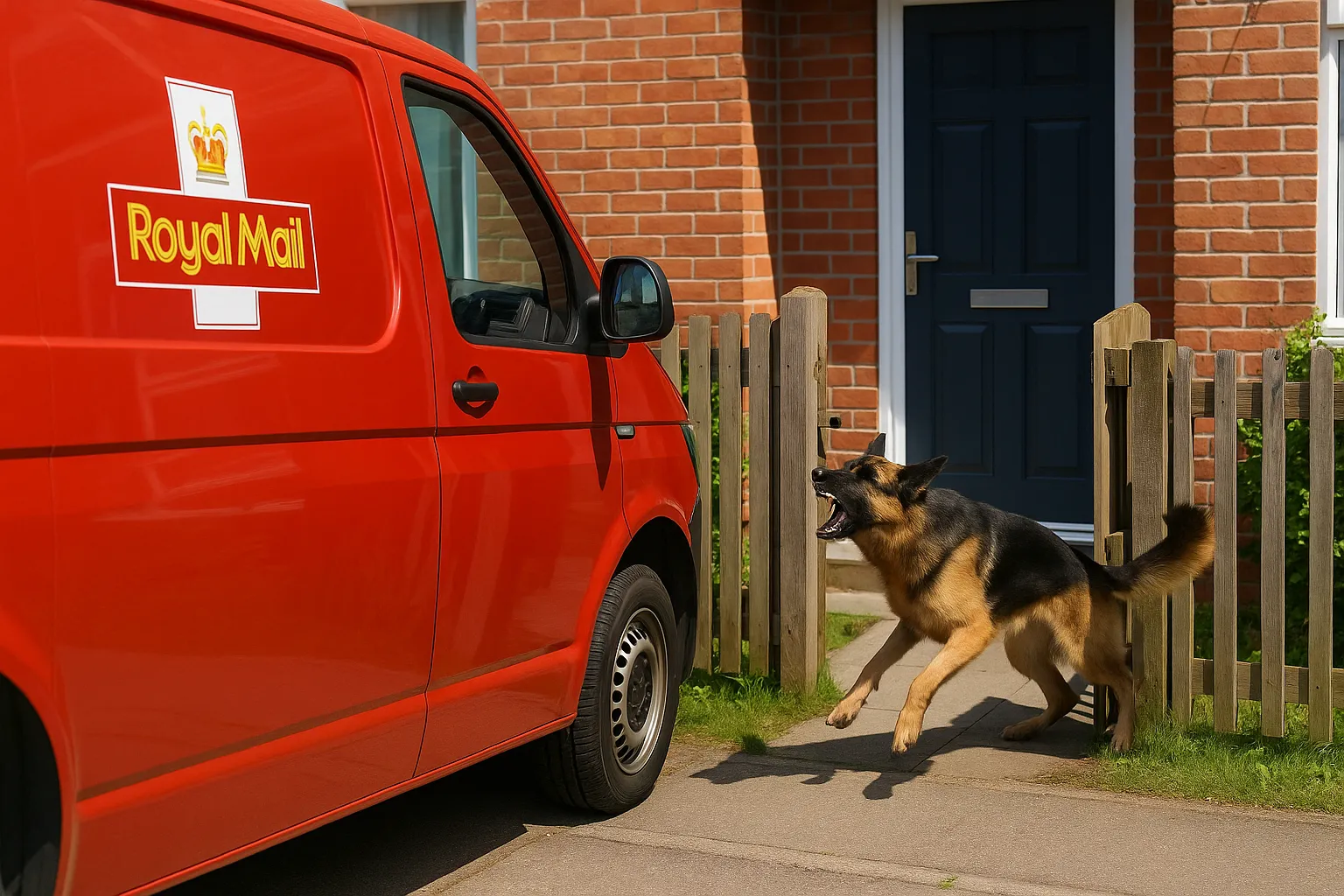
New statistics reveal that the GU postcode, encompassing Guildford and surrounding areas, has been identified as one of the UK’s most problematic regions for dog attacks on postal workers. Royal Mail disclosed on Monday that over the past year, a total of 2,019 incidents of dog attacks were reported across the country, many occurring in the Surrey area.
In particular, 53 attacks on postal staff in the GU postcode have been documented in the last 12 months, positioning it as the second most dangerous postcode in the UK for this type of incident. This figure marks a minimal decrease from the 54 reported attacks of the previous year, although the GU area remains a notable concern. It has now been classified as a high-risk zone for dog attacks for the seventh consecutive year, with only eight fewer incidents than Sheffield, which has topped the list.
The GU postcode shares its second-place ranking with the Doncaster area (DN postcode), which has seen a sharp 26% spike in dog attacks, returning to the top ten for only the second time since Royal Mail began monitoring these incidents. This indicates a worrying trend, with dog attacks in Doncaster increasing significantly from 42 incidents reported in the previous 2024/25 period.
Lizz Lloyd, the Health & Safety Director at Royal Mail, commented on the serious implications of these incidents. She stated, “While it’s encouraging to see dog attacks on our colleagues fall by 8% last year, these incidents remain a serious risk to postal workers, resulting in painful injuries and lasting distress. Every attack is one too many.” Lloyd highlighted the importance of community awareness, emphasizing that the responsibility for preventing these incidents predominantly lies with dog owners. “We continue to raise awareness of the issue among the public, but preventing attacks starts at the doorstep. We’re urging dog owners to take simple steps, such as keeping pets secure before opening the door, to help keep our people safe,” she added.
Analysis of the reported incidents reveals that a substantial 52% of attacks occurred at the front door, indicating that home deliveries pose a significant risk to postal staff. Additionally, around 25% of the attacks took place in gardens, driveways, or yards, suggesting that private property is often the setting for these dangerous encounters. Furthermore, incidents on the road or street accounted for 7%, with 135 attacks documented in such public spaces.
Interestingly, a distinct 16% of all reported incidents involved injuries inflicted through the letterbox, with a total of 324 such cases noted. This statistic underscores the sometimes unexpected nature of these risks, as customers may not fully comprehend the potential threats posed by their pets during mail deliveries.
In light of these statistics, Royal Mail is actively encouraging dog owners to understand the severity of dog attacks against postal workers and to take responsible measures to mitigate risks associated with their pets. As part of their initiatives, the organisation has issued comprehensive guidelines aimed at ensuring the safety of postal staff while they carry out their essential duties. These recommendations include securing dogs away from the front door prior to delivery, refraining from opening the door when a dog is present, and providing pets with distractions, such as toys or food, to minimise the risk of aggressive behaviour during mail delivery times.
This ongoing issue not only affects the safety of postal workers but can also have broader implications for community wellbeing. Dog owners are urged to practice responsible ownership and to foster an environment where postal services can operate without fear of attack.
The persistence of such troubling statistics raises concerns about public awareness and attitudes towards dog safety. The persistence of the GU postcode on the high-risk list reflects a broader need for education around responsible dog ownership practices.
Community response to these findings may also play a crucial role in enhancing safety for postal workers and ensuring that such incidents are significantly reduced in the future. Engagement between Royal Mail, local authorities, and dog-owning residents could foster a greater understanding of the potential dangers posed by unsecured pets.
As the Royal Mail continues to monitor the situation, it remains clear that ongoing collaboration between postal services and the community at large will be paramount in addressing the challenges presented by dog attacks on postal workers. The data serves as a stark reminder of the potential hazards that postal staff face on a daily basis and highlights an urgent need for proactive measures to ensure their safety while they fulfill their vital responsibilities within the community.
Our Thoughts
To mitigate the risk of dog attacks on postal workers, several measures could be implemented based on the findings from the reported incidents. Firstly, Royal Mail could enhance training for workers on recognizing potentially dangerous situations and on handling aggressive animals, thereby promoting their personal safety in the line of duty. Furthermore, there should be increased collaboration with local authorities to implement community awareness campaigns about responsible dog ownership, linking to the UK’s Animal Welfare Act 2006, which emphasizes the duty of care pet owners have to prevent their animals from causing harm.
The Health and Safety at Work Act 1974 obliges employers to ensure the safety and welfare of their employees, which includes conducting risk assessments and taking reasonable steps to protect workers from known hazards, such as dog attacks. This could involve establishing guidelines for delivering mail in high-risk areas, such as using alternative delivery methods when raising safety concerns. Lastly, encouraging dog owners to secure their pets before deliveries begins can directly address incidents occurring at doorsteps, fulfilling the safety responsibilities outlined in the legislation. Continued monitoring and evaluation of these measures would be essential to improve overall safety outcomes for postal workers.