










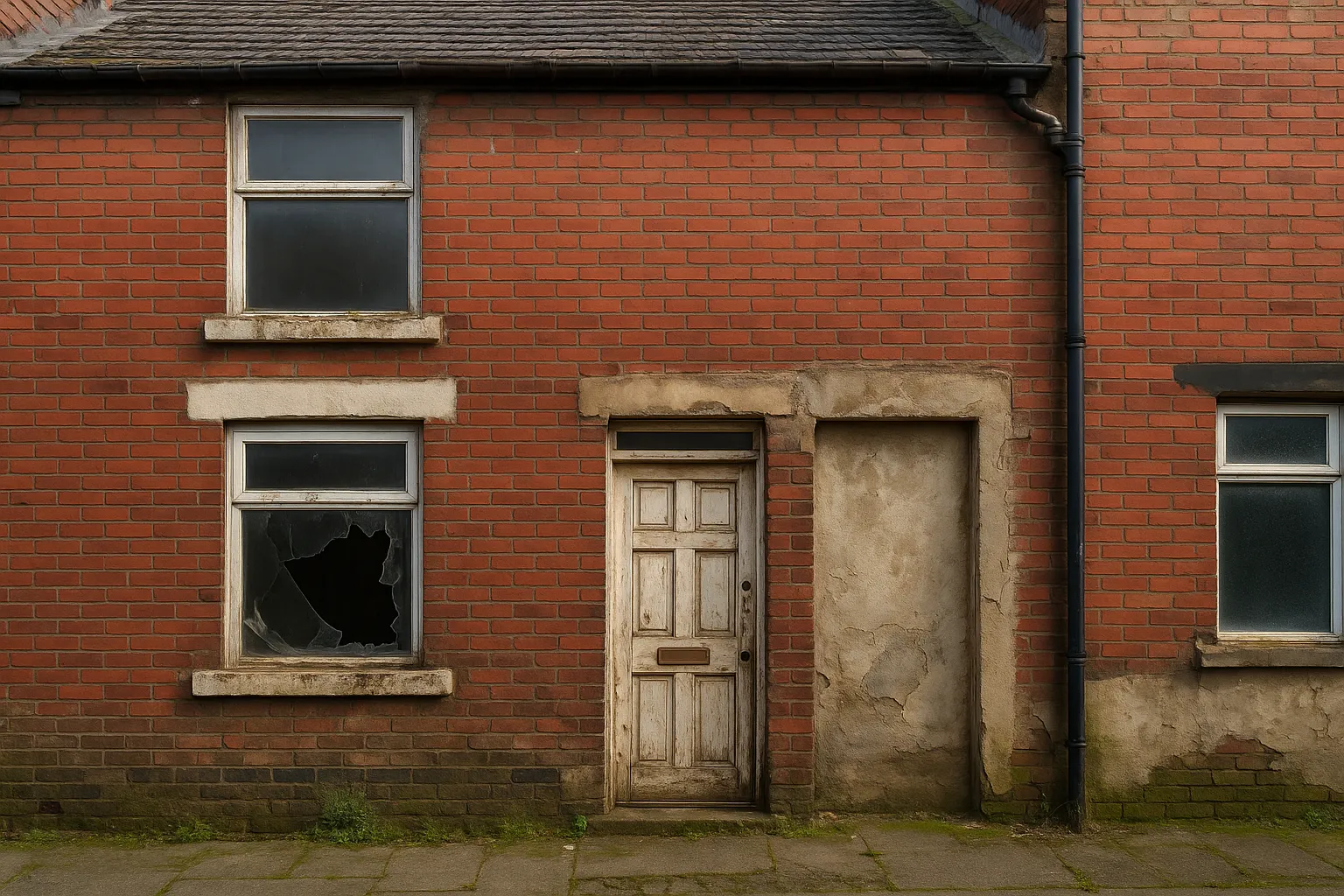
Story Highlight
– UK housing has highest inadequate proportion in Europe.
– 10% social, 21% private homes fail current standards.
– New Decent Homes Standard not effective until 2035.
– 45% social, 48% private homes likely to fail update.
– Delays prioritize landlords over tenants’ housing quality.
Full Story
The UK housing crisis remains a pressing issue, with alarming statistics revealing a significant proportion of inadequate accommodation across the nation. The Home Builders Federation has recently highlighted these concerns, utilising data linked to the Decent Homes Standard (DHS), a benchmark that has been in place since its inception in 2001, with its last major update occurring in 2004. As the country grapples with deteriorating living conditions, the need for an updated standard is more vital than ever.
According to the latest findings from the English Housing Survey released in 2023, an estimated 10% of homes in the social rented sector fail to meet the DHS. The situation is even more critical in the private rented sector, where about 21% of residences do not comply with this standard. With 4.5 million households in the social rental market, this means around 450,000 homes are considered substandard, raising serious questions about the efficacy of current housing regulations.
Notably, the DHS currently does not extend to the private rental market, despite significant numbers of households living in unacceptable conditions. The existence of these statistics exposes an ongoing scandal, especially as it has been determined that the DHS is no longer fit for purpose, failing to encapsulate changing expectations and realities of modern living.
A dramatic shift was announced by the government in January 2026, when proposals for a revised DHS were unveiled. Following a month later, an impact assessment published by the Regulatory Policy Committee confirmed the necessity for changes. It asserted that the DHS needs modernisation to mirror contemporary standards, thereby ensuring that the update includes provisions relevant to the private rental sector. Officials revealed that the new guidelines will aim to enhance living conditions for millions of renters, focusing on safety, decency, and thermal comfort.
The planned overhaul aims to remove age restrictions on dwellings, introduce a range of essential facilities—including well-placed kitchens and bathrooms—and ensure adequate noise insulation. Furthermore, energy efficiency requirements will be upgraded to reflect current standards in sustainability. However, a key concern looms large: despite these much-needed amendments, the new DHS is not slated to take effect until 2035.
The ten-year interval between the announcement and implementation has drawn criticism, with campaign groups like Generation Rent deeming the delay “absurd.” Government representatives have defended this timeline by stating it is necessary to allow landlords to adapt to other regulatory amendments, particularly those under the upcoming Renters’ Rights Act 2025, while also assisting in the development of secure and affordable housing options.
However, such justification invites scrutiny regarding its adequacy in light of the ongoing housing crisis. The consequential effects of the delay cannot be underestimated, particularly on vulnerable populations. Investigations by the all-parliamentary group on Households in Temporary Accommodation revealed a harrowing statistic: from April 2019 to March 2025, 104 children tragically lost their lives while living in temporary housing, which is often marked by poor conditions.
Additionally, research from the Health Foundation indicates that a staggering 72% of households in the lowest income brackets are facing one or more housing issues, contrasted with 37% in slightly higher income tiers. With the cost of living continuing to rise in the aftermath of the COVID-19 pandemic, the decision to postpone the DHS has the potential to hit the poorest communities hardest.
This raises a serious ethical consideration: the choice to delay the DHS appears to favour landlords over tenants, a decision that places economic interests above the pressing needs of families struggling with unsuitable living conditions. For the next nine years, residents in social housing will endure a standard that falls short of modern requirements, while those in the private sector will lack any such standard altogether.
The implications of this lengthy delay stretch further when one considers enforcement mechanisms rooted in the Renters’ Rights Act, which depend on an effective DHS to reflect existing housing conditions accurately. The government’s method of rolling out the updated standard raises concerns about the potential for undermining the Act’s ability to genuinely improve housing quality across the UK.
Despite the promises of the updated DHS, the reality is stark: if the standards are as expected, nearly half of both social and private rental houses would fail to meet them. The implications of these developments suggest that without significant action, renters throughout the UK may be forced to endure subpar housing conditions for a considerable time.
The urgent question remains as to whether the impending changes to the DHS will effectively remedy the longstanding issues plaguing the UK’s housing landscape. As it stands, with landlords continuing to profit from inadequate housing, the government’s commitment to improving living standards appears to hang in the balance. The necessity for action is clear—unless changes are implemented swiftly, millions of renters will find themselves waiting far too long for the decent housing they deserve.
Our Thoughts
The prolonged failure to update the Decent Homes Standard (DHS) represents a considerable breach of health and safety obligations under UK law, particularly the Housing Health and Safety Rating System (HHSRS). The current DHS does not account for modern housing requirements, which puts tenants at risk of living in hazardous conditions. Key safety lessons include the necessity for regular reviews and updates of housing standards to ensure tenant safety and well-being, as stipulated in the Housing Act 2004.
To avoid the recurring issues that arise from inadequate housing, immediate action should be prioritized over long-term delays. Introducing newer regulations sooner would align with the Health and Safety at Work etc. Act 1974, which obliges employers and landlords to maintain a safe environment.
The staggering statistic of homes failing to meet the DHS underscores the urgent need for stricter enforcement of housing regulations. The deficiencies in current standards have direct implications on public health and safety, especially for vulnerable populations. Implementing interim measures or emergency regulations could mitigate risks while waiting for the new DHS to come into effect, thus protecting tenants from continuing exposure to unsafe living conditions.