












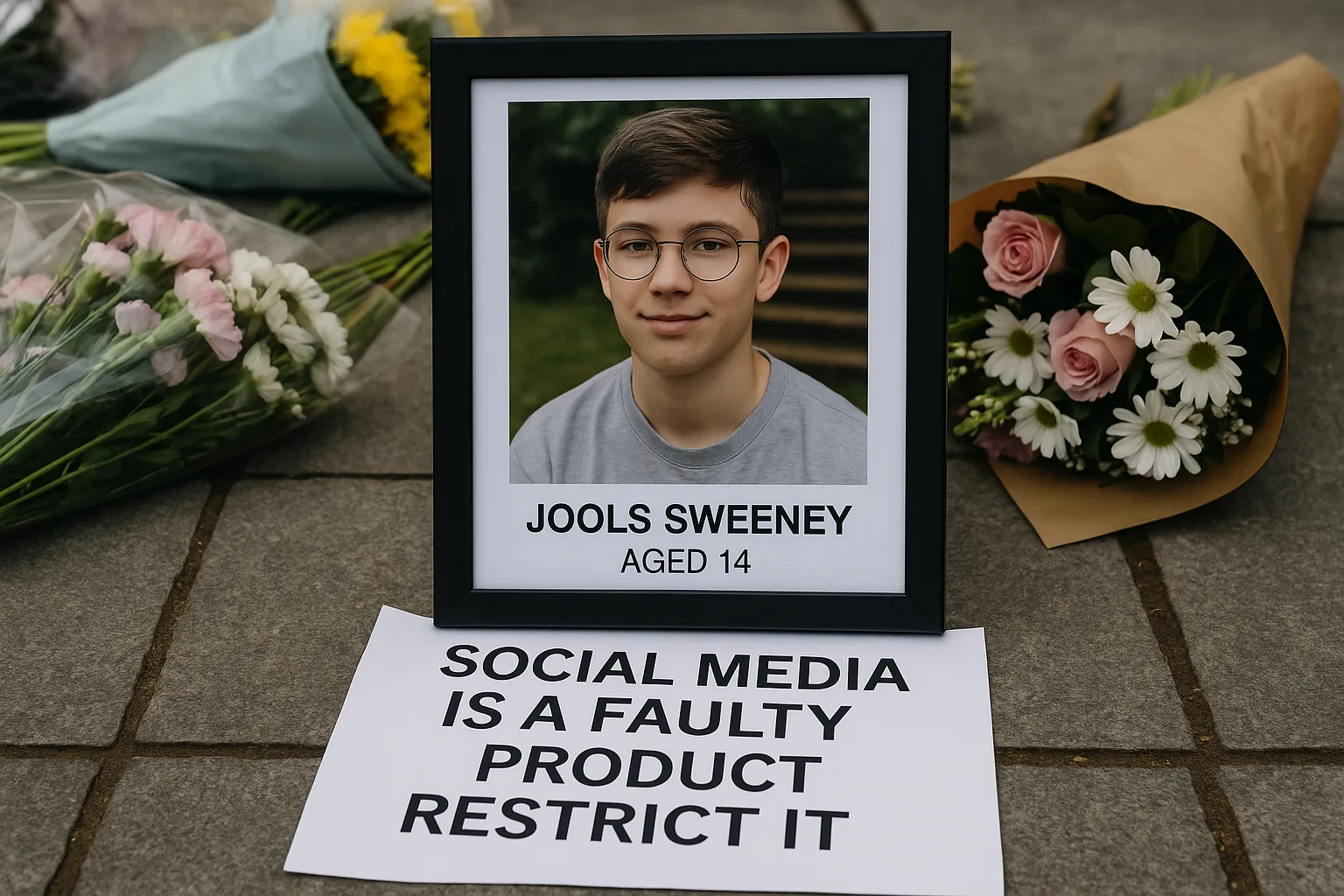
Story Highlight
– Ellen Roome blames social media for her son’s death.
– Son Jools Sweeney died at 14 during online challenge.
– Families urge Prime Minister to address social media dangers.
– Calls for restrictions on unsafe social media products.
– Companies must ensure safety before operating freely.
Full Story
A mother who tragically lost her son has called for urgent action regarding the impact of social media on young users. Ellen Roome, whose son Jools Sweeney passed away at the young age of 14, believes his death was linked to an online challenge. In a powerful statement, she insisted that social media platforms must be treated as products that can pose serious risks, particularly to vulnerable children.
Roome’s experience highlights a growing concern among families affected by similar tragedies, with many feeling that the social media environment is perilous. She asserted that these platforms, which play a significant role in the lives of children and adolescents today, should be subject to stringent regulations. “I, and other families who have lost children to social media, will tell the Prime Minister directly: Social media is a product, and like any other faulty product causing the deaths of children, it should be restricted until the companies responsible have fixed it and proven it is safe,” she stated.
The poignant remarks from Roome come amid increasing scrutiny of social media companies regarding their responsibility for user safety. Critics argue that the platforms often prioritise engagement and profit over the wellbeing of their younger users, exposing them to potentially harmful content that can lead to dangerous behaviours. The issue raises important questions about how these online spaces are regulated and the measures that should be taken to protect children.
Jools Sweeney’s untimely death has spurred conversations around the expectations that society should have of technology companies. Advocates for reform suggest that more needs to be done to ensure that social media platforms do not facilitate harmful behaviour, and that the risks associated with their use are transparently communicated to parents and guardians.
Moreover, the phenomenon of online challenges has become increasingly popular among youth, with some posing significant safety risks. Experts warn that the allure of viral fame can lead to reckless conduct, with tragic outcomes, as evidenced by Roome’s heart-wrenching experience. The calls for regulatory changes are bolstered by increasing evidence of the negative effects social media can have on the mental and emotional health of young users, as well as the potential for dangerous challenges to emerge from these platforms.
In recent years, there have been growing initiatives aimed at implementing stricter regulations for social media companies. Ongoing discussions among legislators, parents, educators, and mental health professionals seek to strike a balance between the benefits of social media for connectivity and self-expression, and the need for protective measures against its darker aspects.
The dialogue surrounding Jools Sweeney’s case resonates with many families who have endured similar losses, underscoring a collective sense of urgency for reform. Many advocate for legislative changes that would enforce accountability on the part of social media companies, compelling them to take a more proactive stance in safeguarding children from online dangers.
Roome is determined to use her voice and her story to affect change, encouraging others who have faced similar heartbreak to come forward and share their experiences. The pursuit of justice for the loss of young lives is driving many bereaved families to demand action from government leaders.
The government’s response to the alarming rise in youth-related incidents linked to social media will be closely watched, with calls growing for essential changes to be made swiftly. Recently, discussions at governmental levels have included potential frameworks for regulation and more rigorous content monitoring. Parents are hoping that these measures will lead to a more secure online environment for their children.
The concern extends beyond personal tragedies and reflects a broader issue of how modern society approaches technology and youth wellbeing. Educational institutions are also recognising the need to integrate digital literacy programmes into their curricula, equipping children with the skills to navigate online spaces safely.
Social media’s dual role as a platform for connection and a potential danger requires careful examination. As digital natives, today’s youth might be more adept at using these platforms, yet they are often ill-prepared for the risks they may encounter. Training and open dialogues about safe online practices are increasingly vital in schools and homes alike.
Roome’s plea for action serves as a stark reminder of the real-world consequences of unchecked digital behaviours. Her advocacy underscores the necessity of collaboration between parents, educators, lawmakers, and social media companies to foster an environment where children can engage safely online.
The impact of social media on the younger generation is an ongoing topic of discussion. The convergence of technology and childhood safety cannot be ignored, especially as new challenges continue to emerge. The collective effort to close the gaps in online safety is essential in nurturing a more secure digital landscape for future generations.
As the debate around this issue evolves, it remains clear that the stories of those like Roome and Jools Sweeney are integral to shaping a discourse that prioritises the safety and wellbeing of children across the UK.
Our Thoughts
To prevent tragedies associated with dangerous online challenges, social media platforms must enhance their safeguarding measures in accordance with the UK Health and Safety at Work Act 1974, which requires employers to ensure the health and safety of users. Key safety lessons include the need for stronger moderation policies and the implementation of age verification systems to protect vulnerable users. Social media companies should conduct regular risk assessments to identify and mitigate potential harms from user-generated content.
Furthermore, the Online Safety Bill seeks to regulate harmful content, ensuring platforms are accountable for user safety. If properly enforced, it could impose significant penalties for non-compliance, pushing companies to prioritize user welfare. Preventative measures could also include the promotion of digital literacy among young users to better navigate online challenges and increased engagement with parents and guardians to raise awareness of the dangers. Overall, a comprehensive approach involving regulation, corporate responsibility, and education could significantly reduce the risk of such incidents in the future.