















Choose an AI chat
New procedure could boost life-saving liver transplants
UK Health and Safety Latest

New procedure could boost life-saving liver transplants

by Ellie Cartwright
July 7, 2026
0

A groundbreaking technique for preserving donor livers within the body has emerged, potentially doubling the number of viable transplant opportunities...

Read moreDetails
Court hears of deadly window fall from luxury London tower block

Court hears of deadly window fall from luxury London tower block

July 7, 2026
Travel urged only if essential as UK faces new heatwave

Travel urged only if essential as UK faces new heatwave

July 7, 2026
Council replaces river stepping stones with footbridge over safety concerns

Council replaces river stepping stones with footbridge over safety concerns

July 7, 2026
UK faces third heatwave in three months as temperatures soar

UK faces third heatwave in three months as temperatures soar

July 6, 2026

Archives

  • July 2026
  • June 2026
  • May 2026
  • April 2026
  • March 2026
  • February 2026
  • January 2026
  • December 2025
  • November 2025
  • October 2025
  • September 2025
  • July 2025
  • August 2009

Categories

  • Health and Safety Help
  • News
  • Policies
  • UK Health and Safety Latest
  • About
  • Advertise
  • Policies
    • Privacy Policy
    • Editorial Policy
    • Corrections & Complaints policy
  • Useful Documents
    • Understanding RIDDOR
    • 10 Workplace Safety Failures
    • A Complete Guide to Reporting Safety Incidents in the UK
    • Fire Risk Assessment: Meeting the Regulatory Reform (Fire Safety) Order
    • COSHH Basics: A Practical Guide to Control of Substances Hazardous to Health
    • Working at Height in the UK: The Essentials (WAH Regulations 2005)
    • Asbestos in the Workplace: Control of Asbestos Regulations 2012 (CAR) Essentials
    • Managing Contractors Under CDM 2015: Roles, Duties & Controls
    • DSE & Ergonomics: Healthy Workstations for Office & Hybrid Teams
    • Lock out Tag out LOTO
    • Workplace Transport Safety: Forklifts, Pedestrians & Traffic Management
    • Noise & Vibration at Work: Practical Controls (2005 Regulations)
    • Confined Spaces in the UK: Safe Entry under the Confined Spaces Regulations 1997
  • Contact
  • Agent
Wednesday, July 8, 2026
32 °c
London
26 ° Wed
28 ° Thu
26 ° Fri
  • Login
UK Safety News
  • Home
  • News
    • All
    • UK Health and Safety Latest
    New procedure could boost life-saving liver transplants

    New procedure could boost life-saving liver transplants

    Court hears of deadly window fall from luxury London tower block

    Court hears of deadly window fall from luxury London tower block

    Travel urged only if essential as UK faces new heatwave

    Travel urged only if essential as UK faces new heatwave

    Council replaces river stepping stones with footbridge over safety concerns

    Council replaces river stepping stones with footbridge over safety concerns

    UK faces third heatwave in three months as temperatures soar

    UK faces third heatwave in three months as temperatures soar

    UK braces for third heatwave of the year as temperatures soar

    UK braces for third heatwave of the year as temperatures soar

    UK faces third heatwave this summer as temperatures soar

    UK faces third heatwave this summer as temperatures soar

    UK faces third heatwave of the year with temperatures rising to 35C

    UK faces third heatwave of the year with temperatures rising to 35C

    Chanelle McCoy Health becomes first to gain regulatory approval for oral CBD supplement

    Chanelle McCoy Health becomes first to gain regulatory approval for oral CBD supplement

    Guildford postcode among UK’s worst hotspots for dog attacks on postal workers

    Guildford postcode among UK’s worst hotspots for dog attacks on postal workers

    Trending Tags

No Result
View All Result
UK Safety News
No Result
View All Result
Home News UK Health and Safety Latest

New procedure could boost life-saving liver transplants

Ellie Cartwright by Ellie Cartwright
July 7, 2026
in UK Health and Safety Latest
Reading Time: 4 mins read
0
New procedure could boost life-saving liver transplants

Story Highlight

– New procedure preserves donor livers inside the body.
– Increases viable liver transplants by reducing organ damage.
– NRP maintains oxygen supply for two hours pre-removal.
– Draft guidance aims for fair NHS availability nationwide.
– Estimated 150 additional liver transplants possible annually.

Full Story

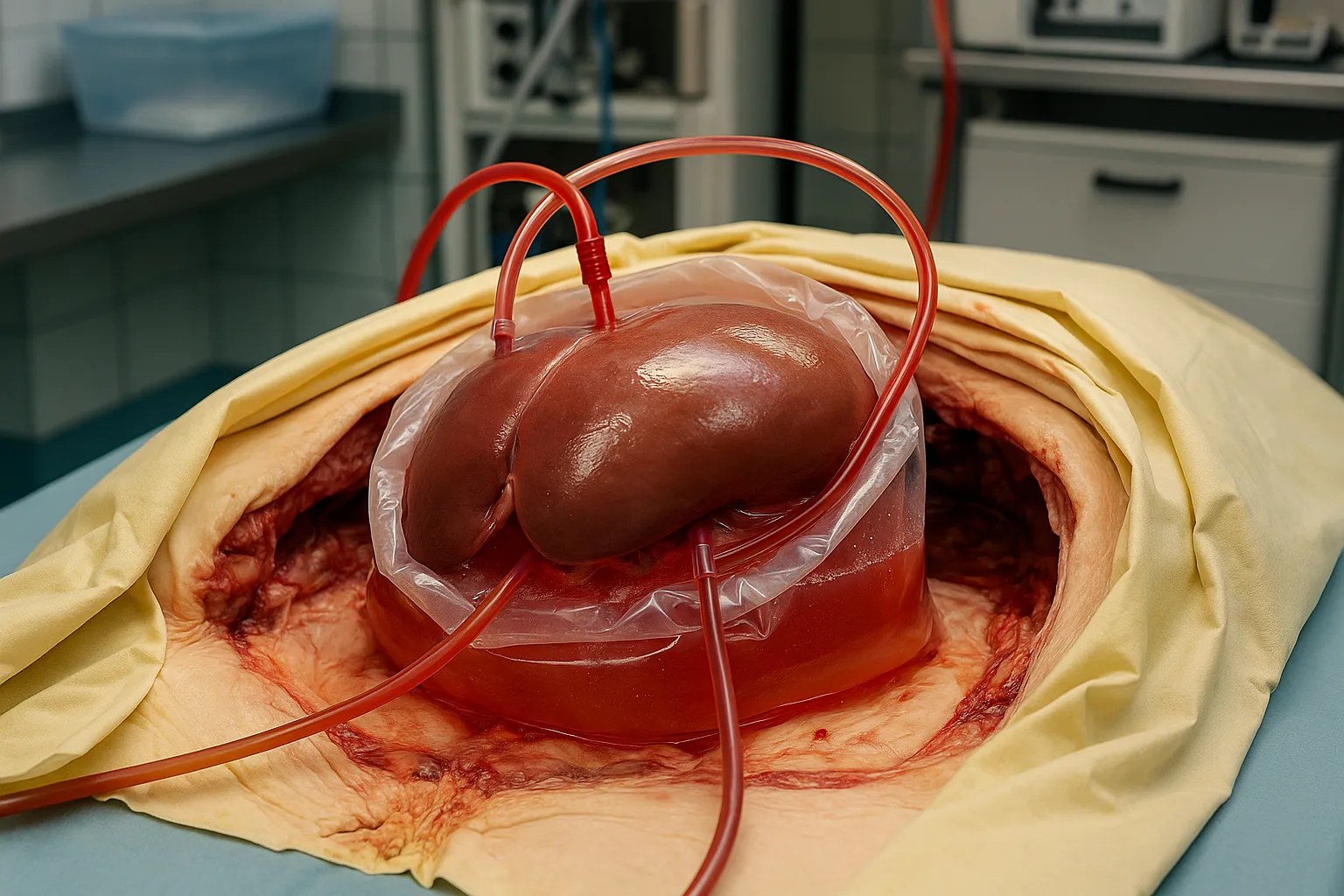
A revolutionary technique developed for preserving donor livers within the body is poised to enhance the availability of transplants, according to health authorities. This pioneering method aims to maintain the oxygen supply to the liver for roughly two hours after the donor’s heart has ceased functioning, allowing the organ to recuperate from potential damage prior to its removal.

The National Institute for Health and Care Excellence (NICE) highlighted that this critical timeframe not only aids in the organ’s recovery but also provides medical professionals with essential time to perform necessary tests to assess viability. Traditionally, after a liver is donated, it is immediately flushed with a cold preservation solution and placed on ice for transport—a procedure that often leads to significant organ deterioration.

Data released by NICE indicates that in the UK, during the 2024/25 period, of the 727 livers donated following circulatory death, only 309 were successfully transplanted. This alarming statistic illustrates that more than half (58 per cent) of the livers available went unused, mainly due to concerns regarding damage from interrupted blood circulation, an issue that this new method seeks to address.

The technique, referred to as in-situ abdominal normothermic regional perfusion (NRP), is designed to sustain donor livers post-retrieval after the heart has stopped beating, according to forthcoming guidance from NICE. Additionally, NICE’s separate draft recommendations propose the use of specialized machines for liver preservation, which operate outside the human body. These devices utilise tailored solutions to safeguard the liver from deterioration while it’s being stored.

Dr Anastasia Chalkidou, programme director for health technology at NICE, remarked, “Too many donated livers are currently going unused, and too many people are dying while waiting for a transplant. The evidence shows this procedure works as well as, or better than, existing methods and has a good safety record. This is the first time NICE has evaluated this procedure for any organ, and our draft guidance gives the NHS a clear, evidence-based foundation to make it available consistently and fairly across the country.”

The NHS Blood and Transplant has projected that the broader implementation of the NRP technique could facilitate an additional 150 liver transplants annually. This represents a significant increase that could greatly benefit patients facing advanced liver disease.

Vanessa Hebditch, representing the British Liver Trust, expressed her support, stating, “Too many people with advanced liver disease spend months living with uncertainty while waiting for a suitable donor liver, and sadly every year people die whilst waiting for a life-saving transplant. This is encouraging because it supports an innovative approach that could help make more donated livers be viable and available for transplantation. We know that every additional transplant represents a life saved and a family given hope for the future. We welcome the opportunity to see innovations like this benefiting more patients across the UK.”

This advancement not only highlights the urgent need to maximise the potential of organ donations but also brings hope to numerous patients who are currently awaiting transplants. The potential to improve outcomes significantly with the use of this new method could change the landscape of organ donation in the UK, making the process safer and more efficient.

The traditional method of storing organs poses inherent risks, including the degradation of the organ due to the lack of blood and oxygen after the donor’s death. The NRP method tackles this problem by keeping the liver in a near-normal physiological state for a short period, allowing it to remain in a more favourable condition for transplantation. Such innovation in the field of organ transplant medicine signifies a crucial step towards addressing the disparity between the number of organs available and those needed.

The implications of broadening the use of NRP extend beyond transplant numbers; they resonate deeply within communities where families are grappling with the heart-wrenching reality of waiting for life-saving procedures. Patients who often endure long waits have uncertainty that can weigh heavily on their quality of life. Therefore, the encouragement derived from developments like NRP is profound, as it immerses these families in a renewed sense of hope.

Experts in the field are eager to witness how the adoption of this technique will unfold. The NHS’s commitment to utilizing evidence-based practices presents a substantial opportunity for improving liver transplant outcomes, and all eyes will be on the efficiency of implementation across the country.

As evaluations continue to assess the potential impacts of this new procedure, the medical community looks forward to seeing how it will influence the trajectory of organ donation and transplantation, ultimately saving lives and providing families with the answers and relief they desperately need. The concerted effort from health authorities and organisations reflects a broader ambition to ensure that every available organ has the potential to benefit the patients and families awaiting transformation through liver transplants.

Our Thoughts

The recent announcement of a new liver preservation procedure highlights several key areas where health and safety measures could be improved to prevent organ damage and enhance transplant success rates in the UK. One primary lesson is the importance of adhering to health and safety regulations concerning organ retrieval and handling. The implementation of the in-situ abdominal normothermic regional perfusion (NRP) technique addresses prior issues related to blood flow disruption, aligning with the Health and Safety at Work Act 1974, which mandates the protection of health and safety for employees and the public.

To prevent similar incidents where viable organs are wasted, it is crucial to ensure that all healthcare professionals are trained in the latest techniques and that appropriate equipment is available. Additionally, the Medical Devices Regulations 2002 should be rigorously followed to ensure that any new technology or procedure meets necessary safety standards.

By embracing innovative preservation methods and ensuring compliance with existing legislation, the NHS can substantially reduce the number of unused donated organs, ultimately saving lives and providing hope for patients awaiting transplants. Enhanced training and resources for staff involved in organ retrieval and transplantation processes could further minimize risks associated with outdated procedures.

Tags: Health and Safety
SummarizeShare34Share197SendSend
ADVERTISEMENT
Ellie Cartwright

Ellie Cartwright

Ellie Cartwright is a health and safety journalist with a background in occupational health and public health reporting. She covers UK workplace safety legislation, HSE enforcement actions, and emerging health risks in the workplace. Ellie holds a degree in Public Health and has reported on safety issues across the construction, healthcare, and manufacturing sectors.

Related Posts

Key changes affecting families as phone bans, smoking laws, and benefit reforms announced

Key changes affecting families as phone bans, smoking laws, and benefit reforms announced

by Tara Rowden
May 2, 2026
0

A series of transformative measures aimed at enhancing children's welfare and supporting families across the UK has been unveiled. Key...

Employee dies after becoming trapped in unguarded machine at Derbyshire factory

Employee dies after becoming trapped in unguarded machine at Derbyshire factory

by Ellie Cartwright
November 11, 2025
2

A Derbyshire plastics manufacturer has been fined £277,500 following the tragic death of employee Paul Whalley, who became trapped in...

Leave a Reply Cancel reply

Your email address will not be published. Required fields are marked *

I agree to the Terms & Conditions and Privacy Policy.

Useful Documents

  • Understanding RIDDOR
  • 10 Workplace Safety Failures
  • A Complete Guide to Reporting Safety Incidents in the UK
  • Understanding RIDDOR
  • Fire Risk Assessment: Meeting the Regulatory Reform (Fire Safety) Order
  • COSHH Basics: A Practical Guide to Control of Substances Hazardous to Health
  • Working at Height in the UK: The Essentials (WAH Regulations 2005)
  • Lock out Tag out LOTO

Recent Posts

  • New procedure could boost life-saving liver transplants
  • Court hears of deadly window fall from luxury London tower block
  • Travel urged only if essential as UK faces new heatwave
  • Council replaces river stepping stones with footbridge over safety concerns
  • UK faces third heatwave in three months as temperatures soar

Recent Comments

  1. Piper Douglas on Worker dies due to inadequate machinery safety measures
  2. Natalie Coleman on New housing laws aim to tackle damp and mould crisis in England
  3. Simon Barrett on Honeymoon ruined by illness as newlywed suffers severe infection in Cape Verde
  4. Nolan Barrett on Work-related ill health in Great Britain remains a concern after pandemic peak
  5. Dylan Reeves on Sickness rates among Scottish police officers soar to troubling levels
UK Safety News

Copyright © 2026
UK Safety News

Navigate Site

  • About
  • Advertise
  • Policies
  • Useful Documents
  • Contact
  • Agent

Follow Us

Welcome Back!

Login to your account below

Forgotten Password?

Retrieve your password

Please enter your username or email address to reset your password.

Log In
No Result
View All Result
  • Home
  • News

Copyright © 2026
UK Safety News

This website uses cookies. By continuing to use this website you are giving consent to cookies being used. Visit our Privacy and Cookie Policy.