














Story Highlight
– Minton & Donello Organic White Orzo recalled for health risk.
– Contains undeclared wheat, posing allergy concerns.
– Label falsely describes orzo as “Orzo White Rice.”
– FSA advises affected customers to return for refunds.
– Recall impacts Tesco, Ocado, Amazon, and Planet Organic.
Full Story
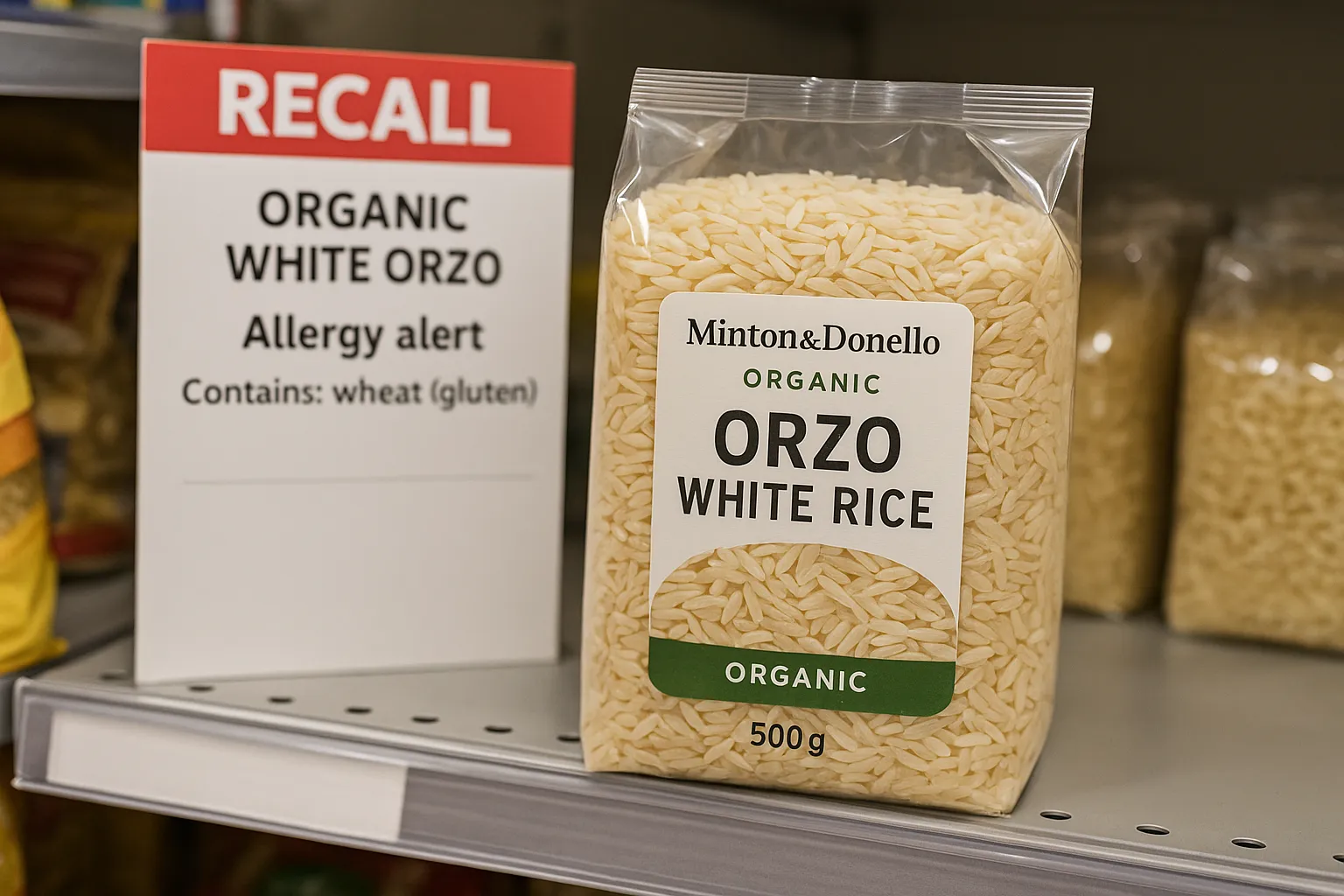
A recall has been initiated for a specific type of pasta sold in various supermarkets, after it was revealed that the product may pose a health risk to certain consumers. The affected item is Minton and Donello Organic White Orzo, which has been identified as containing undeclared wheat (gluten) on its packaging. As a result, customers who might be allergic or intolerant to wheat or gluten have been cautioned against consuming this product.
The Food Standards Agency (FSA) has stepped in to issue an allergy alert regarding this food item. The agency stated, “This product contains wheat making it a possible health risk for anyone with an allergy or intolerance to wheat or gluten or with coeliac disease.” In line with this announcement, affected retailers have been instructed to display point-of-sale notices, and Dundeis UK, the distributor, has communicated with various allergy support organisations to raise awareness of the issue among consumers.
The FSA has strongly urged anyone who has purchased this particular organic orzo product and suffers from wheat or gluten allergies not to consume it. Instead, they are advised to return the product to the store for a complete refund. The recall centres around 500g packs identified by batch codes 78850, 78850, and 78850, with best before dates set for January 31, May 2, and May 24 of 2027. Notably, the recall action is limited to England and Wales.
Minton and Donello’s Organic White Orzo, often referred to as risoni, is a short-cut pasta that is shaped like grains of rice, making it a popular choice in a variety of culinary applications, including salads, stews, and one-pot meals. Despite its versatile usage, the labelling error has raised significant concerns. In a formal notice from Dundeis UK Ltd, the company elaborated, “Dundeis UK Ltd is recalling batches of Organic Orzo due to a labelling error and missing allergen labelling. Organic orzo has been labelled as Orzo White Rice. In addition, the product contains wheat (gluten), which is missing on the packaging ingredient declaration.”
The company further expressed their regret over the oversight, stating, “Therefore, the product is a potential health risk for consumers with an allergy or sensitivity to wheat or gluten. Please do not consume the product. Please return the product for a full refund. We sincerely apologise for any inconvenience this has caused.” Those seeking further information on this matter can reach Dundeis UK directly via email at info@dundeis.co.uk or by telephone at +44 1782366715.
In the realm of food safety, items can either be withdrawn or recalled. A withdrawal indicates that products are taken off the shelves, while a recall involves the methodical retrieval of items from consumers due to potential health risks related to labelling or other safety concerns. Such measures are crucial to safeguarding public health, particularly when it comes to products that may unintentionally harm vulnerable individuals.
Consumers must remain vigilant and informed about food recalls, especially regarding products that may contain allergens. The recent announcement serves as a reminder of the importance of proper labelling and consumer awareness in preventing allergic reactions and safeguarding health. Individuals with dietary restrictions should always be cautious and review product labels carefully, even in instances where they believe they are purchasing safe items.
The potential ramifications of mislabelled food products can be severe, highlighting the need for rigorous quality control measures in the food industry. As the situation continues to develop, it is vital for consumers to monitor updates from the FSA and manufacturers, particularly if they have recently purchased Minton and Donello Organic White Orzo.
For those impacted by this recall, returning the product is not just a precautionary measure but may be crucial for their health and safety. With the risk of allergic reactions potentially leading to serious health implications, the community of allergy sufferers is particularly reliant on accurate labelling to navigate their dietary needs.
The FSA closely monitors food safety in the UK, striving to ensure public health standards are met. This incident underscores the ongoing challenges within food regulation and the importance of compliance by manufacturers concerning ingredient listings. Consumers can take solace in knowing that there are mechanisms in place to address such issues when they arise, but it also emphasizes the critical nature of careful review and vigilance on the part of consumers.
As the follow-up actions on this recall progress, the importance of clear communication and transparency from brands like Minton and Donello and distributors like Dundeis UK Ltd will be crucial in restoring consumer confidence. Public health authorities and food companies alike must learn from such incidents, reinforcing the need for vigilance and continuous improvement in products to safeguard the well-being of all consumers.
Our Thoughts
The incident with Minton and Donello Organic White Orzo highlights significant lapses in compliance with UK food safety regulations, specifically regarding allergen labeling mandated by the Food Information Regulations 2014. The failure to declare wheat (gluten) on the product’s label poses a serious health risk to individuals with allergies or intolerances, contravening requirements under the Food Safety Act 1990.
To prevent such incidents, a more robust quality control system could have been implemented to verify that packaging and labeling accurately reflect ingredient content before products reach the market. Regular audits of labeling practices and staff training on allergen management are critical.
Further, the company could have engaged in periodic reviews of their supply chain to ensure that all components are delivered and labeled correctly, thus avoiding consumer health risks. Enhanced communication strategies with customers regarding recalls and health alerts could also be improved to ensure that the affected consumers are promptly informed.
Ultimately, compliance with allergen labeling requirements and thorough product checks are key lessons from this incident to enhance safety and protect consumer health in the future.