















Story Highlight
– 41 deaths in UK farm accidents since April last year.
– Event highlights farming’s poor safety record urgency.
– Long hours and fatigue increase accident risks significantly.
– NFU East hosts health and safety workshops for farmers.
– Official safety statistics to be released during Farm Safety Week.
Full Story
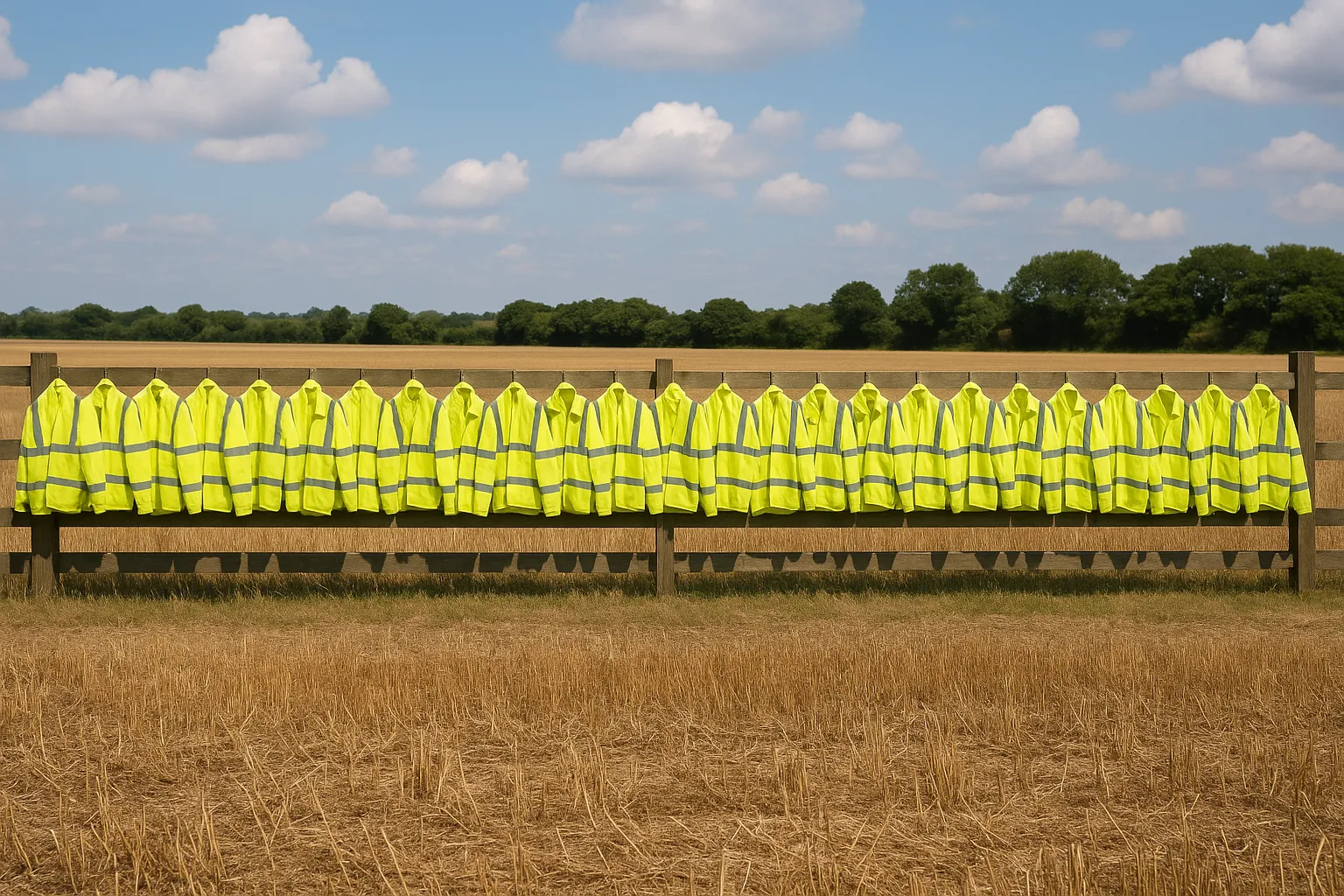
As the busy harvest season approaches, farmers in the UK have been starkly reminded of the paramount importance of safety on farms. A compelling visual display of 41 high-visibility jackets at Symonds Farm, situated near Bury St Edmunds in Suffolk, served to underscore this critical message to over 100 attendees at a recent farm safety event organised by the National Farmers’ Union (NFU) East.
Each jacket symbolises a life lost in farming-related accidents within the UK since April of the previous year, reflecting an alarming reality for those within the agricultural sector. George Gittus, a Suffolk farmer and representative on the NFU Suffolk Council, delivered a poignant address stressing the necessity of prioritising safety.
“Since April last year until today, 41 people – whether they be your colleagues, a member of the public, or a child – have not returned home to their family because they have been killed on farms,” Mr Gittus shared with the assembled group. He later recounted the emotional impact on his team as they arranged the jackets, relaying how it instilled a sense of apprehension among them.
The timing of this display is particularly significant, coinciding with a period marked by increased farm activity as combines and heavy machinery begin to operate intensively. The combination of long working hours, heightened pressures to meet harvest targets, and fatigue can create a hazardous environment where accidents are more likely to occur.
This event at Symonds Farm was part of a broader initiative conducted by NFU East, which has seen a series of 11 health and safety workshops conducted across the region throughout June and July. These sessions aim to address vital safety concerns within the agricultural community. Topics covered included quad bike and all-terrain vehicle safety, emergency first aid training, regulations pertaining to vehicle licenses, tyre safety, and guidelines for those working alone.
The importance of safe practices in the farming environment was further stressed by representatives from local police and fire services, who participated in the event to reinforce safety messages.
Charles Hesketh, the regional policy manager for NFU East, noted the persistent dangers inherent in the farming profession. “It is vital we do everything we can to change the industry’s poor safety record,” he commented. He emphasised that these educational programmes are vital instruments in promoting safer working environments.
The aforementioned 41 fatalities are indicative of grim trends, with official statistics expected to be released during the upcoming Farm Safety Week, set to take place from 20-24 July. Each loss highlights the ongoing necessity for enhanced safety measures and a cultural shift towards prioritising worker welfare.
The ongoing challenges presented by the farming sector’s safety record continue to elicit concern, with calls for farmers to acknowledge the risks and take proactive steps to mitigate them. The intensive demands of the harvest season can induce a ‘perfect storm’ of risks, underscoring the need for proper training and adherence to safety standards.
As farmers gear up for harvest, it is critical that they not only focus on productivity but also on ensuring that safety is never compromised. The risk factors associated with farming, including busy machinery, unpredictable weather conditions, and the mental and physical toll of extended working hours, necessitate an unwavering commitment to safety protocols.
The poignancy of the silent jackets serves as a somber reminder of the tangible consequences of neglecting safety. Each jacket represents not just a statistic, but a personal tragedy, affecting families, friends, and the broader community.
Moreover, many farmers are calling for more resources and support to help them implement effective safety practices. Part of the solution lies in sharing knowledge and experiences across the farming community, ensuring that best practices can be adopted consistently.
The NFU and local safety initiatives are at the forefront of these efforts, striving to create a safer working environment for all involved in agricultural activities. The workshop series represents a crucial step forward in addressing the ingrained safety issues within the sector.
In conclusion, as the UK’s farmers enter one of their most critical periods of work, the essential message of prioritising safety resonates louder than ever. The lives impacted by workplace accidents serve as a stark reminder of the responsibilities that come with farming. With increased awareness, proper training, and concerted efforts to improve safety, it is hoped that future harvesting seasons will witness a reduction in the tragic toll of accidents. The agricultural community stands at a pivotal moment where change is imperative, and the collective aim must be to ensure that every individual not only returns home safely but thrives in a secure working environment.
Our Thoughts
To prevent the tragic fatalities highlighted in the article, several measures could have been implemented. Firstly, adherence to the Health and Safety at Work Act 1974 is crucial, which mandates a duty of care to ensure the safety and health of all personnel on farms. This includes implementing regular safety training sessions on handling machinery, which would cover risk assessments and hazard identification.
The use of Personal Protective Equipment (PPE), such as high-visibility jackets, should be rigorously enforced beyond awareness campaigns, ensuring that all farm workers are consistently wearing appropriate safety gear, particularly during high-risk activities like harvesting.
Furthermore, industry-specific training programs on safe working practices for managing fatigue and stress during long hours are vital. The Provision and Use of Work Equipment Regulations 1998 should be reviewed to ensure that all machinery is adequately maintained and operated according to safety standards.
Creating a culture where safety is prioritized, and encouraging workers to speak up about potential hazards can significantly reduce the risk of accidents. Regular audits and checks on safety compliance could further instil a commitment to maintaining safe working conditions on farms.