















Story Highlight
– Larissa Hope credits psilocybin for overcoming mental health issues.
– Mixed experiences raise questions about psychedelic treatment safety.
– Clinical trials for psychedelics increasingly suggest therapeutic benefits.
– Experts urge cautious evaluation of psychedelics before widespread use.
– Regulatory changes for psychedelic research are progressing slowly.
Full Story
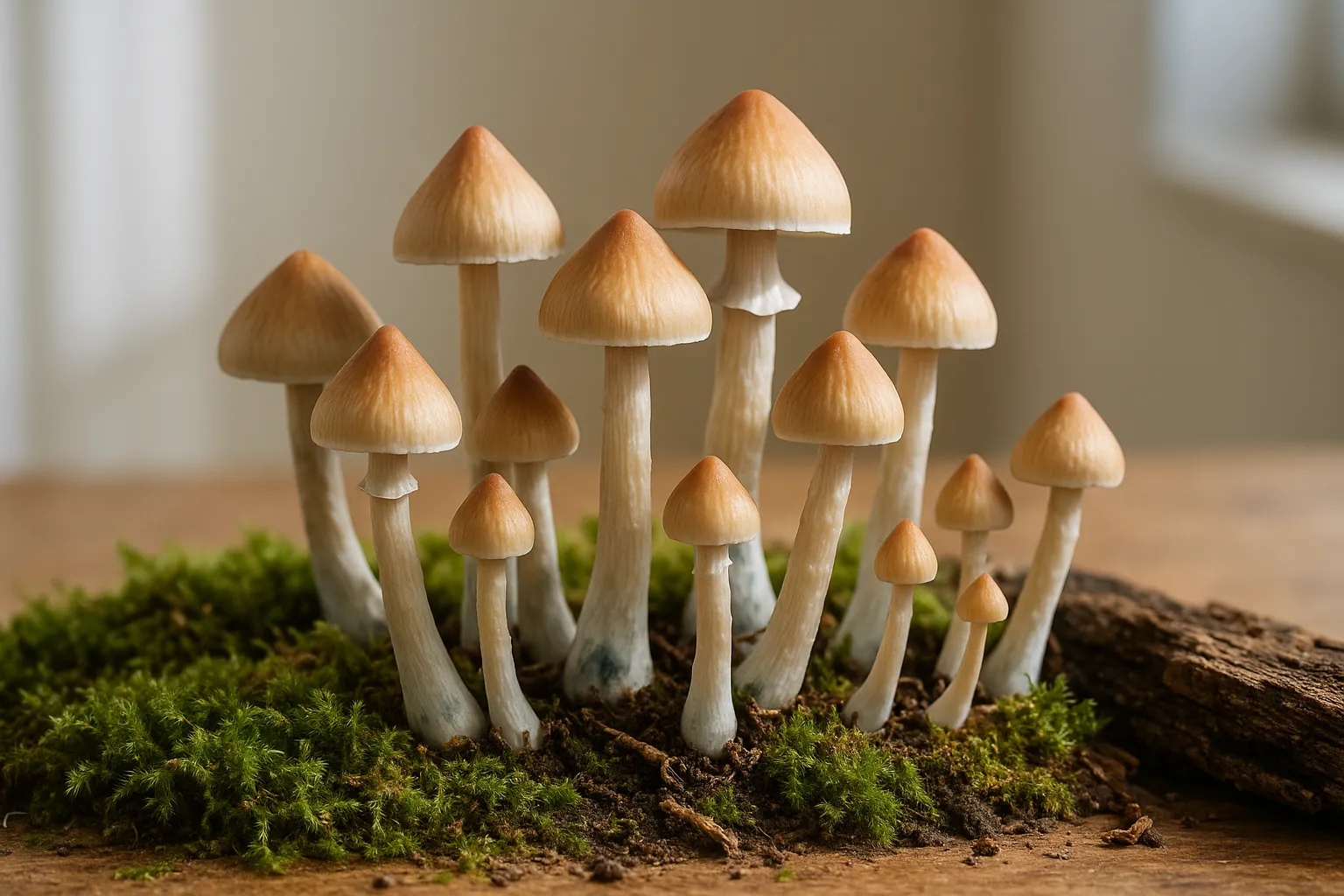
Larissa Hope’s journey with psilocybin—a compound found in magic mushrooms—reveals a poignant narrative of recovery from mental health struggles. At the age of 17, she was thrust into the spotlight after being cast in the acclaimed television series Skins. However, this quick ascent to fame unearthed deep-seated traumas, leaving her to grapple with overwhelming emotional turmoil. Traditional antidepressants did little to alleviate her suffering, but a carefully monitored dose of psilocybin became a catalyst for a significant transformation in her life.
Reflecting on her experience, Hope shares, “When I experienced it, I burst out crying. It was the first time in my life I had ever felt a sense of belonging and safety in my body. I kept saying, ‘I’m home, I’m home.’” Nearly two decades later, she attributes her recovery from suicidal thoughts, in part, to this experience, alongside other therapeutic interventions.
Contrasting her story is that of Jules Evans, who embarked on his psychedelic journey at 18 with LSD, but his experience proved to be far less positive. What began as a recreational trip quickly spiraled into a harrowing episode. “I believed that everyone was talking about me, criticising me, judging me,” he recalls. “I thought, I’ve permanently damaged myself; I’ve permanently lost my mind. It was the most terrifying experience of my life.” Today, Evans directs the Challenging Psychedelic Experiences Project, dedicated to assisting individuals grappling with difficult experiences tied to psychedelics. Following his own distressing trip, he faced lingering anxiety and ultimately received a diagnosis of post-traumatic stress disorder (PTSD).
These divergent experiences highlight a pressing dilemma confronting medical professionals, policymakers, and regulatory bodies: the appropriateness of allowing prescriptive use of psychedelic substances like magic mushrooms in clinical settings.
The dialogue surrounding psychedelic treatment options has gained momentum in light of recent academic research suggesting these substances may play a role in alleviating mental health disorders, such as depression, obsessive-compulsive disorder (OCD), PTSD, and addiction-related issues. Currently classified as illegal, psychedelics may only be administered within the framework of sanctioned research or clinical trials. However, since 2022, over 20 trials have explored the efficacy of various psychedelic treatments, particularly focusing on conditions like depression and PTSD. Initial findings from these studies have generally been positive, though some have yielded ambiguous results. It’s worth noting that a small number of trials have indicated no observable benefits.
Later in the year, we anticipate results from one of the largest clinical trials investigating psilocybin, conducted by the UK biotech firm Compass Pathways. The UK’s Medicines and Healthcare products Regulatory Agency is awaiting this important data as it contemplates possible revisions to the restrictive regulations governing psychedelics for therapeutic use.
Professor Oliver Howes, chair of the Royal College of Psychiatrists’ Psychopharmacology Committee, expresses optimism regarding the potential for psychedelics as novel treatments for mental health issues in the National Health Service (NHS). He comments, “One of the key messages is that this is something we desperately need—more treatments and better treatments for mental health disorders… These treatments are really interesting because they’ve shown promise in these small-scale studies…and have the potential to work quicker.” Nevertheless, Howes underscores the necessity of rigorous trial results to avoid unsubstantiated optimism regarding these substances.
This caution is echoed in a report from the Royal College of Psychiatrists released in September 2025, highlighting the possible risks associated with psychedelics and reiterating that the current legal framework surrounding these substances is based on significant safety concerns.
Psychedelic substances have been intertwined with human societies for centuries. Magic mushrooms, alongside opium and cannabis, have a long history of use for therapeutic and spiritual purposes. The 1960s and 1970s ushered in a cultural revolution during which psychedelics were embraced by the counterculture movement, led by figures like Harvard psychologist Timothy Leary, who encouraged youth to embrace their consciousness and challenge societal norms. However, this era of experimentation ended abruptly as these substances became stigmatized and subsequently banned, which also led to restrictions on scientific inquiry into their effects.
Nonetheless, a resurgence of interest in psychedelic research emerged in the 2010s, largely attributed to groundbreaking studies led by Professor David Nutt and his colleagues at Imperial College London. Their findings suggested that psilocybin might rival conventional antidepressants in efficacy while presenting fewer side effects. Nutt highlighted a crucial advantage of psychedelics: their rapid impact. “We thought rather than wait for eight weeks for antidepressants to switch off the part of the brain associated with depression, maybe psilocybin could switch it off in the space of a few minutes,” he explained.
However, the scientific community remains divided on this progressive perspective. Nutt’s controversial assertions have sparked debates since his removal in 2009 from his role as chair of the government’s Advisory Council on the Misuse of Drugs, following comments that trivialised the harms posed by certain substances.
Dr. Ravi Das, a neuroscientist at University College London, is investigating how psychedelics could contribute to understanding addiction dynamics. His research involves heavy drinkers to ascertain if dimethyltryptamine (DMT), a short-acting psychedelic, can disrupt the associations between environmental cues and substance use. “We’ve been focusing on whether certain drugs, such as psychedelics can break down those associations,” he explained.
Das hopes that successful trial outcomes will lead to the integration of psychedelic therapies into NHS offerings, contingent upon regulatory endorsements. He highlighted the need for access to effective treatments for mental health, stating, “If psychedelic therapies prove to be both safe and more effective than current treatments, I would hope to see them made accessible via the NHS — rather than to just the privileged few.”
Although ketamine is regulated differently in the UK and may currently be administered as part of therapeutic protocols, other psychedelics like psilocybin and MDMA remain classified as Schedule 1 substances with no recognized medical applications, demanding stringent licenses for research use.
Dr. Das advocates for continued exploration, suggesting that mounting scientific evidence could pave the way for policy reform regarding psychedelics. “I hope if there’s sufficient evidence, the government will be open to revising the scheduling of these drugs,” he remarked.
While there is optimism surrounding the therapeutic potential of psychedelics, caution remains paramount. Professor Howes is particularly alert to the risks of unsupervised use, emphasizing, “In a clinical trial setting, it’s very carefully evaluated. If people take these on their own or in a backstreet clinic, then there is no guarantee of that and the safety issues start becoming a major issue.” Additionally, troubling statistics indicate that a considerable percentage of regular psychedelic users have reported intensely challenging experiences, with some expressing thoughts of self-harm.
In the face of such challenges, advocates like Professor Nutt stress the urgency for research into psychedelics and point to the barriers that hinder progress. “There are so many people suffering unnecessarily,” he lamented. “And some of them are dying,” he added, attributing the loss to the restrictive environment surrounding psychedelic research.
As the conversation about the medical use of psychedelics continues to expand, Larissa Hope remains a testament to their potential, sharing her story of how psilocybin provided a new perspective in her battle with trauma. “I had a solid plan to end my life. Then suddenly, death wasn’t the only way,” Hope stated. “Under psilocybin, my nervous system began, for the first time, to recognise what peace felt like.” As research progresses, many are hopeful that such experiences may become more accessible as a viable treatment option for those in need.
Our Thoughts
The article discusses the complexities surrounding the use of psilocybin and other psychedelics in treating mental health disorders. To avoid potential adverse incidents related to psychedelic treatments, several key safety measures could be implemented. Firstly, rigorous clinical trials adhering to UK regulations, such as the Medicines Act 1968 and the Misuse of Drugs Act 1971, should be mandatory to thoroughly assess the safety and efficacy of these substances before any approval for general use.
Educational programs for both healthcare providers and patients about the risks associated with unsupervised psychedelic use would further mitigate harmful outcomes. The establishment of clear protocols for monitoring and managing adverse reactions during clinical trials could also reduce long-term psychological effects experienced by users.
Furthermore, ongoing assessments and critical appraisals of trial results should be mandated to ensure that claims regarding therapeutic benefits do not overtake safety considerations. As the regulatory landscape evolves, ensuring public safety through stringent oversight can prevent similar incidents and enhance confidence in psychedelic therapies.