















Story Highlight
– New guidance prohibits dry cutting of engineered stone.
– Water suppression now a legal requirement for safety.
– Over 1,000 inspections to enforce compliance initiated.
– Silicosis deaths prompt urgent protective measures for workers.
– HSE’s actions aim to prevent future lung disease cases.
Full Story
The Health and Safety Executive (HSE) has unveiled a comprehensive set of measures aimed at safeguarding workers from the health risks associated with engineered stone, particularly regarding silicosis, a serious lung disease. This initiative comes in response to alarming instances of silicosis-related deaths among young workers in the construction sector and marks a significant shift in safety policy.
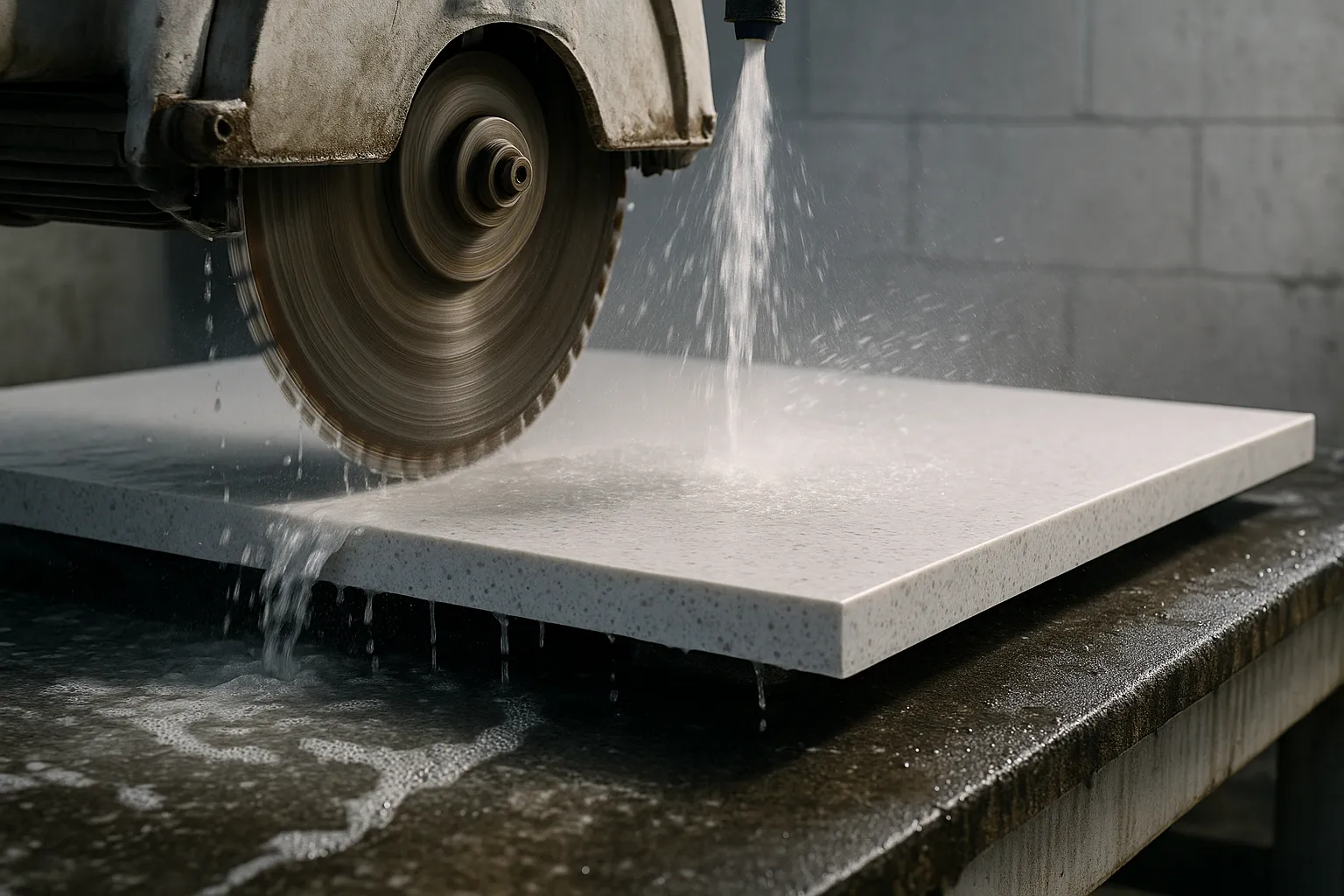
At the heart of the new guidance is the unequivocal stance against dry cutting of engineered stone. The HSE has designated this practice as unacceptable and has emphasised that businesses must utilise water suppression techniques during the cutting process. These techniques, which have already been adopted by several industry leaders, are viewed as essential in complying with legal obligations concerning worker safety.
Coinciding with the upcoming Stone & Surfaces Show, a significant event for professionals in the industry, the HSE’s guidance is supported by a robust national inspection strategy. Over the next year, HSE inspectors are set to carry out more than 1,000 inspections across fabricators in Great Britain. Already, the initial phase of these inspections is in progress, targeting compliance and ensuring strict adherence to the new standards. Any company found failing to meet these requirements can expect enforcement actions to follow.
The HSE’s intervention is a direct response to the tragic deaths of two young workers attributed to silicosis, which has raised urgent calls from various stakeholders, including Members of Parliament, trade unions, and healthcare professionals, for immediate action to mitigate the risks associated with engineered stone cutting.
In its recent efforts, the HSE undertook an extensive two-year study that involved thorough research and consultation with industry participants. The outcome underscored the need for stringent controls on exposure levels to respirable crystalline silica (RCS), which is significantly higher—five to ten times—when dry cutting is performed in comparison to using water-based methods. The research findings also indicated that options for engineered stone with reduced silica content are both available and of comparable quality, thus discouraging businesses from using more hazardous materials.
To clarify the responsibilities of businesses and workers alike, HSE has published groundbreaking COSHH (Control of Substances Hazardous to Health) guidelines specifically targeting engineered stone. The guidelines stipulate crucial actions employers are legally obliged to perform: opting for engineered stone featuring low silica levels, employing effective water suppression techniques on tools to control dust, providing suitable respiratory protective equipment (RPE) to workers, and conducting regular health surveillance.
Mike Calcutt, Deputy Director in HSE’s Engagement and Policy Division, asserted, “Today’s guidance marks our most significant intervention in the engineered stone sector to date, and not without good reason. Silicosis is incurable, but it is entirely preventable. No worker should lose their life to a lung disease caused by their job, and that is why we have taken this action.”
Calcutt further added, “We have spent the past two years conducting extensive research and industry engagement to understand the scale of this risk. What we found was stark. Many businesses are not putting the right controls in place; they are still using engineered stone with high silica content and dry cutting, which must stop.”
The concerns surrounding engineered stone are heightened due to the high silica content—up to 95%—in materials commonly used for kitchen and bathroom surfaces. Unlike natural stone, which generally results in silica-related diseases developing over many years, evidence suggests that exposure to engineered stone dust can lead to silicosis in a significantly shorter timeframe. Workers may experience permanent and debilitating lung damage before any symptoms present themselves, often rendering timely intervention impossible.
In a show of support for the new regulations, Sir Stephen Timms, Minister for Social Security and Disability, emphasised, “Every worker deserves to come home safe, without fear of losing their life to a preventable, deadly lung disease caused by their job. This new guidance gives businesses clear instructions on what the law requires; HSE will ensure that these standards are enforced through over 1,000 inspections scheduled for this spring and summer.”
Industry expertise has been vocal about the implications of these guidelines. Kevin Bampton, Chief Executive Officer of the British Occupational Hygiene Society, commented on the newly issued guidance, highlighting its necessity for broad industry compliance. He stated, “HSE’s revised guidance provides much-needed clarity for the mainstream industry and the professionals supporting it. The guidance reflects this evidence base and brings clarity to what is needed to help protect workers.”
Nigel Fletcher, Operations Officer at the Worktop Fabricators Federation, welcomed the clarity brought forth by the new guidance and reiterated the federation’s commitment to improving workplace safety through education and training. He noted, “The WFF is dedicated to refining worker safety in the fabrication industry, which includes not only reducing dust exposure but also addressing other significant hazards.”
The HSE’s inspection initiative is a part of a larger strategy that will extend through to 2027, aimed at fostering compliance amongst employers and raising awareness of legal responsibilities within the sector. Those with concerns about workplace safety can reach out to HSE via their direct line or website, while individuals worried about their health are encouraged to seek medical consultation.
This commitment to enforce the new guidance represents a pivotal step towards ensuring the safety and well-being of workers in the engineered stone sector, promising a future where such preventable diseases are no longer tolerated. The emphasis placed on robust health and safety practices is set to transform working conditions in an industry that has grappled with serious health risks for far too long.
Our Thoughts
To prevent the recent silicosis deaths among young workers in the engineered stone sector, several safety measures could have been implemented. Firstly, adherence to the Control of Substances Hazardous to Health (COSHH) Regulations would mandate comprehensive risk assessments and the use of appropriate control measures, such as water suppression during stone cutting. The HSE’s findings indicate non-compliance with this legal requirement, particularly in the practice of dry cutting, which significantly increases silica dust exposure.
Employers should have prioritized switching to engineered stone with lower silica content as an alternative to mitigate risk. Additionally, employers are legally obliged to provide adequate training and respiratory protective equipment (RPE) to employees, which appears to have been lacking.
Key regulations breached include Section 6 of the Health and Safety at Work etc. Act 1974, which requires manufacturers to provide adequate information about product risks, and COSHH regulations regarding the management of hazardous substances. To prevent similar incidents, ongoing monitoring and enforcement of safety regulations, alongside robust training programs highlighting the dangers of silicosis and effective control measures, are essential.