













Story Highlight
– Solar panel fires raised safety concerns at British schools.
– Suffolk officials turned off 80 solar energy systems.
– Wildfires burning in 19 locations across England and Wales.
– Investigations confirmed solar panels caused multiple school fires.
– Heatwave conditions prompted health warnings and alerts.
Full Story
A series of fires at schools in Britain over the past year has raised urgent safety concerns regarding the materials used in educational institutions, particularly in light of the nation’s ongoing heatwave.
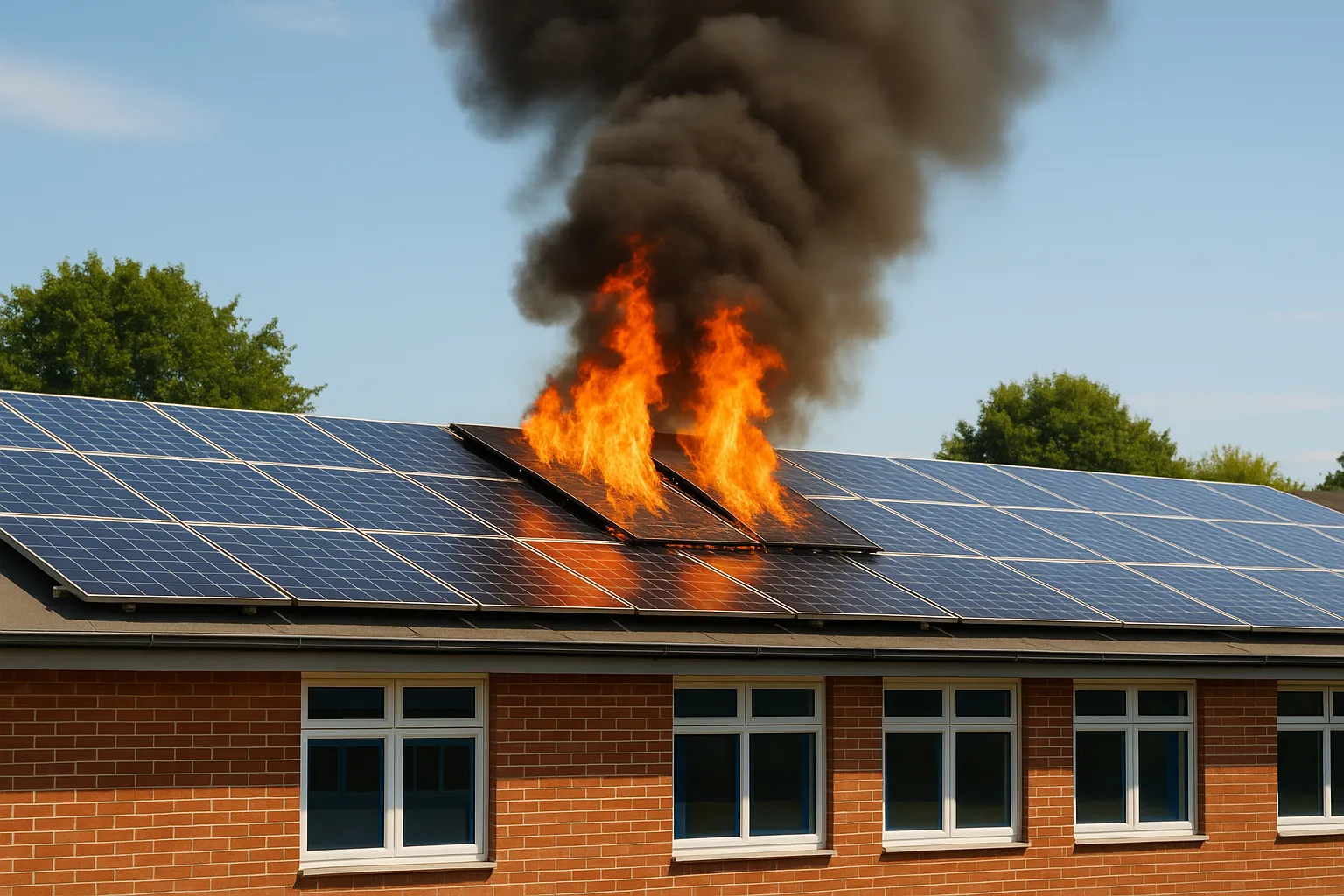
In Suffolk, local officials have taken the precautionary step of shutting down 80 solar panel systems installed on school rooftops. This decision follows three separate incidents of fires that have occurred within a year, prompting fears about the safety of energy solutions installed above classrooms. These actions coincide with the broader concerns for public safety, as wildfires burn in 19 locations across England and Wales amidst exceptionally high temperatures, with heat-health alerts being issued throughout much of the country.
This week, the UK Health Security Agency (UKHSA) has declared yellow alerts for seven regions, anticipating temperature spikes to reach 33°C in southern-central England. The increasing incidence of severe weather has caused schools and local governments to re-evaluate the risk posed by the installation of solar panels, which are designed to enhance sustainability but have now been implicated in fire incidents.
In Northumberland, earlier in the summer, 81 solar panels were disconnected from a primary school following a fire attributed to the panels. Such incidents have prompted a comprehensive review of building materials used in school construction, particularly in regions experiencing heightened summer temperatures. The debates surrounding these safety measures highlight the vital intersection between ecological responsibility and public safety.
The latest string of incidents in Suffolk began with a fire at Sidegate Lane Primary School in Ipswich on June 24. Reports indicated that staff evacuated the building after detecting smoke, leading to immediate concerns for student and staff safety. The local fire brigade confirmed no extensive investigation was necessary, citing that the fire was definitively linked to the solar panels installed on the roof.
Another blaze occurred recently at Brooklands Primary School, just a short distance from the earlier incident in Ipswich. Prior to this, East Bergholt Primary School also experienced a fire attributed to faulty solar panels last August. Such events underline an alarming trend prompting school officials to rethink their reliance on these energy systems in light of increasing heatwave conditions across the UK.
As emergency services continue to combat numerous wildfires—often exacerbated by dry conditions and high temperatures—the National Fire Chiefs Council (NFCC) has issued warnings about the ongoing “severe wildfire risk” affecting substantial areas of England and Wales. Some locations are classified as having an “extreme risk” of wildfires, necessitating major incident declarations for blazes reported in North Wales and Glossop, Derbyshire.
A spokesperson for the Met Office, Stephen Dixon, has informed media outlets that the prevailing heatwave is set to persist well into the week, forecasting peak temperatures of around 33 degrees Celsius in certain parts of southern-central England. In contrast with recent weeks, a slight dip in temperatures is anticipated as the weekend approaches, as the high-pressure system that has dominated weather patterns begins to shift, introducing a more northerly weather influence.
Dixon explained to the Press Association: “It’s going to be a sunny and warm week for the vast majority of the UK as high pressure remains in charge… Temperatures are likely to ease as we move towards the weekend.” He further noted that peak temperatures will likely descend to mid-to-high 20s, though still above the average for this time of year, which continues to raise concerns for public health amid existing extreme weather conditions.
The overlapping threats posed by rising temperatures and potential safety hazards from solar panel systems emphasize the need for thorough assessments of educational infrastructure. Local governments are urged to remain vigilant, not only protecting students and staff from immediate fire risks but also considering the long-term implications of sustainable energy technologies under changing climate conditions.
The situation has prompted discussions about sustainable energy sources in educational environments and how such initiatives can be aligned with safety protocols. As these incidents become more frequent, it is essential for educational authorities and construction regulators to prioritise the evaluation of materials and systems employed in school buildings, particularly in areas susceptible to higher temperatures and fire hazards.
With significant risks now associated with the combination of heatwaves and faulty installations, the alignment of safety measures and sustainability practices remains a pressing concern. Policymakers are urged to strike a balance that ensures both environmental responsibility and the wellbeing of students and staff alike in educational institutions across the country.
Our Thoughts
The series of solar panel fires at schools in Suffolk highlights significant gaps in safety management regarding the installation and maintenance of renewable energy systems. To prevent such incidents, rigorous risk assessments should be conducted, particularly during periods of extreme weather, as stipulated by the Management of Health and Safety at Work Regulations 1999.
Inadequate materials or installation practices could potentially violate the Construction (Design and Management) Regulations 2015, which require ensuring that buildings are constructed and maintained for safety. Regular maintenance checks and fire risk assessments are crucial under the Regulatory Reform (Fire Safety) Order 2005.
Key lessons include the necessity for schools to establish clear fire safety protocols, especially regarding equipment linked to electrical systems like solar panels. Training and awareness programs for staff on identifying fire hazards related to extreme temperatures could also mitigate risks.
To avoid similar incidents, comprehensive guidelines for solar panel installation should be developed, ensuring materials used are fire-retardant and suitable for high-heat conditions, reinforcing elements of the Building Regulations 2010 concerning fire safety.