














Story Highlight
– Johnson & Johnson faces $5.5bn lawsuits over talcum powder.
– Claims link talc to ovarian cancer and mesothelioma risk.
– J&J denies allegations, cites compliance with safety standards.
– Talc can be contaminated with asbestos during mining process.
– Experts suggest avoiding talc and using safer alternatives.
Full Story
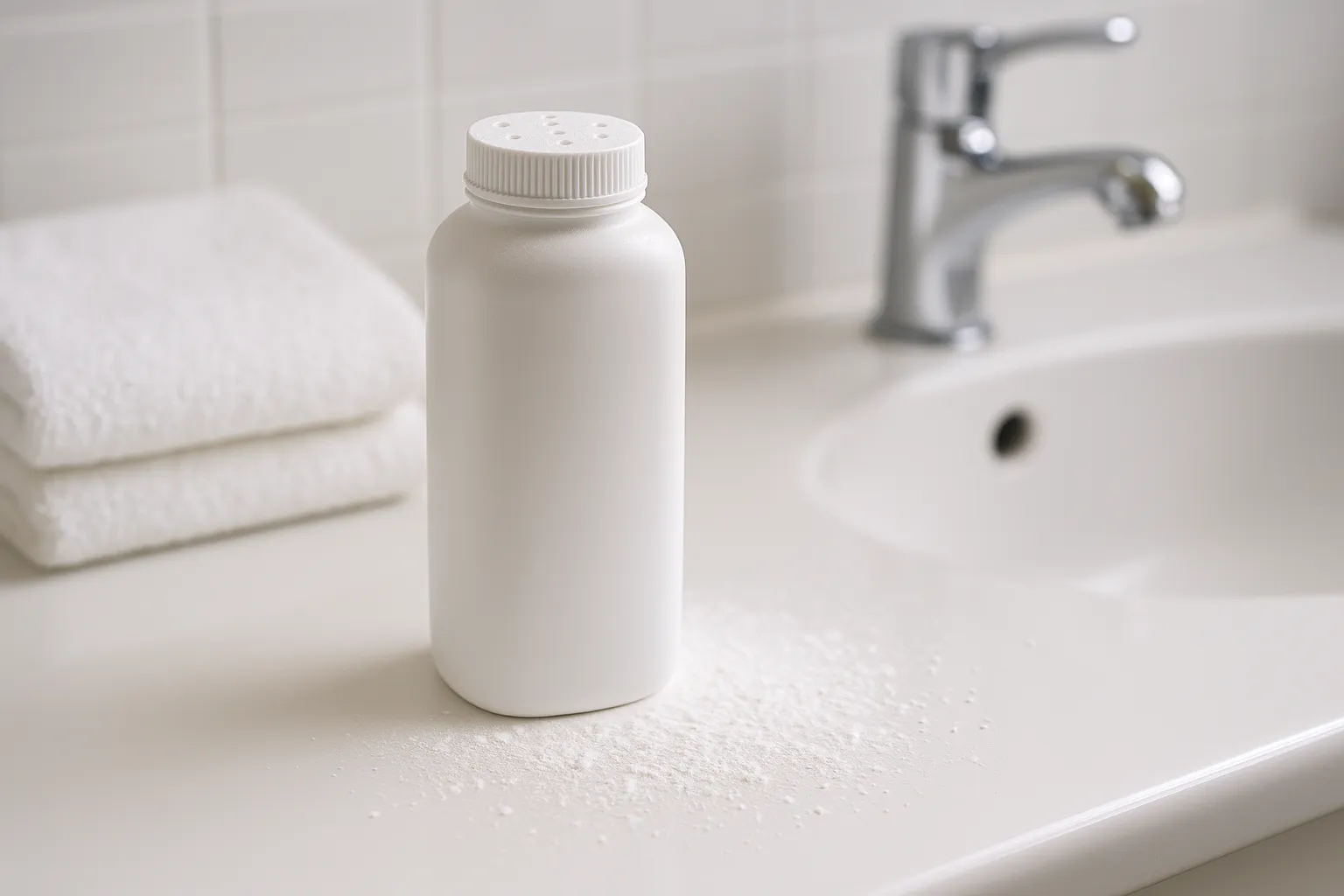
A popular household item in many UK bathrooms, talcum powder has been synonymous with cleanliness and care, frequently used by parents for infants to prevent skin irritations and rashes. However, ongoing legal disputes concerning the safety of talc-based products have raised significant fears regarding their association with serious health issues, particularly cancer.
Johnson & Johnson (J&J), a major player in the healthcare sector, is currently embroiled in a protracted legal struggle focused on allegations that its talcum powder products may have been tainted with asbestos, a substance known for its cancer-causing properties. In a recent development, J&J announced a proposal to settle approximately 76,000 lawsuits in the United States, offering to pay up to $5.5 billion (£4.14 billion). These cases claim that the company’s baby powder and other talc-based items have caused instances of ovarian cancer among users.
Despite these claims, the pharmaceutical giant has consistently refuted the assertion that its products are linked to cancer. In response to the ongoing concerns, J&J has reformulated its baby powder, transitioning away from talc-based ingredients. The company also faces multiple legal claims in the UK, where over 3,000 individuals initiated lawsuits last year in the High Court. These plaintiffs assert that they or their relatives developed either ovarian cancer or mesothelioma as a result of prolonged use of J&J’s talcum powder. Damages are being sought from both J&J and its subsidiary, Kenvue UK, which became independent in 2023.
Allegations suggest that J&J has potentially concealed known risks associated with its talc products for decades, having been aware of contamination with harmful minerals dating back to the 1960s. The company has denied these claims vehemently, with Kenvue stating that its baby powder complied with all necessary regulations and did not contain asbestos. They maintain that extensive testing from leading laboratories and health authorities supports the safety of their product.
To shed light on the health implications of talcum powder use, experts in oncology have offered insights into its safety profile, particularly regarding its relationship with cancer. Dr Astero Klampatsa, who leads the Thoracic Oncology Immunotherapy Group at The Institute of Cancer Research in London, highlights that talc is a naturally existing mineral often extracted in areas where asbestos deposits are found. This proximity raises the risk of asbestos contamination during the mining process if stringent separation protocols are not adhered to.
Dr Klampatsa clarifies that while talc itself is not classified as a definitive carcinogen, its contamination with asbestos transforms it into a product that could lead to cancer. The link between asbestos exposure and cancer was first identified in the 1950s when medical professionals observed a heightened prevalence of serious diseases among asbestos miners. This prompted increased scrutiny and, by the 1970s, many countries began implementing restrictions on asbestos use, culminating in a complete ban in the UK in 1999.
Professor Justin Stebbing, an oncologist and professor from Anglia Ruskin University, elaborates on the prolonged latency period between asbestos exposure and the development of cancer, estimating it can span from 12 to 60 years. This extended timeframe complicates the relationship between past talc use and potential future health concerns.
The lawsuits centre around talcum powder’s alleged connection to two specific cancers: mesothelioma and ovarian cancer. Mesothelioma, which predominantly arises from inhaling asbestos fibres, is a severe form of lung cancer that poses significant treatment challenges and is often fatal. The nature of talcum powder application—typically resulting in airborne clouds of powder—raises concerns about inhalation exposure.
Dr Klampatsa notes that although mesothelioma is relatively uncommon, with around 3,000 new cases diagnosed annually in the UK, the risk of developing the disease can escalate with heightened exposure levels. Conversely, understanding the correlation between ovarian cancer and talcum powder use has gained traction, particularly following a recent study published in the Journal of Clinical Oncology. This research identified an association between the use of talcum powder as a personal care product and ovarian cancer, while no similar link was found with breast or uterine cancers.
Professor Stebbing discusses potential biological mechanisms that could explain how talcum powder might influence ovarian cancer risk, such as the inflammatory responses induced by asbestos exposure, which might lead to cellular damage and ultimately, cancer.
Despite these concerns, Professor Stebbing reassures that the overall cancer risk posed by talcum powder remains low, suggesting a population-level perspective in which the dangers should not induce widespread alarm. He posits that while there is evidence of asbestos contamination in certain talcum powders, the specifics regarding contamination levels and associated cancer risks are challenging to ascertain accurately.
As for the current claimants within the UK, many are either suffering from or have succumbed to ovarian cancer, mesothelioma, or other cancer types attributed to prolonged use of J&J’s powder. The exact number of affected individuals remains unclear. One claimant, Siobhan Ryan, 63, expressed her dismay upon learning of her advanced ovarian cancer, linking it to her use of J&J’s product. “They knew it was contaminated and still they sold it to new mums and their babies,” she recounted.
Experts advise exercising caution when considering the use of talcum powder, regardless of asbestos content. Dr Klampatsa underscores the precautionary principle, advocating for a complete avoidance of talc-based products. Following public health concerns, J&J ceased the sale of talc-based baby powder in the UK in 2023, opting instead for a cornstarch-based alternative deemed safer for consumers.
The global trend in regulatory standards now favours the transition away from talc, encouraging the use of non-mineral, plant-derived substitutes. Alternatives such as arrowroot and kaolin clay powders are highlighted as viable options in place of traditional talc.
Our Thoughts
The situation surrounding Johnson & Johnson’s talcum powder raises significant health and safety concerns that could have been mitigated through strict adherence to UK health and safety legislation, including the Health and Safety at Work Act 1974. The company should have implemented more rigorous testing and quality control measures to ensure their talc products were free from asbestos contamination, as contamination risks were known for decades.
Key safety lessons include the necessity of transparent communication regarding product safety and potential risks associated with consumer goods. Manufacturers must not only comply with regulatory standards but also proactively assess and manage risks to prevent harm to consumers.
Relevant regulations that may have been breached include the Chemicals (Hazard Information and Packaging for Supply) Regulations 2009, which require that products do not pose a health risk when used as intended. Additionally, the Consumer Protection Act 1987 mandates that products placed on the market must be safe for use.
To prevent similar incidents, manufacturers should adopt the precautionary principle, as advised by experts, by exploring non-talc alternatives that eliminate the risk of asbestos contamination. Regular risk assessments and an open dialogue with consumers about product safety are essential in maintaining trust and safety standards.