















Story Highlight
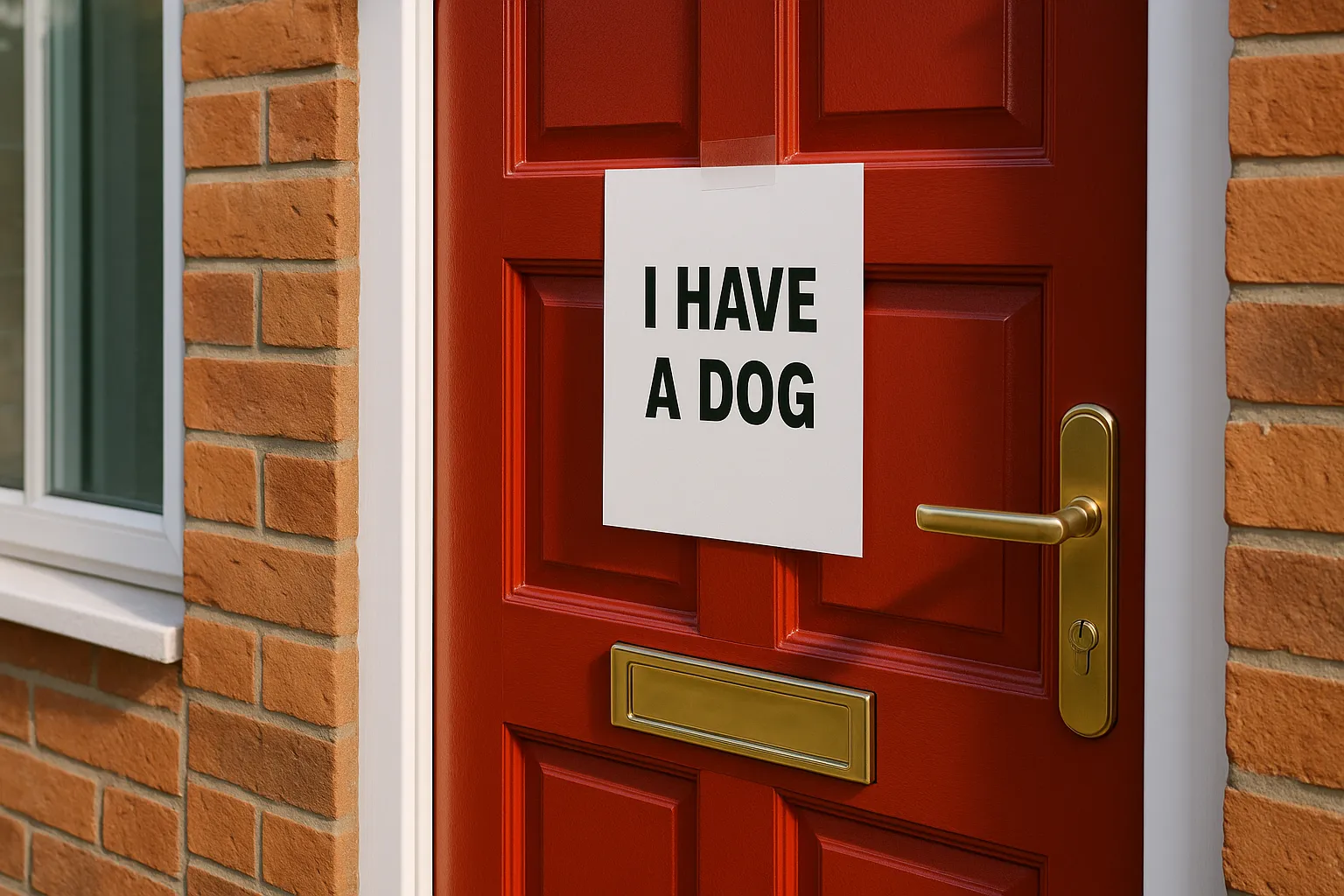
– Royal Mail urges four-word sign for dog owners.
– Dog attacks on postal workers increased by 2%.
– S postcode area tops dog attack statistics again.
– Royal Mail prioritizes safety amid delivery services.
– Customers requested to secure pets during deliveries.
Full Story
Royal Mail has issued a reminder to customers about the importance of notifying delivery staff regarding the presence of dogs at their homes. As the Easter period approaches, which typically results in an increased volume of packages being delivered, the postal service is advising residents to consider displaying a simple sign reading “I have a dog.” This initiative aims to improve safety for postal workers and ensure that deliveries are uninterrupted.
Recent statistics published by Royal Mail highlight a concerning upward trend in dog attacks on postal employees. Over the past year, there has been a 2% increase in such incidents, bringing the total to 2,197. This translates to over 40 attacks weekly, with many postal workers facing injuries that could have lasting effects on their wellbeing and employment.
The simple four-word notice serves a dual purpose: it alerts delivery personnel to the potential presence of a dog, allowing them to wait while homeowners secure their pets in a safe location. Royal Mail noted in a customer correspondence, “While receiving your letters and parcels is important, our priority is to get these items to you safely, and I’m hoping that you can help me with that.” The letter further detailed the alarming reality that around 2,000 postal workers face injuries from dog encounters annually—a stark reminder of the hazards involved in their daily tasks.
To combat the rising number of dog-related incidents, Royal Mail has provided valuable insights into local problem areas. Among these, the Sheffield area, particularly the S postcode, has emerged as the most dangerous, experiencing a troubling 61% increase in dog attacks this year, a significant rise from the previous year’s figures. With a total of 66 attacks reported, this area has consistently ranked among the highest for risks to postal workers since its data tracking began.
Another postcode that continues to present challenges is the Portsmouth area (PO), where there was a slight decrease in dog attacks, down to 60 incidents from 62 in the last reporting period. Despite this small decline, the PO area remains well-known for the frequency of attacks, marking eight years of being listed among the highest-risk locations for such incidents.
In the TN postcode area, covering parts of Kent, Sussex, and Surrey, there has also been a notable rise, with a total of 56 attacks reported. This increase follows a previous decline, signifying a concerning back-and-forth trend in dog attack statistics in this region.
Meanwhile, the GU postcode area near Guildford has seen an increase as well, with 54 dog attacks recorded this year, which is a 29% rise from last year’s 42 incidents. This area is noteworthy for having appeared multiple times on Royal Mail’s dangerous dog location lists.
Additional places of concern include Nottingham (NG) with 49 attacks—a 17% increase— and the joint sixth position held by Chelmsford (CM) and Brighton (BN), with each area reporting 47 dog attacks. Notably, Brighton has seen a marginal decrease from its previous year’s total.
The BT postcode area encompassing Belfast showed a welcomed 27% reduction in dog attacks, although it remained on the high-risk list due to a history of being a trouble spot for postal workers. The NE postcode area in Newcastle also recorded 45 incidents, underlining the ongoing challenges faced across various regions.
Swindon (SN) is emerging on the list for the second time, with 44 reported dog attacks this year, while Doncaster (DN) has recorded its first entry into this concerning statistic, with 42 reported attacks. Staffordshire (ST) also made its debut on this list of high-risk areas, following a rise in incidents.
Lizz Lloyd, the Director of Health and Safety at Royal Mail, commented on the persistence of dog attacks as a pressing safety concern for postal workers. “Dog attacks remain one of the most significant safety risks faced by postal workers. In many cases, these incidents result in serious injuries, emotional distress, and time away from work,” she noted. Lloyd reinforced the need for public awareness and responsibility in securing their pets when deliveries are expected, underscoring a collaborative approach between the public and postal services to reduce these dangerous encounters.
Royal Mail continues to invest in comprehensive safety training programmes for its employees while also seeking to raise awareness among the public about the importance of securing dogs before delivery staff arrive. The hope is that such measures, along with community support, will contribute significantly to decreasing the rate of dog attacks, ensuring a safer working environment for postal staff and uninterrupted service for customers.
Our Thoughts
To prevent dog attacks on postal workers, key safety measures should include increased public awareness and adherence to relevant legislation. The significant rise in dog attacks highlights a gap in compliance with the Control of Dogs Order 1992, which requires dog owners to ensure their pets are under control in public spaces.
Royal Mail’s initiative to encourage customers to display a sign stating “I have a dog” is a proactive step; however, it underscores the inadequacy of relying solely on personal responsibility. A more robust approach could involve local authorities implementing stricter regulations regarding dog ownership and training, alongside public awareness campaigns on responsible pet ownership.
Additionally, the Health and Safety at Work Act 1974 mandates employers to ensure, as far as reasonably practicable, the health and safety of their employees. Royal Mail could enhance its risk assessments and training programs to educate staff on handling potentially dangerous situations with dogs, thus reducing the likelihood of harm.
Overall, fostering a stronger community engagement and reinforcing legislative standards on dog control could significantly mitigate the risks faced by postal workers in high-incidence areas.